

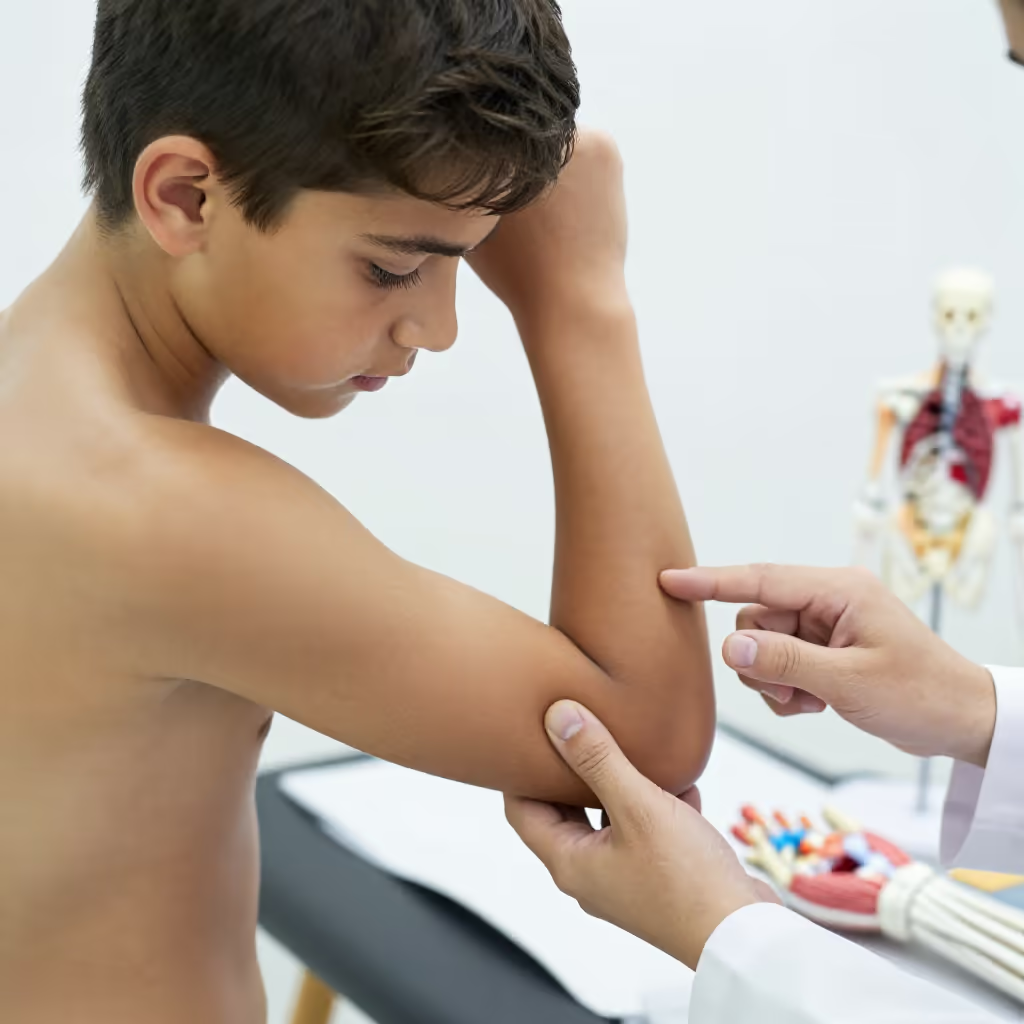
der Ellenbogen
elbow
The joint in the middle of the arm that connects the upper arm with the forearm.
EXAMPLE
Ich habe mir beim Sport den Ellenbogen gestoßen.
I bumped my elbow while doing sports.
elbow
Loading your saved state.
elbow
The joint in the middle of the arm that connects the upper arm with the forearm.
Ich habe mir beim Sport den Ellenbogen gestoßen.
I bumped my elbow while doing sports.

to use one's elbows
To behave ruthlessly and selfishly in order to achieve one's own goals, without taking others into consideration.
In dieser wettbewerbsorientierten Branche muss man manchmal die Ellenbogen einsetzen, um voranzukommen.
In this competitive industry, you sometimes have to use your elbows to get ahead.
The word is made up of 'Elle', an old unit of length and also the name of a forearm bone, and 'Bogen' (arc/bend). So it describes the 'Bogen' (bend) of the arm.
Das Gelenk am Arm nennt man Ellenbogen.
The joint on the arm is called an elbow.
The expression 'die Ellenbogen einsetzen' (to use one's elbows) or 'die Ellenbogen gebrauchen' (to use one's elbows) is a fixed idiom. It means that someone pursues their goals ruthlessly and selfishly.
Er hat seine Ellenbogen eingesetzt, um die Beförderung zu bekommen.
He used his elbows to get the promotion.
In the literal sense, 'Ellenbogen' (elbow) is often used with verbs that describe an action or injury, such as 'sich den Ellenbogen stoßen' (to bump one's elbow) or 'sich auf die Ellenbogen stützen' (to lean on one's elbows).
Aua, ich habe mir gerade den Ellenbogen am Tisch gestoßen!
Ouch, I just bumped my elbow on the table!
You can always recognize the figurative meaning from the fixed expression 'die Ellenbogen einsetzen/gebrauchen' (to use one's elbows). In all other cases, when it is about the body, the literal meaning is meant.
Sein linker Ellenbogen schmerzt seit dem Training.
His left elbow has hurt since training.