

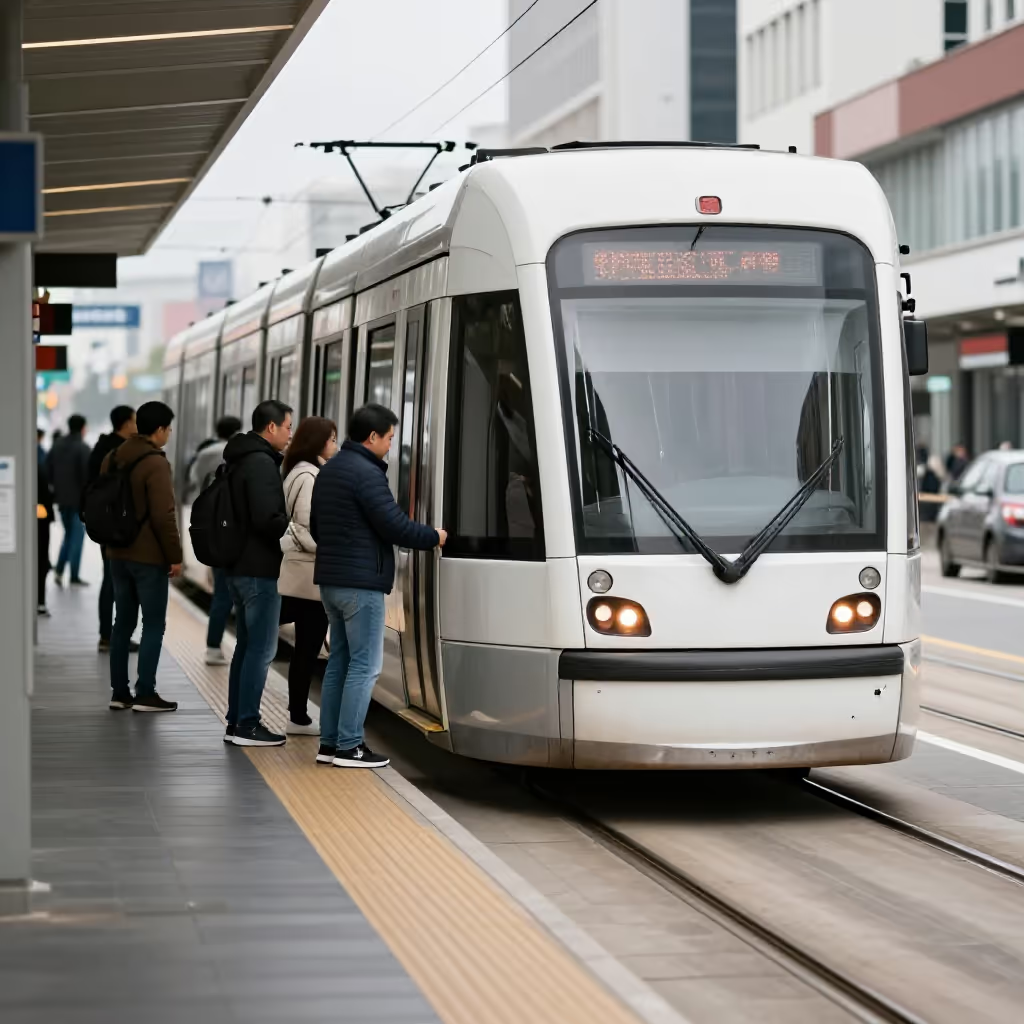
The last stop on the route of a form of public transportation such as a bus, train, or tram.
example
Bitte alle aussteigen, der Zug endet hier. Dies ist die Endstation.
All passengers please get off; the train ends here. This is the final stop.
Usage tips
Word composition
'Endstation' (terminal station / final stop) is an easy-to-understand compound made up of 'Ende' (end) and 'Station' (station). So it literally refers to the station at the end of a route.
EXAMPLE
Die U-Bahn fährt nur bis zur nächsten Haltestelle, das ist die Endstation.
The subway only goes as far as the next stop; that is the final stop.
Typical collocations
In the context of transportation, 'Endstation' (final stop) is often used with the prepositions 'an' or 'bis zu': 'an der Endstation aussteigen' (to get off at the final stop) or 'bis zur Endstation fahren' (to ride to the final stop).
EXAMPLE
Wir müssen bis zur Endstation fahren und dort umsteigen.
We have to ride to the final stop and change there.
Figurative meaning
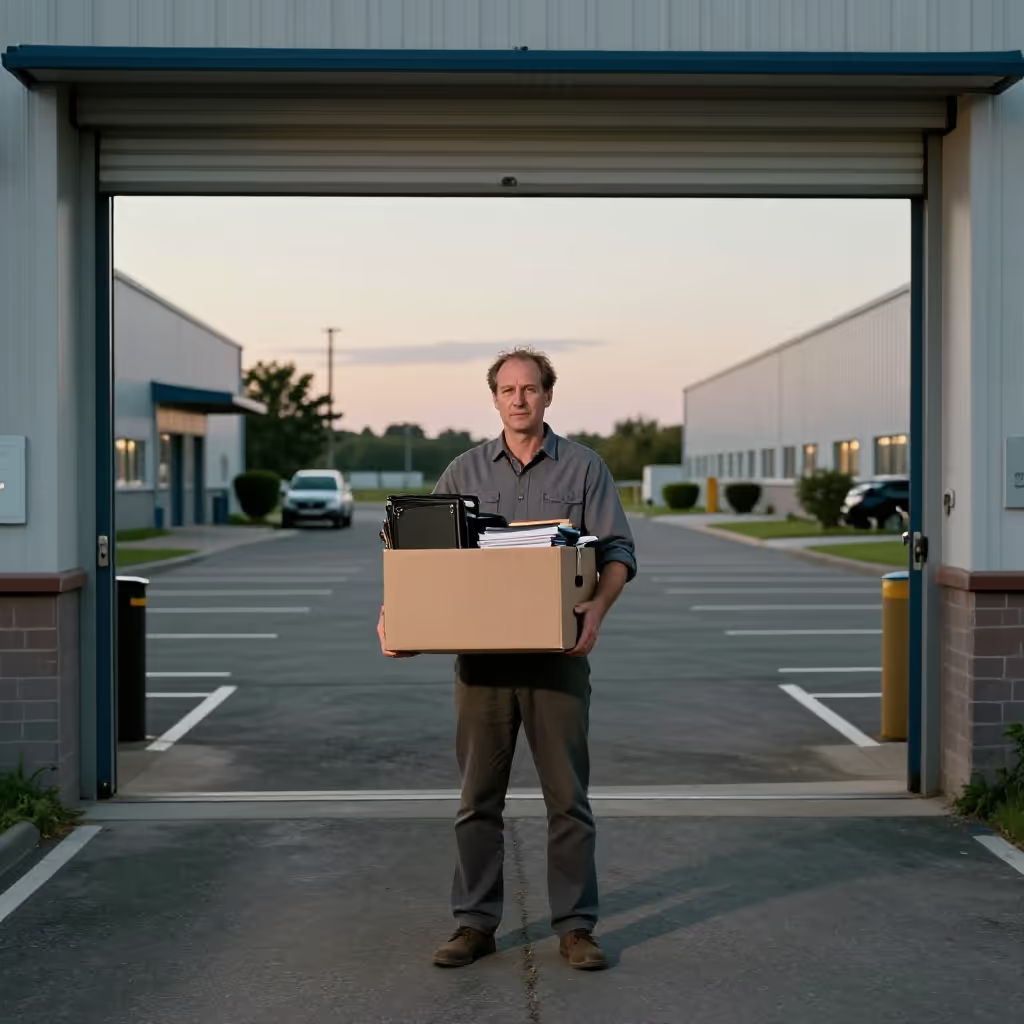
The figurative meaning is always negative. It describes the low point or unwanted end of a development in life or in a career.
EXAMPLE
Für viele Drogenabhängige ist die Straße die Endstation.
For many drug addicts, the street is the dead end.
Context clue
You can easily recognize the difference between the meanings from context. If people are talking about a bus, train, or subway, the literal meaning is meant. If it is about life, a career, or social problems, the figurative meaning is meant.
EXAMPLE
Die Linie U3 endet an der Endstation „Krumme Lanke“.
Line U3 ends at the terminal station 'Krumme Lanke'.
Compare with
near_synonym · confusable
Endstation vs Ende
end
'das Ende' and 'die Endstation' both refer to a final point. 'das Ende' is very general: it can be the end of a film, an event, a street, or something else. 'die Endstation' is more specific and usually means the final stop of a bus, train, or tram. In a figurative sense, 'Endstation' can also mean the final, often negative point of a development. Learners may confuse the words because both have to do with 'not going any further'. For general situations, 'Ende' fits; for transit lines or an ultimate final point, 'Endstation' fits.
Endstation
Wir müssen an der Endstation aussteigen und dann den Bus nehmen.
We have to get off at the final stop and then take the bus.
Ende
Am Ende des Films waren viele Zuschauer sehr still.
At the end of the film, many viewers were very quiet.