

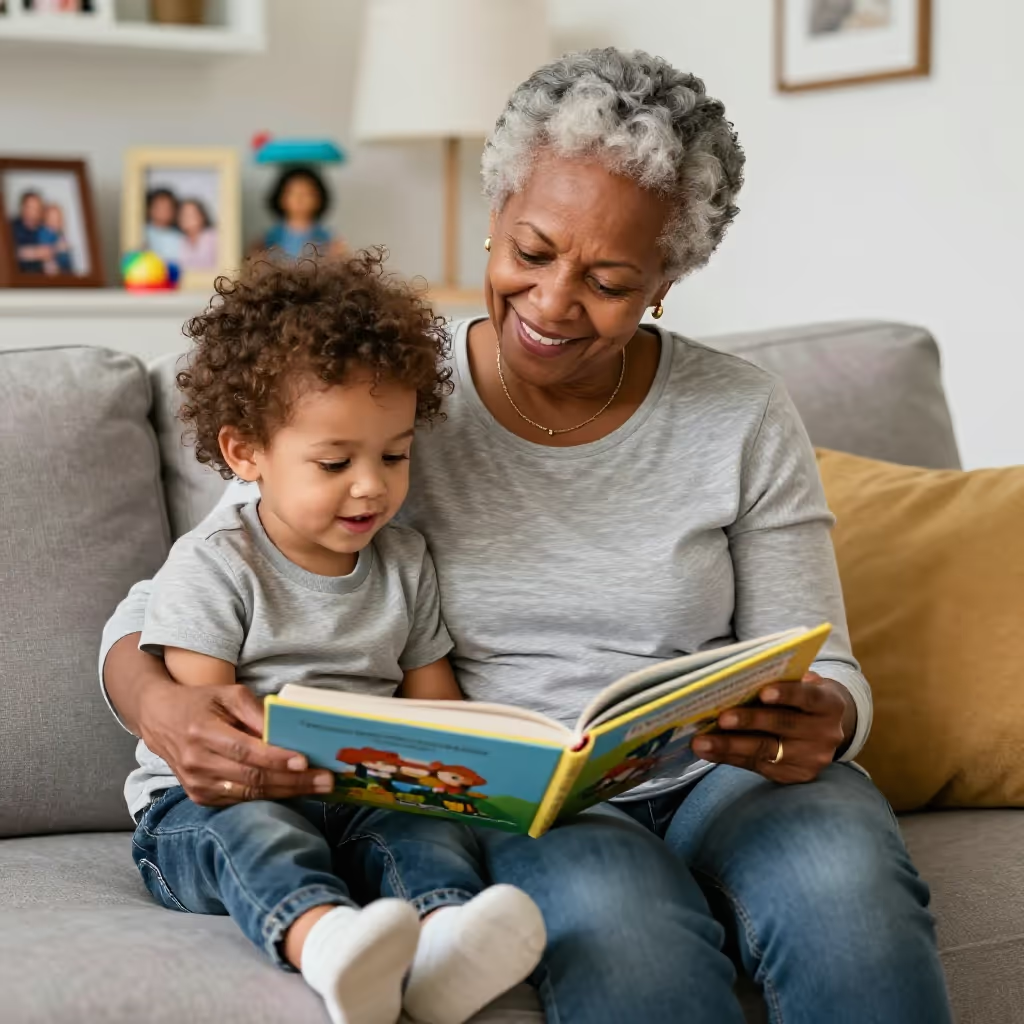
The child of one's own son or daughter. The term is gender-neutral and can refer to a grandson or a granddaughter.
example
Jedes Wochenende passt die Großmutter auf ihr Enkelkind auf.
Every weekend, the grandmother looks after her grandchild.
Usage tips
Word composition
The word consists of 'Enkel' (grandson) and 'Kind' (child). The word 'Enkel' alone can refer to a boy, but by adding '-kind', the term becomes neutral and emphasizes the family relationship.
EXAMPLE
Mein erstes Enkelkind kommt bald zur Welt.
My first grandchild will be born soon.
Gender-neutral term
'Enkelkind' (grandchild) is a very useful, neutral umbrella term. It is used when the child's gender is unknown or unimportant, or when talking about several grandchildren.
EXAMPLE
Egal ob Junge oder Mädchen, jedes Enkelkind ist ein Geschenk.
Whether boy or girl, every grandchild is a gift.
Typical collocations
Common verbs used with 'Enkelkind' (grandchild) are 'auf das Enkelkind aufpassen' (to look after the grandchild), 'Zeit mit dem Enkelkind verbringen' (to spend time with the grandchild), or 'ein Enkelkind bekommen' (to have/get a grandchild).
EXAMPLE
Die Großeltern freuen sich, Zeit mit ihrem Enkelkind zu verbringen.
The grandparents are happy to spend time with their grandchild.
Compare with
confusable
Enkelkind vs Kind
child
'das Kind' and 'das Enkelkind' both describe a person in a family. 'Kind' means someone's son or daughter, regardless of how old that person is. 'Enkelkind' means the child of one's own son or daughter. The words are easy to confuse because 'Enkelkind' contains the word 'Kind' and also describes a family relationship. The important point is the generation: for the parents, someone is the 'Kind'; for the grandparents, that same person is the 'Enkelkind'.
Enkelkind
Am Montag holt Herr Kaya sein Enkelkind nach der Schule ab.
On Monday, Mr. Kaya picks up his grandchild after school.
Kind
Wir haben unser Kind am Wochenende bei den Großeltern besucht.
We visited our child at the grandparents' house over the weekend.