


entladen
to unload
To remove the load or freight from a vehicle, ship, or means of transport.
EXAMPLE
Die Arbeiter haben den Lastwagen in weniger als einer Stunde entladen.
The workers unloaded the truck in less than an hour.
to unload / discharge
Loading your saved state.
to unload
To remove the load or freight from a vehicle, ship, or means of transport.
Die Arbeiter haben den Lastwagen in weniger als einer Stunde entladen.
The workers unloaded the truck in less than an hour.
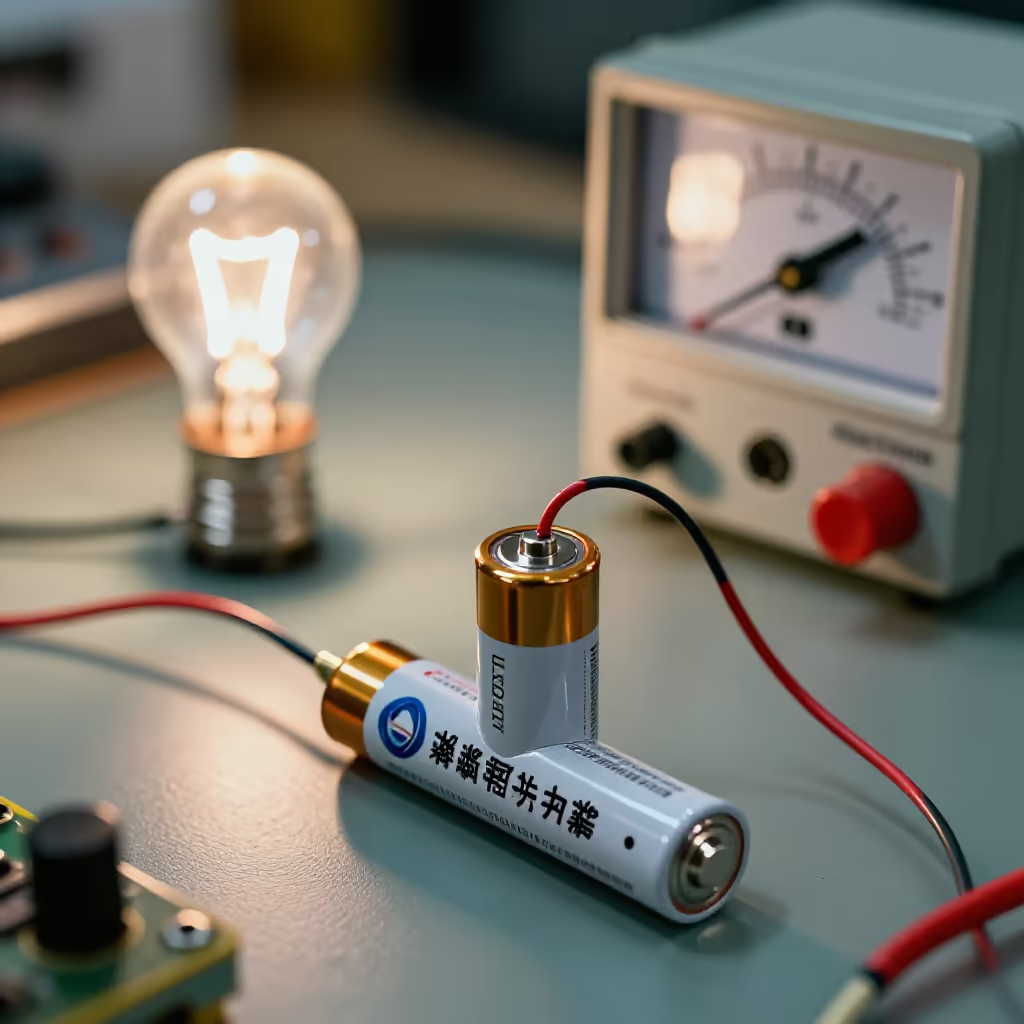
to discharge
To release stored electrical energy, as with a battery or capacitor.
Wenn du das Licht anlässt, wird sich die Autobatterie schnell entladen.
If you leave the light on, the car battery will discharge quickly.

to erupt
When a pent-up strong emotion such as anger or tension suddenly and violently expresses itself.
Nach wochenlangem Stress entlud sich seine ganze Anspannung in einem Wutausbruch.
After weeks of stress, all his tension erupted in an outburst of anger.
The verb is made up of the prefix 'ent-' and the verb 'laden' (to load). The prefix 'ent-' here expresses a reversal or removal: you undo the loading.
Die Möbelpacker haben den ganzen Wagen entladen.
The movers unloaded the whole truck.
The meanings related to electricity and emotions are used reflexively: 'etwas entlädt sich' (something discharges/erupts). The meaning of unloading freight, however, is not reflexive: 'jemand entlädt etwas' (someone unloads something).
Der Akku meines Handys hat sich über Nacht vollständig entladen.
My phone battery completely discharged overnight.
In the literal meaning, the verb is often combined with means of transport and their cargo: 'einen LKW entladen' (to unload a truck), 'ein Schiff entladen' (to unload a ship), 'Waren entladen' (to unload goods), or 'Container entladen' (to unload containers).
Am Hafen wird gerade ein großes Containerschiff entladen.
A large container ship is currently being unloaded at the harbor.
When emotions 'sich entladen' (erupt), the preposition 'in' with the accusative is often used to describe the type of outburst.
Seine aufgestaute Wut entlud sich in einem lauten Schrei.
His pent-up anger erupted in a loud scream.
to omit / leave out
Auslassen and sich entladen can both be associated with strong negative feelings. When someone takes their anger out on an uninvolved person, they deliberately direct it at someone; when an emotion erupts, it tends to surface suddenly and intensely. The presence of an affected person or thing points to auslassen.

Nach dem stressigen Arbeitstag entlud sich seine Wut plötzlich in einem lauten Streit.
After a stressful day at work, his anger suddenly erupted in a loud argument.
Nach dem stressigen Arbeitstag ließ er seinen Ärger an seiner unbeteiligten Schwester aus.
After a stressful day at work, he took his anger out on his uninvolved sister.