

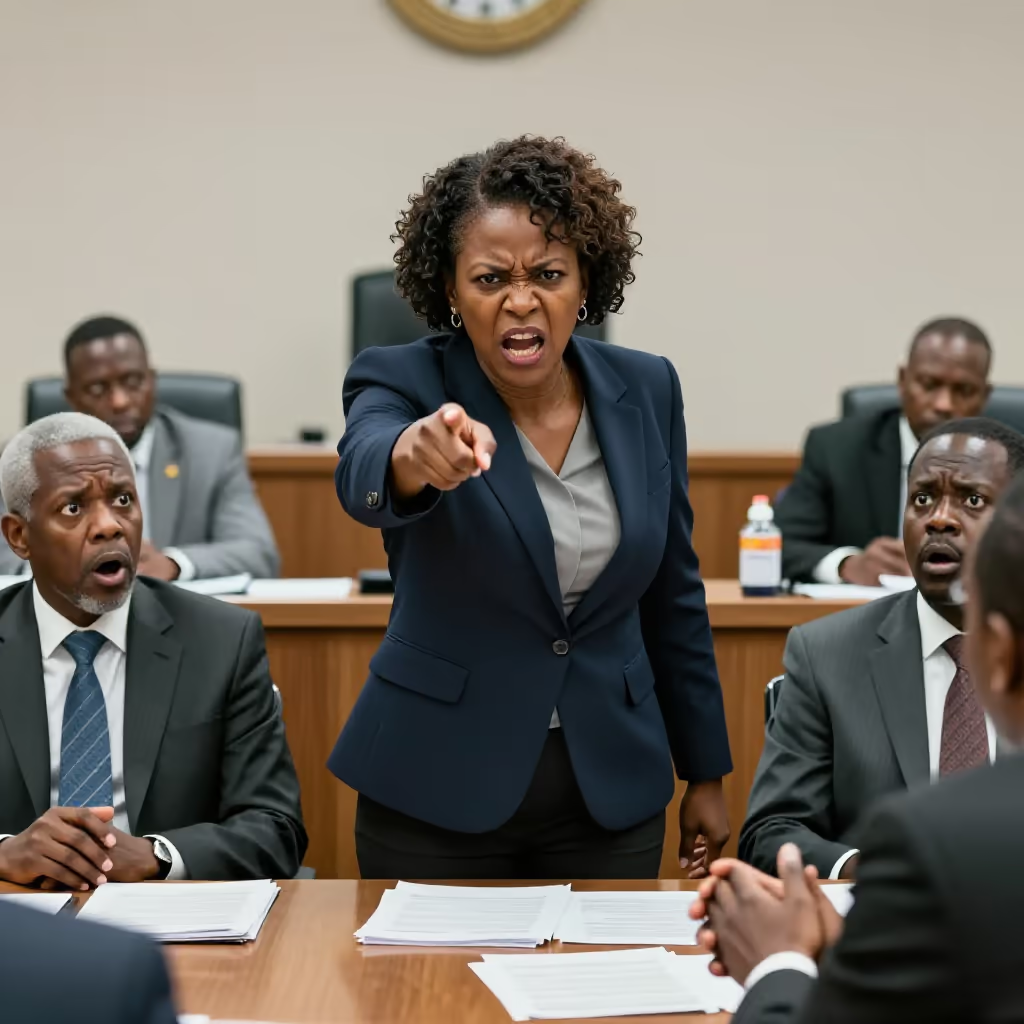
A strong feeling of indignation and anger about something perceived as unjust, immoral, or indecent.
example
Die Entscheidung des Politikers löste in der Bevölkerung große Entrüstung aus.
The politician's decision caused great outrage among the public.

Usage tips
Word family
'Die Entrüstung' (outrage) is the noun form of the verb 'sich entrüsten' (to become indignant). The ending '-ung' is often used to form nouns from verbs that describe a process or result.
EXAMPLE
Er konnte sich über die Ungerechtigkeit nur entrüsten.
He could only become indignant about the injustice.
Typical verbs
This feeling is often not actively “made,” but caused by an event. That is why 'Entrüstung' (outrage) often appears with verbs such as 'auslösen' (to trigger), 'hervorrufen' (to evoke), or 'sorgen für' (to cause).
EXAMPLE
Die plötzliche Preiserhöhung sorgte für große Entrüstung bei den Kunden.
The sudden price increase caused great outrage among customers.
Correct preposition
To indicate the reason for the outrage, the preposition 'über' (about/over) is used with the accusative.
EXAMPLE
Die Entrüstung über das Verhalten des Managers war im ganzen Team spürbar.
The outrage over the manager's behavior was noticeable throughout the whole team.
Compare with
near_synonym · confusable
Entrüstung vs Ärger
annoyance / trouble
'der Ärger' and 'die Entrüstung' both describe strong negative feelings. 'Ärger' is more general and can already arise when something is annoying, goes wrong, or seems unfair. 'Entrüstung' is stronger and fits especially when someone sees something as unjust, immoral, or indecent. So it is not just about anger, but also about outrage. Learners may confuse the words because outrage can be a kind of strong anger. For normal everyday situations, 'Ärger' usually fits; for moral outrage, 'Entrüstung' is more precise.
Entrüstung
Die Entrüstung war groß, als die Firma die unfairen Regeln bekannt gab.
There was great outrage when the company announced the unfair rules.
Ärger
Um Ärger zu vermeiden, ruft Lisa vor dem Termin noch einmal an.
To avoid trouble, Lisa calls again before the appointment.