


entzünden
to ignite
To set something on fire; to kindle a fire.
EXAMPLE
Er entzündete die Kerzen auf dem Geburtstagskuchen.
He ignited the candles on the birthday cake.
to ignite / to become inflamed / to spark
Loading your saved state.
to ignite
To set something on fire; to kindle a fire.
Er entzündete die Kerzen auf dem Geburtstagskuchen.
He ignited the candles on the birthday cake.

to become inflamed
To develop a painful, red, and often swollen reaction of the body to an injury or infection; to get an inflammation.
Die Wunde an seinem Knie hat sich leider entzündet.
Unfortunately, the wound on his knee has become inflamed.

to spark
In a figurative sense, to trigger or start an argument, debate, or strong feeling.
Die kontroverse Aussage des Politikers entzündete eine landesweite Diskussion.
The politician's controversial statement sparked a nationwide discussion.
'Entzünden' is an inseparable verb. The prefix 'ent-' remains firmly attached to the verb stem 'zünden' in all tenses and sentence constructions.
Sie entzündete das Kaminfeuer mit einem einzigen Streichholz.
She ignited the fireplace with a single match.
You can recognize the meaning from the grammar and the object. The reflexive form 'sich entzünden' (to become inflamed) refers to a medical inflammation. The non-reflexive form with a concrete object means 'anzünden' (to light / to set on fire), and with an abstract object it means 'auslösen' (to trigger).
Sein Finger hat sich entzündet. (medizinisch)
His finger has become inflamed. (medical)
In the meaning of 'anzünden' (to light / to set on fire), the verb is combined with things that can burn. Typical objects are 'eine Kerze' (a candle), 'ein Feuer' (a fire), 'ein Streichholz' (a match), or 'ein Funke' (a spark).
Zum Geburtstag haben wir 30 Kerzen auf dem Kuchen entzündet.
For the birthday, we lit 30 candles on the cake.
In the medical sense, 'entzünden' is always used reflexively ('sich entzünden'). The subject of the sentence is the body part that is affected.
Nach dem Insektenstich hat sich mein Arm stark entzündet.
After the insect bite, my arm became badly inflamed.
In the figurative meaning, the objects are always abstract and often negative. Typical nouns are 'ein Streit' (an argument), 'eine Debatte' (a debate), 'ein Konflikt' (a conflict), or also strong feelings such as 'Leidenschaft' (passion).
Diese Entscheidung könnte einen neuen Konflikt zwischen den Parteien entzünden.
This decision could spark a new conflict between the parties.
to light / ignite
Both verbs can mean causing something to burn. Anzünden is the usual choice in everyday language. Entzünden refers to the same action but sounds more formal or literary.
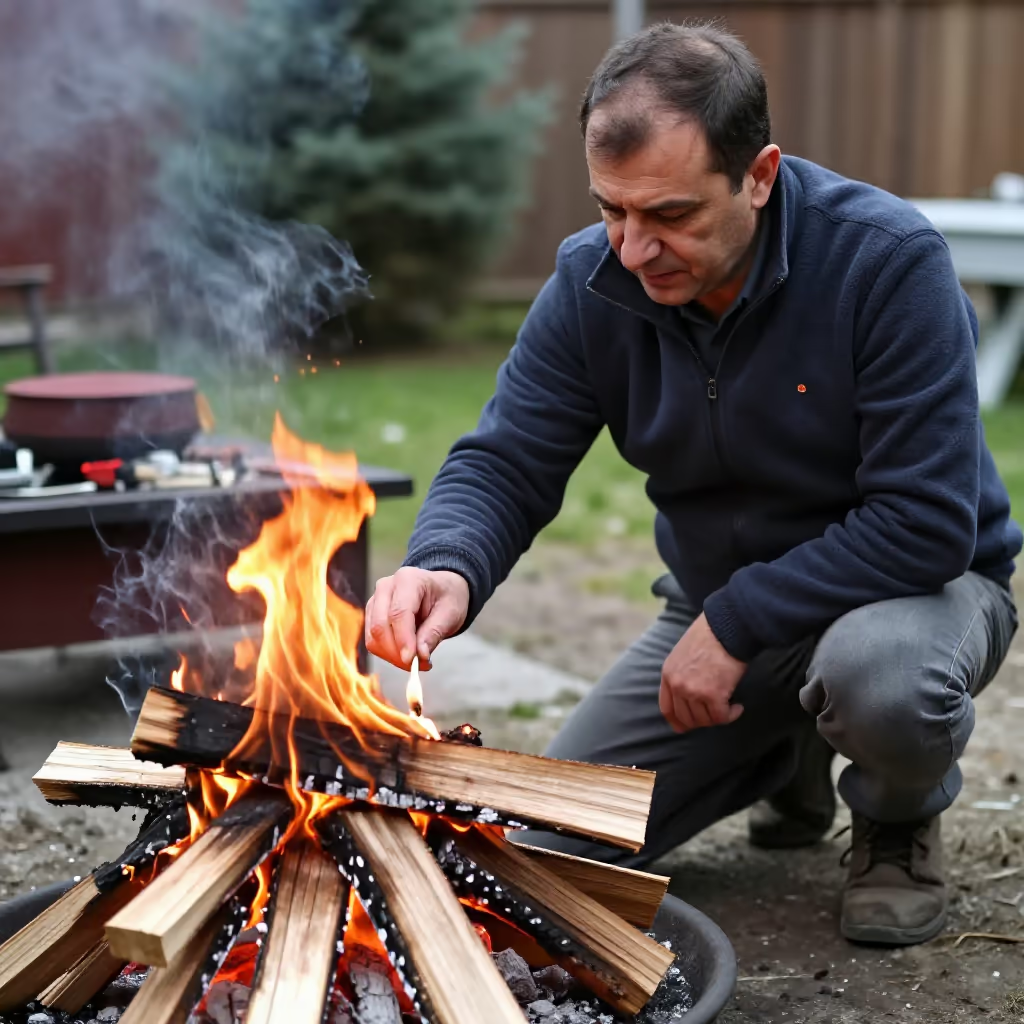
Bei Beginn der Zeremonie entzündet der Wächter die Fackel.
At the beginning of the ceremony, the guard lights the torch.
Am Abend zündet der Wächter die Fackel an.
In the evening, the guard lights the torch.