

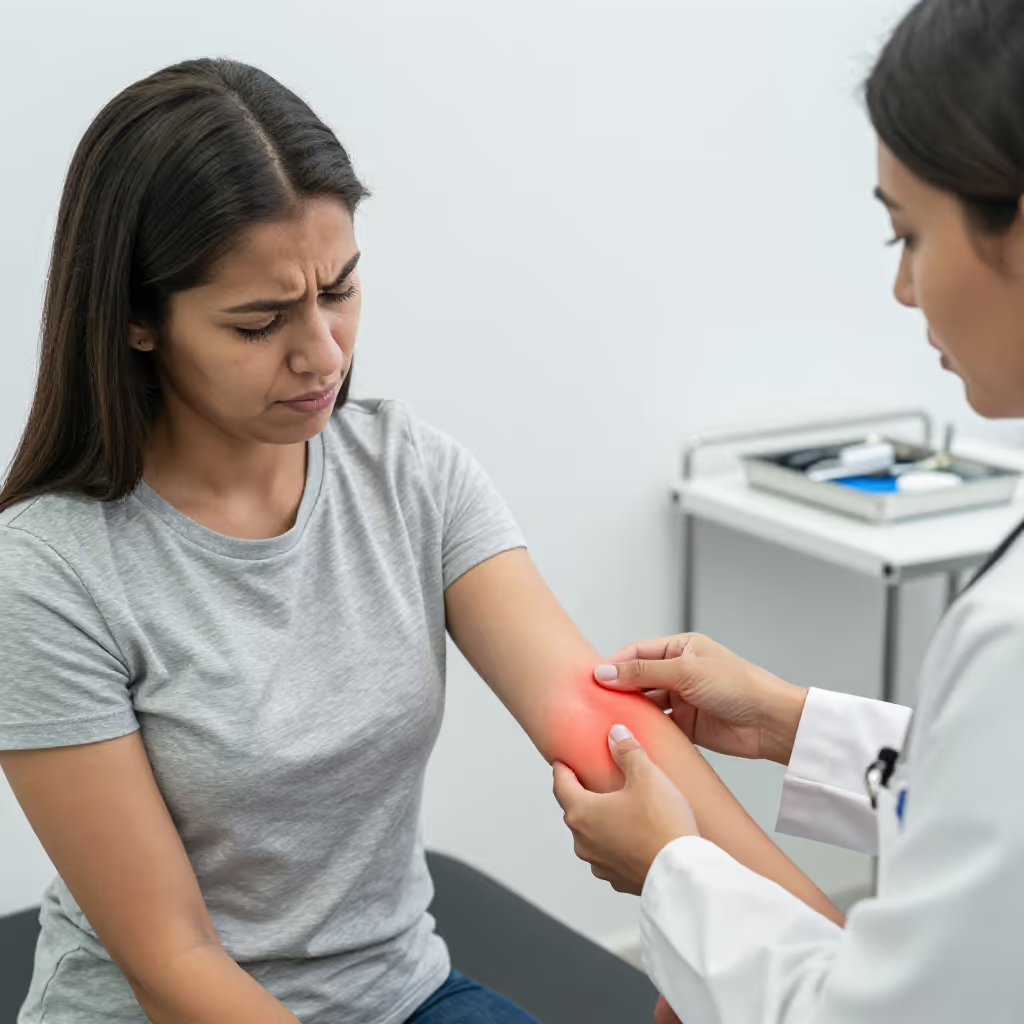
A reaction of the body to an injury or infection, typically noticeable through redness, swelling, pain, and warmth.
example
Der Arzt verschrieb eine Salbe gegen die Entzündung am Arm.
The doctor prescribed an ointment for the inflammation on his arm.

Usage tips
Word family
The noun 'die Entzündung' (inflammation) comes from the verb '(sich) entzünden' (to catch fire / to become inflamed), which means 'to start burning.' This fits well with the feeling of heat that often occurs with inflammation.
EXAMPLE
Die Wunde hat sich leider entzündet.
Unfortunately, the wound has become inflamed.
Correct preposition
The preposition depends on the location of the inflammation. You say 'eine Entzündung im Hals' (an inflammation in the throat) for something inside, but 'eine Entzündung am Finger' (an inflammation on the finger) or 'auf der Haut' (on the skin) for something on the surface.
EXAMPLE
Er hat eine schmerzhafte Entzündung im Knie.
He has a painful inflammation in his knee.
Typical collocations
Common verbs used with 'Entzündung' (inflammation) are 'eine Entzündung haben' (to have an inflammation), 'bekommen' (to get), or 'behandeln' (to treat). Adjectives are often 'akut' (acute), 'chronisch' (chronic), or 'schwer' (severe).
EXAMPLE
Eine chronische Entzündung sollte ärztlich behandelt werden.
A chronic inflammation should be treated by a doctor.
Compare with
confusable
Entzündung vs Infektion
infection
'Infektion' and 'Entzündung' both often occur in medical contexts and can happen together. An 'Infektion' occurs when pathogens such as viruses or bacteria enter the body and multiply. An 'Entzündung' is the body's reaction, for example with redness, swelling, pain, or warmth. Learners can easily confuse the words because an infection can trigger inflammation. But not every inflammation is an infection; for example, an injury can also cause inflammation.
Entzündung
Wegen der Entzündung ist mein Knie rot und geschwollen.
Because of the inflammation, my knee is red and swollen.
Infektion
Nach der Operation achtet die Ärztin genau auf Zeichen einer Infektion.
After the operation, the doctor watches carefully for signs of an infection.