


erben
to inherit
To receive money, property, or a title from a person after their death.
EXAMPLE
Sie hat von ihrer Tante ein kleines Vermögen geerbt.
She inherited a small fortune from her aunt.
to inherit
Loading your saved state.
to inherit
To receive money, property, or a title from a person after their death.
Sie hat von ihrer Tante ein kleines Vermögen geerbt.
She inherited a small fortune from her aunt.

to inherit
To receive a genetic trait, characteristic, or illness from one's parents or ancestors.
Er hat die lockigen Haare von seiner Mutter geerbt.
He inherited his curly hair from his mother.
The verb 'erben' (to inherit) follows a fixed pattern: the person who inherits is the subject. What is inherited is in the accusative, and the person it is inherited from is in the dative with the preposition 'von' (from).
Er hat das Haus (Akkusativ) von seinen Großeltern (Dativ) geerbt.
He inherited the house (accusative) from his grandparents (dative).
'Erben' (to inherit) belongs to a word family around the topic of inheritance. 'Das Erbe' is what one inherits (e.g., money or traditions), and 'der Erbe' or 'die Erbin' is the person who inherits.
Nach dem Tod des Königs trat der älteste Sohn das Erbe an.
After the king's death, the eldest son took over the inheritance.
The context makes it clear which meaning is intended. If it is about money, houses, or objects, the financial meaning is meant. If it is about appearance, character, or illnesses, the genetic meaning is meant.
Mein Bruder hat Omas alte Uhr geerbt.
My brother inherited Grandma's old watch.
to bequeath / pass on
Erben and vererben describe the same transfer from different perspectives. A person who receives property after someone’s death erbt it. A person who arranges for their own property to pass to someone else after their death vererbt it.
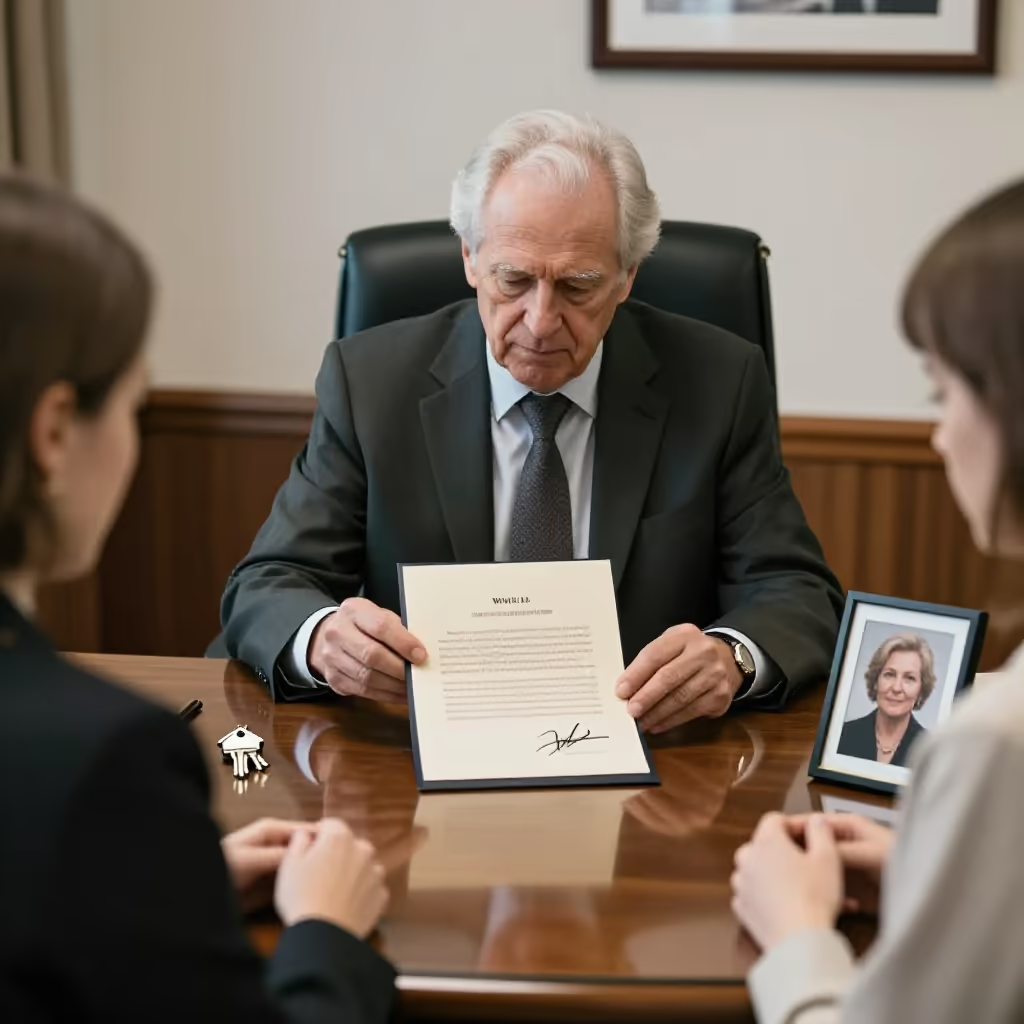
Lena erbt das Haus von ihrem Großvater.
Lena inherits the house from her grandfather.
Ihr Großvater vererbt Lena das Haus.
Her grandfather bequeaths the house to Lena.