

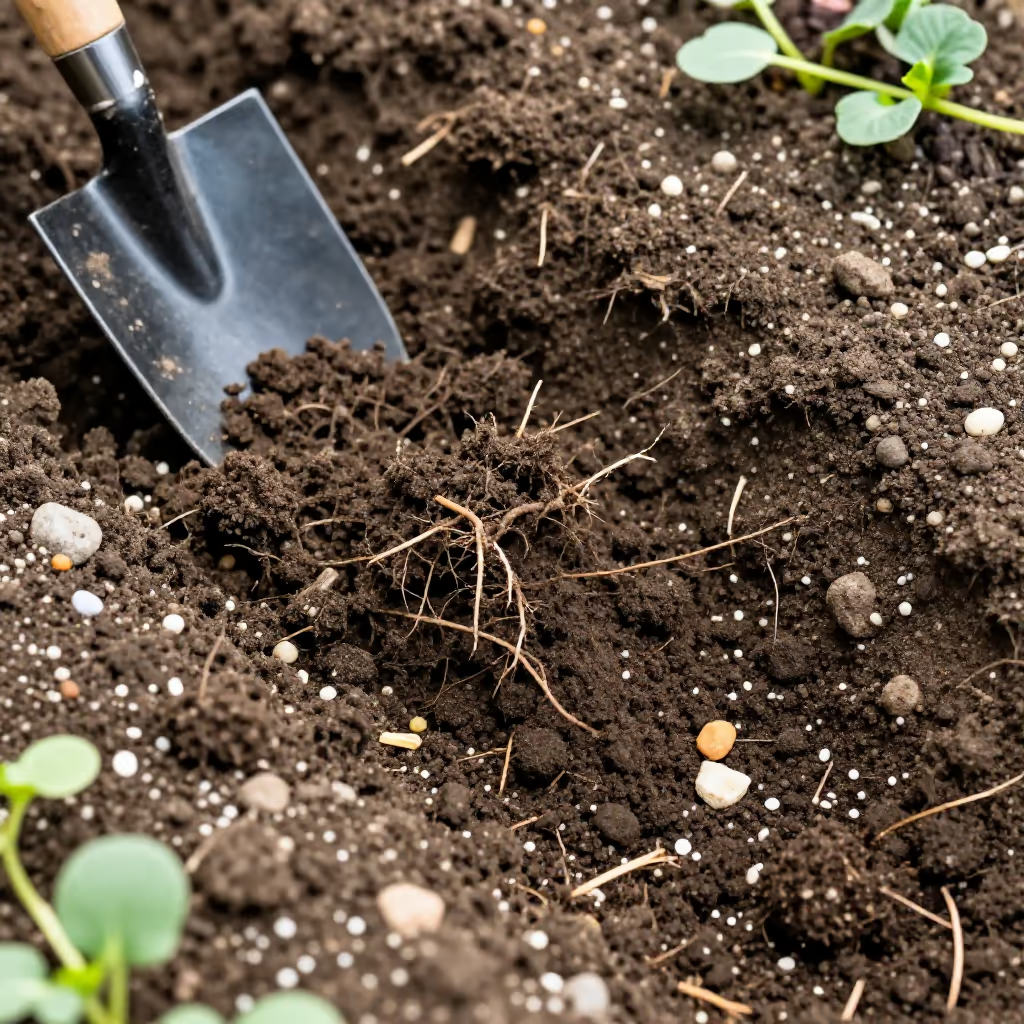
The top layer of the earth's surface, consisting of earth, sand, stones, and organic material; the ground.
example
Für das Fundament des Hauses musste viel Erdreich abgetragen werden.
A lot of soil had to be removed for the foundation of the house.
Usage tips
Word composition
The word is made up of 'Erde' (earth/soil) and 'Reich' (realm). Here, 'Reich' means something like 'Bereich' (area) or 'Gesamtheit' (totality). So 'Erdreich' (soil) is literally the 'area of the earth' beneath our feet.
EXAMPLE
Die Archäologen fanden im Erdreich alte Münzen.
The archaeologists found old coins in the soil.
Typical context
'Erdreich' (soil) is a typical word in contexts such as construction work, gardening, geology, or archaeology. It is often used when talking about earth as a material that is moved or examined.
EXAMPLE
Der Gärtner lockerte das Erdreich, bevor er die Blumen pflanzte.
The gardener loosened the soil before planting the flowers.
Typical verbs
Common verbs used in connection with 'Erdreich' (soil) describe what you do with it. The most important are 'Erdreich abtragen' (to remove soil), 'ausheben' (to dig out / excavate), and 'lockern' (to loosen).
EXAMPLE
Für den Pool mussten wir eine große Menge Erdreich ausheben.
For the pool, we had to excavate a large amount of soil.
Compare with
near_synonym
Erdreich vs Boden
floor / ground
'der Boden' and 'das Erdreich' can both refer to the soil in which plants grow. 'Boden' is the normal everyday word and is also used for many other surfaces. 'Erdreich' sounds more precise and a little more factual; it really refers to the layer made of earth, sand, stones, and similar material. When talking about gardens, construction work, or nature, 'Erdreich' can be very fitting. In simple everyday sentences, however, people often say 'Boden' instead.
Erdreich
Bei der Arbeit gräbt meine Schwester tief ins Erdreich, um die Leitung zu finden.
At work, my sister digs deep into the soil to find the pipe.