


der Boden
floor / ground
The surface on which you stand or walk, whether outdoors (ground) or in a building (floor).
EXAMPLE
Das Glas fiel auf den Boden und zerbrach.
The glass fell on the floor and broke.
floor / ground
Loading your saved state.
floor / ground
The surface on which you stand or walk, whether outdoors (ground) or in a building (floor).
Das Glas fiel auf den Boden und zerbrach.
The glass fell on the floor and broke.
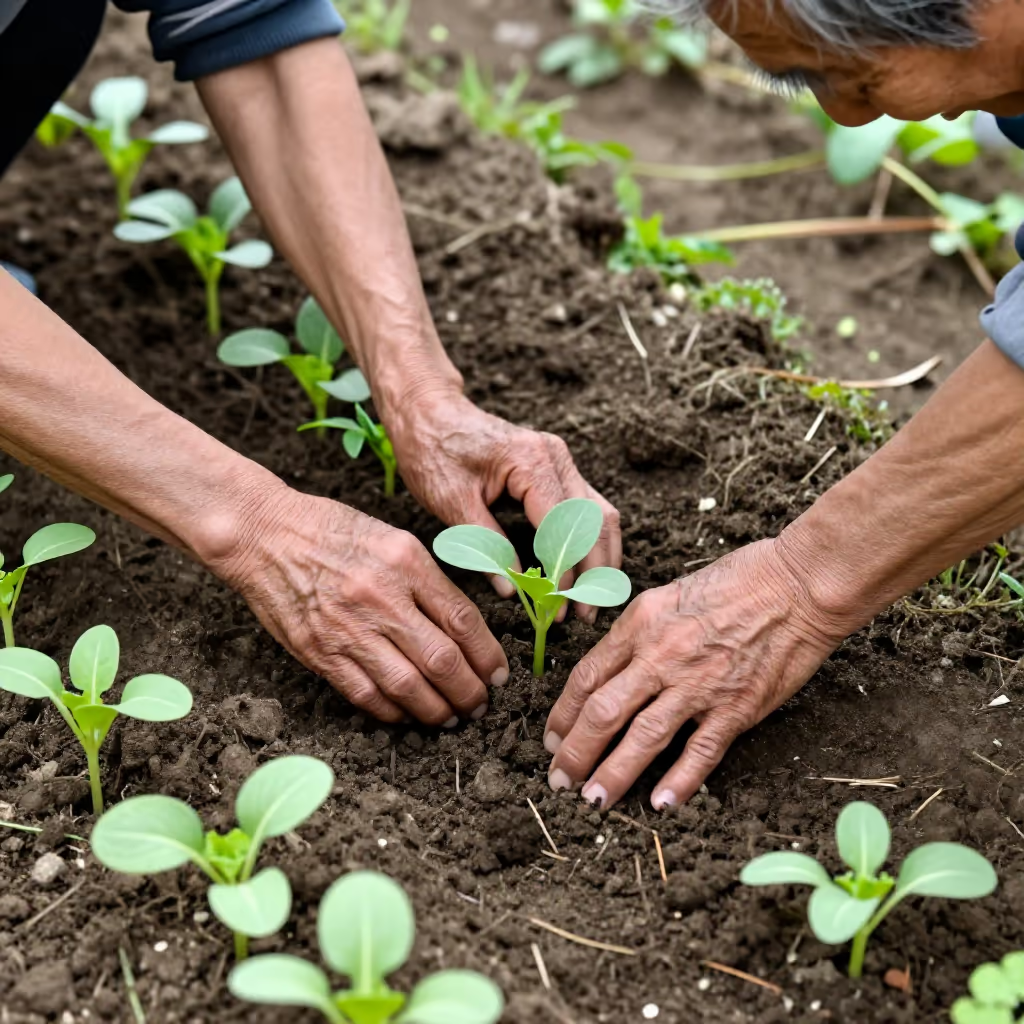
soil
The top layer of the earth's crust in which plants grow; the earth.
Der Boden in unserem Garten ist sehr lehmhaltig und fruchtbar.
The soil in our garden is very clayey and fertile.

bottom
The lowest part of a container, body of water, or room.
Am Boden des Sees konnte man alte Münzen erkennen.
At the bottom of the lake, you could make out old coins.
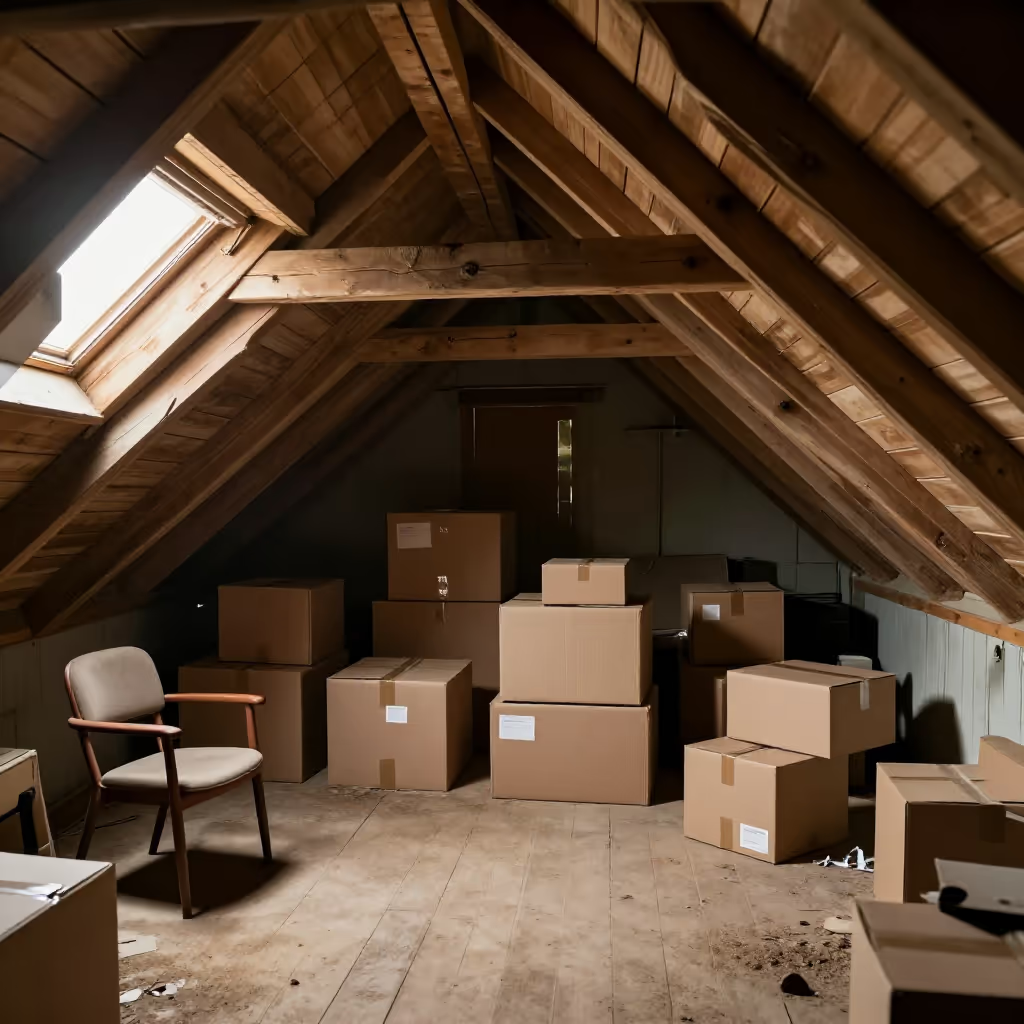
attic
The attic; the room directly under the roof of a house.
Die alten Weihnachtssachen lagern bei uns auf dem Boden.
We store the old Christmas things in the attic.

to be devastated
To be emotionally completely at the end of one's rope, very unhappy, or desperate.
Nach der Trennung war sie wochenlang am Boden zerstört.
After the breakup, she was devastated for weeks.

to lose one's footing
To lose control, security, or stability in life.
Als er seinen Job und seine Wohnung verlor, hatte er das Gefühl, den Boden unter den Füßen zu verlieren.
When he lost his job and his apartment, he felt as if he were losing his footing.
Pay attention to the preposition and the case. 'Auf dem Boden' (on the floor/ground; dative) describes a location. 'Auf den Boden' (onto the floor/ground; accusative) describes movement toward it.
Die Katze schläft auf dem Boden in der Sonne.
The cat is sleeping on the floor in the sun.
'Boden' (floor/ground) is a very productive word and part of many compounds. When you see '-boden' at the end of a word, it often has to do with a surface, the ground, or a level, e.g. 'Fußboden' (floor), 'Meeresboden' (seabed), 'Dachboden' (attic).
Der Holzboden im Wohnzimmer ist neu.
The wooden floor in the living room is new.
When 'Boden' (soil) means earth, it is often described with adjectives such as 'fruchtbar' (fertile), 'sandig' (sandy), or 'trocken' (dry). Plants 'wachsen im Boden' (grow in the soil).
Für diese Pflanzen brauchen Sie einen sehr fruchtbaren Boden.
For these plants, you need very fertile soil.
In the combination 'Boden + von/des' (bottom of) with a container or body of water, it always means the lowest part. Typical phrases are 'der Boden des Glases' (the bottom of the glass) or 'der Boden des Sees' (the bottom of the lake).
Am Boden der Tasse war noch Kaffeesatz.
There were still coffee grounds at the bottom of the cup.
The use of 'der Boden' (the attic) for the attic is common especially in northern and central Germany. In other regions, especially in the south, 'der Dachboden' (the attic) is more common.
Die alten Kisten stehen oben auf dem Boden.
The old boxes are upstairs in the attic.
The idiom 'am Boden zerstört sein' (to be devastated) is a fixed expression and means that someone is emotionally very down. The person who feels this way is the subject of the sentence.
Nach der schlechten Nachricht war er tagelang am Boden zerstört.
After the bad news, he was devastated for days.
reason / ground
When referring to a body of water, Grund and Boden can both designate the same lower surface. Grund is the usual term for the lowest area; Boden places more emphasis on the concrete surface or its condition. Use Grund for the location, and often Boden for the material or structure.

Der Boden des Sees ist an dieser Stelle sandig.
The bottom of the lake is sandy at this point.
Auf dem Grund des Sees liegt ein altes Ruder.
An old oar is lying on the bottom of the lake.