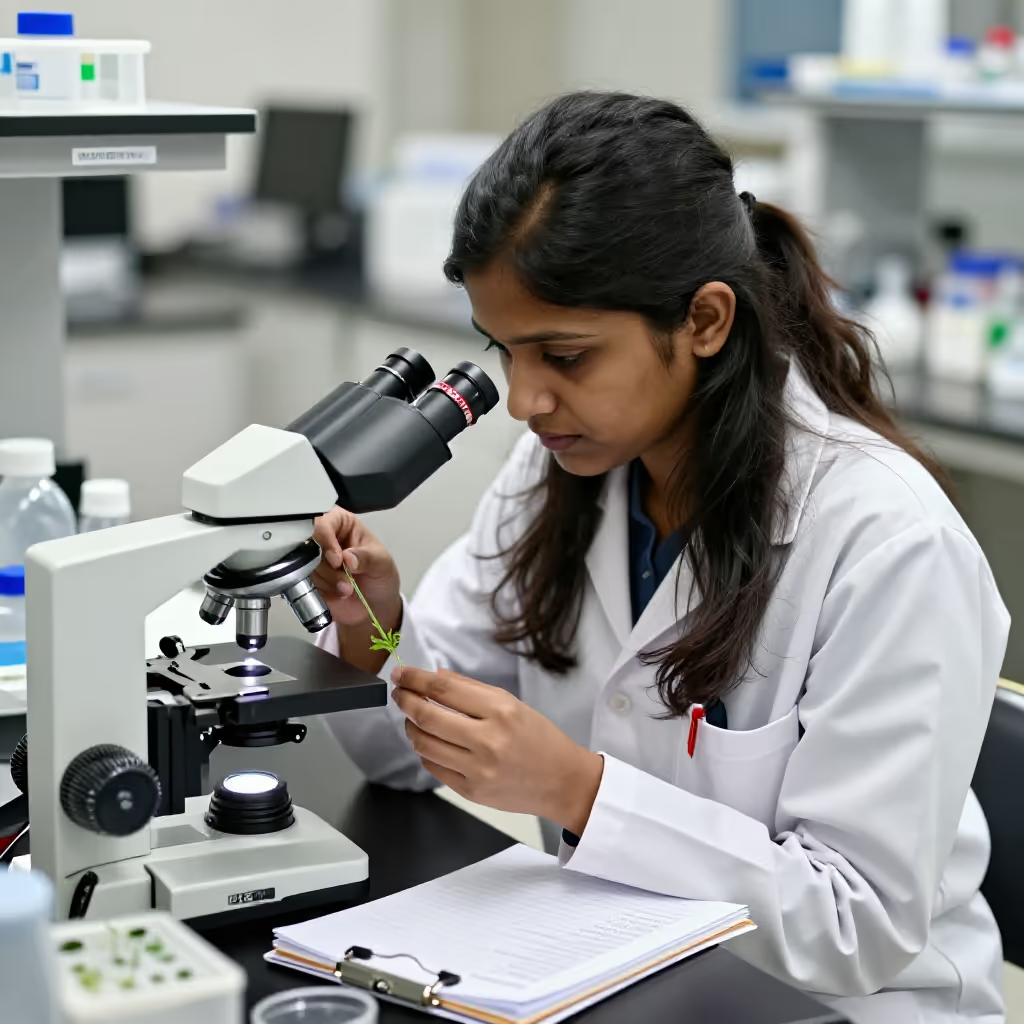
To examine something systematically and scientifically in order to gain new knowledge about it.
example
Ein Team von Biologen erforscht das Verhalten von Walen in der Arktis.
A team of biologists is researching the behavior of whales in the Arctic.
Usage tips
Word structure
The verb is made up of the prefix 'er-' and the verb 'forschen' (to research). While 'forschen' describes the process of investigation, 'erforschen' (to research/explore) often emphasizes the goal of achieving a complete result or comprehensive findings.
EXAMPLE
Die Wissenschaftler forschen seit Jahren an diesem Thema, aber sie haben es noch nicht vollständig erforscht.
The scientists have been researching this topic for years, but they have not fully explored it yet.
Inseparable verb
'Erforschen' (to research/explore) is an inseparable verb. The prefix 'er-' remains firmly attached to the verb in all sentence forms and tenses and is never placed at the end of the sentence.
EXAMPLE
Er erforschte die Tiefsee.
He explored the deep sea.
Typical collocations
In a scientific context, 'erforschen' (to research) is often used with abstract concepts. Typical objects are: the causes, a phenomenon, the history, the possibilities, or the effects of something.
EXAMPLE
Ein Historiker erforscht die Auswirkungen der industriellen Revolution.
A historian is researching the effects of the Industrial Revolution.
Typical collocations
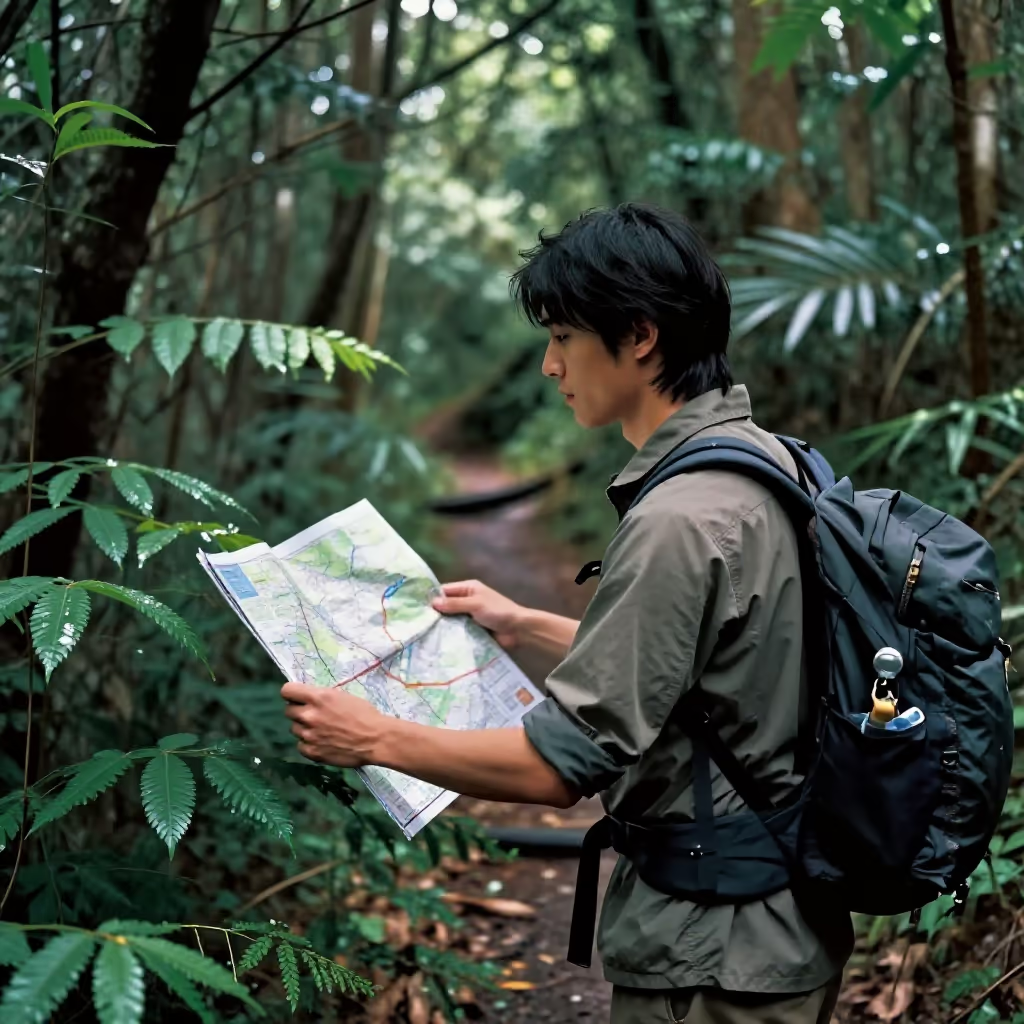
When it is about exploring places, 'erforschen' (to explore) is combined with geographic or spatial destinations. Common objects are: a cave, an island, an area, a planet, or an old building.
EXAMPLE
Die Kinder liebten es, den geheimnisvollen Garten hinter dem Haus zu erforschen.
The children loved exploring the mysterious garden behind the house.
Compare with
near_synonym · confusable
erforschen vs entdecken
to discover
'entdecken' and 'erforschen' both have to do with something new or unknown. 'entdecken' means the moment when you find or notice something that was previously unknown. 'erforschen' goes further: you examine something closely and often systematically in order to learn more about it. This can be scientific, or it can happen with an unknown place. Learners may confuse the words because both involve gaining new knowledge. Practically speaking: first you discover something, and afterward you can research or explore it.
erforschen
Die Wissenschaftler erforschen, warum sich das Klima in der Region verändert.
The scientists are researching why the climate in the region is changing.
entdecken
Auf der Wanderung entdecken wir einen kleinen See hinter den Bäumen.
On the hike, we discover a small lake behind the trees.