


erhitzen
to heat
To make something hot or warmer by adding heat.
EXAMPLE
Für das Rezept müssen Sie zuerst das Öl in der Pfanne erhitzen.
For the recipe, you must first heat the oil in the pan.
to heat
Loading your saved state.
to heat
To make something hot or warmer by adding heat.
Für das Rezept müssen Sie zuerst das Öl in der Pfanne erhitzen.
For the recipe, you must first heat the oil in the pan.

to get heated
To become emotional and agitated in a discussion or argument.
Die Gemüter erhitzten sich, als es um die Verteilung der Kosten ging.
Tempers got heated when it came to the distribution of the costs.
'Erhitzen' (to heat) is an inseparable verb. The prefix 'er-' always remains attached to the stem. It often expresses the beginning of a process or the reaching of a state—here: becoming hot.
Sie erhitzte die Milch für ihren Kakao.
She heated the milk for her cocoa.
The figurative, emotional meaning is always used reflexively: 'sich erhitzen' (to get heated). The subject is often an abstract noun such as 'die Gemüter' (tempers) or 'die Debatte' (the debate).
Während der politischen Diskussion erhitzten sich die Gemüter schnell.
During the political discussion, tempers quickly got heated.
The literal meaning of 'erhitzen' (to heat) is especially common in recipes and cooking instructions. Typical objects are ingredients such as 'Öl' (oil), 'Wasser' (water), 'Milch' (milk), or 'Butter' (butter).
Erhitzen Sie das Öl in einer großen Pfanne bei mittlerer Temperatur.
Heat the oil in a large pan over medium heat.
to heat / speed
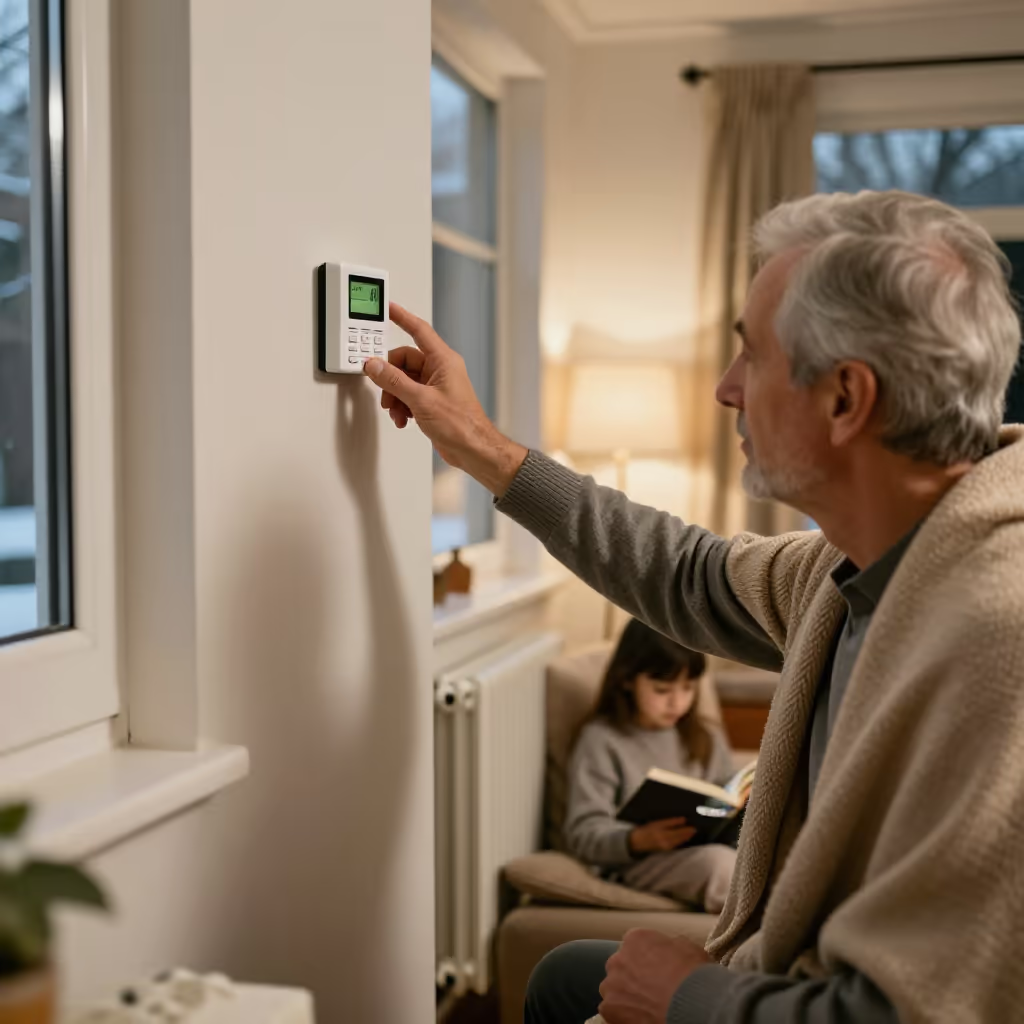
Heizen can be used with water when it is warmed by a heating system. Erhitzen describes more generally adding heat to water so that it becomes warmer or hot. With a stove or another direct heat source, erhitzen is therefore usually the better choice.
Auf dem Herd erhitze ich das Wasser für den Tee.
I heat the water for the tea on the stove.
Die Heizungsanlage heizt das Wasser für die Wohnungen auf eine angenehme Temperatur.
The heating system heats the water for the apartments to a comfortable temperature.