

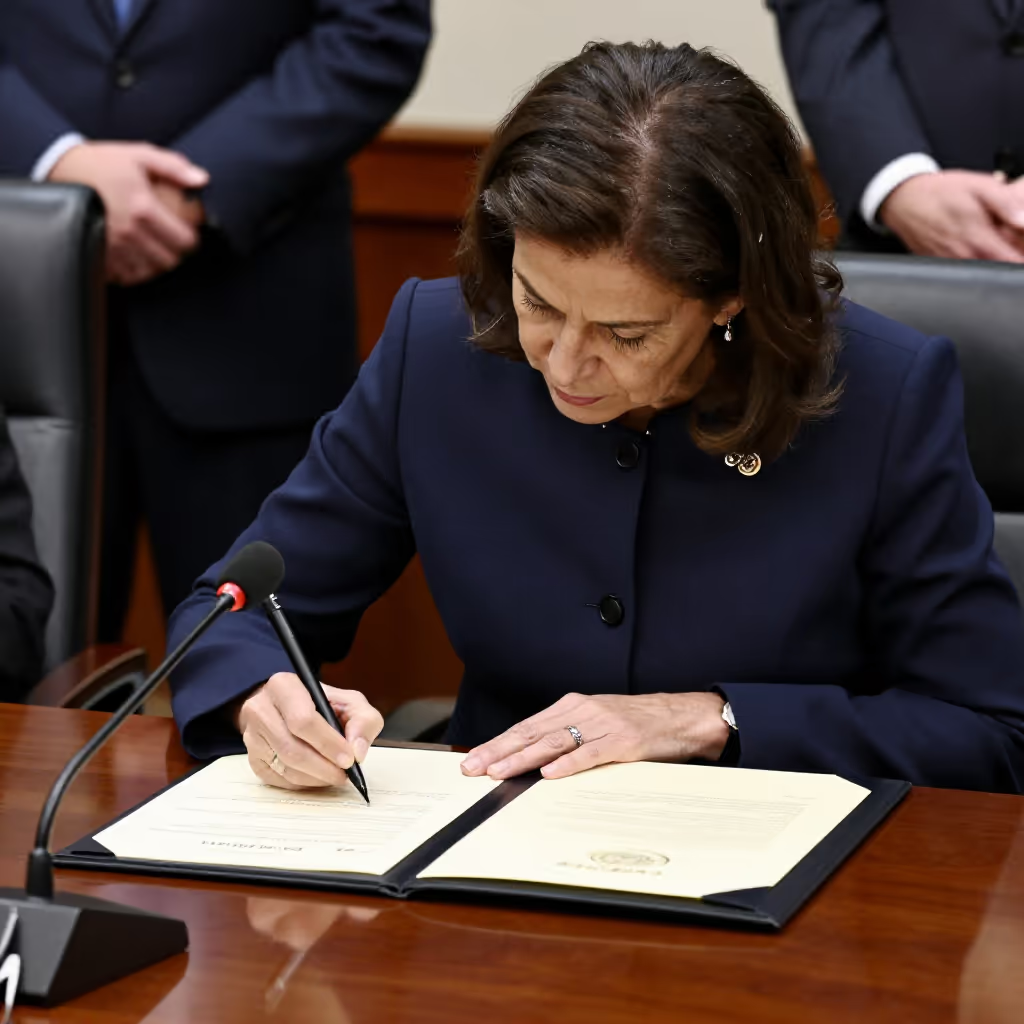
erlassen
to enact
To officially announce and put into force a law, regulation, or order.
EXAMPLE
Die Regierung hat ein neues Gesetz zum Klimaschutz erlassen.
The government enacted a new law on climate protection.
to enact / waive
Loading your saved state.
to enact
To officially announce and put into force a law, regulation, or order.
Die Regierung hat ein neues Gesetz zum Klimaschutz erlassen.
The government enacted a new law on climate protection.

to waive
To forgive someone a debt, punishment, or obligation and refrain from requiring its fulfillment.
Wegen guter Führung wurde dem Gefangenen ein Teil seiner Haftstrafe erlassen.
Because of good behavior, part of the prisoner's sentence was waived.
The verb 'erlassen' (to enact/to waive) is inseparable. The prefix 'er-' remains firmly attached to the stem 'lassen' (to let) in all sentence forms and is never placed at the end of the sentence.
Das Gericht erließ ein strenges Urteil.
The court issued a strict judgment.
The context reveals the meaning: if the object is a law, rule, or order, 'erlassen' (to enact) means to officially put it into force. If it is about a debt, punishment, or fee, it means 'to waive'.
Das Parlament hat ein neues Steuergesetz erlassen.
Parliament enacted a new tax law.
In this meaning, 'erlassen' (to enact) is typically used by governmental or official institutions. Common objects are 'ein Gesetz' (a law), 'eine Verordnung' (a regulation), 'ein Dekret' (a decree), or 'ein Befehl' (an order).
Der Bürgermeister erließ eine neue Parkverordnung für die Innenstadt.
The mayor issued a new parking regulation for the city center.
When someone is forgiven a debt or punishment with 'erlassen' (to waive), that person is in the dative. The thing that is waived is in the accusative.
Die Bank hat ihm die restlichen Schulden erlassen.
The bank waived his remaining debts.
to assign / to forgive / to miss
Here, vergeben means no longer holding a person's mistake or bad deed against them. erlassen, by contrast, applies to a debt, punishment, or obligation that is formally waived. Use vergeben for personal reconciliation and erlassen for waiving a claim.

Wegen seiner besonderen Situation erlässt die Behörde ihm einen Teil der Strafe.
Because of his special circumstances, the authorities waive part of his punishment.
Nach seiner ehrlichen Entschuldigung vergibt sie ihm den schweren Fehler.
After his sincere apology, she forgives him for the serious mistake.