


verfügen über
to have at one's disposal
To possess something or have it available; to have control over or access to something.
Das Hotel verfügt über einen Swimmingpool und eine Sauna.
The hotel has a swimming pool and a sauna at its disposal.

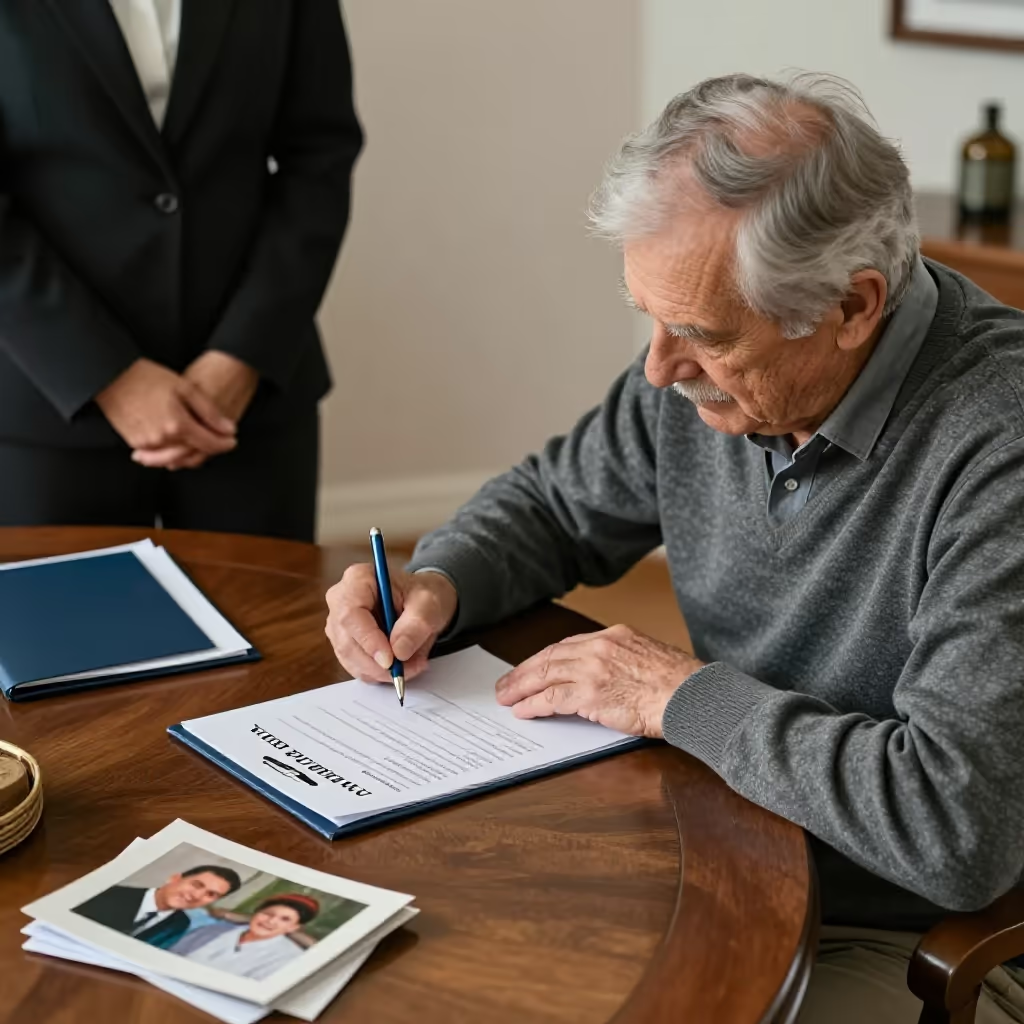
to have at one's disposal / decree
Loading your saved state.
to have at one's disposal
To possess something or have it available; to have control over or access to something.
Das Hotel verfügt über einen Swimmingpool und eine Sauna.
The hotel has a swimming pool and a sauna at its disposal.

'Verfügen' (to have at one's disposal / to decree) is an inseparable verb. The prefix 'ver-' remains firmly attached to the verb 'fügen' in all tenses and sentence positions.
Er verfügte über großes Wissen in diesem Bereich.
He had extensive knowledge in this field.
In the most common meaning 'besitzen' (to possess), 'verfügen' is always used with the preposition 'über' (over/about) and the accusative. The structure is: Jemand verfügt über etwas (someone has something at their disposal).
Der Konferenzraum verfügt über die neueste Technik.
The conference room has the latest technology at its disposal.
'Verfügen' (to have at one's disposal / to decree) is a formal word. In particular, the meanings 'anordnen' (to order/decree) and 'im Testament festlegen' (to stipulate in a will) are limited to administrative and legal contexts.
Das Ministerium verfügte neue Sicherheitsrichtlinien.
The ministry decreed new safety guidelines.
The preposition 'über' is a clear signal for the meaning 'besitzen' (to possess). If the preposition is missing, it is usually about a formal order or a testamentary provision.
Unser Unternehmen verfügt über weltweite Kontakte.
Our company has contacts around the world.
to have
'haben' and 'verfügen über' can both express that someone possesses something or can use it. 'haben' is the normal, simple word and fits almost always in everyday language. 'verfügen über' sounds more formal and emphasizes that someone has access to something or can use something for a purpose, for example money, experience, information, or rooms. Learners may confuse the words because their meanings are similar. The grammar is also important: you say 'etwas haben' (to have something), but 'über etwas verfügen' (to have something at one's disposal).

Im Büro verfügt sie über alle wichtigen Unterlagen.
At the office, she has all the important documents at her disposal.
Mein Vater hat ein kleines Auto für die Fahrt zur Arbeit.
My father has a small car for the commute to work.