

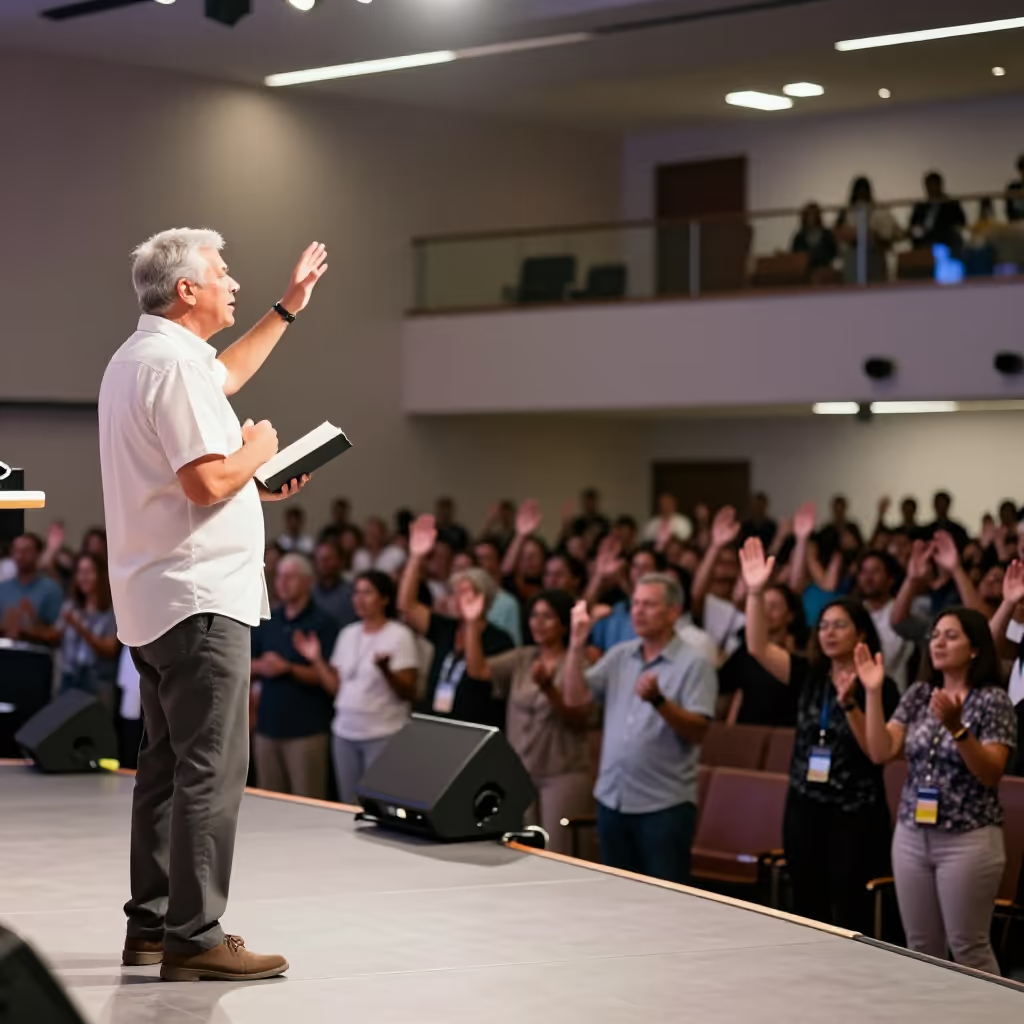
Refers to a theological movement within Protestantism that strongly emphasizes personal conversion ('Wiedergeburt' — being born again), the literal inspiration of the Bible, and the necessity of missionary work (evangelization). The term should not be equated with 'evangelisch' (Protestant).
example
Die evangelikale Bewegung hat besonders in den USA viele Anhänger und großen gesellschaftlichen Einfluss.
The evangelical movement has many followers and significant social influence, especially in the United States.

Usage tips
Common mistake
A common mistake is to use 'evangelikal' for all Protestant Christians or churches. However, the word describes only a specific, often conservative movement within Protestantism, not the entire group.
EXAMPLE
Diese Gemeinde folgt einer streng evangelikalen Lehre.
This congregation follows a strictly evangelical doctrine.
Word family
The word 'evangelikal' is derived from 'das Evangelium' (the good news, the central message of Christianity). This emphasizes the movement's focus on the Bible and missionary work, that is, the spreading of the Gospel.
EXAMPLE
Für evangelikale Christen ist die persönliche Lektüre der Bibel sehr wichtig.
For evangelical Christians, personal reading of the Bible is very important.
Typical collocations
'Evangelikal' is often used with nouns such as 'Bewegung' (movement), 'Christen' (Christians), 'Gemeinde' (congregation), or 'Freikirche' (free church) to characterize these groups more precisely.
EXAMPLE
Die evangelikale Bewegung ist weltweit stark gewachsen.
The evangelical movement has grown strongly worldwide.
Compare with
confusable
evangelikal vs evangelisch
Protestant / evangelical
'evangelisch' and 'evangelikal' look similar and both have to do with Protestantism, but they do not mean the same thing. 'evangelisch' usually means the Protestant denomination or the Protestant church. 'evangelikal' describes a specific theological movement within Protestantism. Personal conversion ('Wiedergeburt', or being born again), a very strong focus on the Bible, and mission are especially important there. The risk of confusion is high because the words sound almost identical. But be careful: an evangelisch person is not automatically evangelikal.
evangelikal
Beim Gespräch erzählt sie, dass ihre Gemeinde evangelikal geprägt ist.
During the conversation, she says that her congregation is evangelical in character.
evangelisch
Zu Hause lernen die Kinder gerade, was evangelisch und katholisch bedeutet.
At home, the children are learning what 'evangelisch' and 'katholisch' mean.