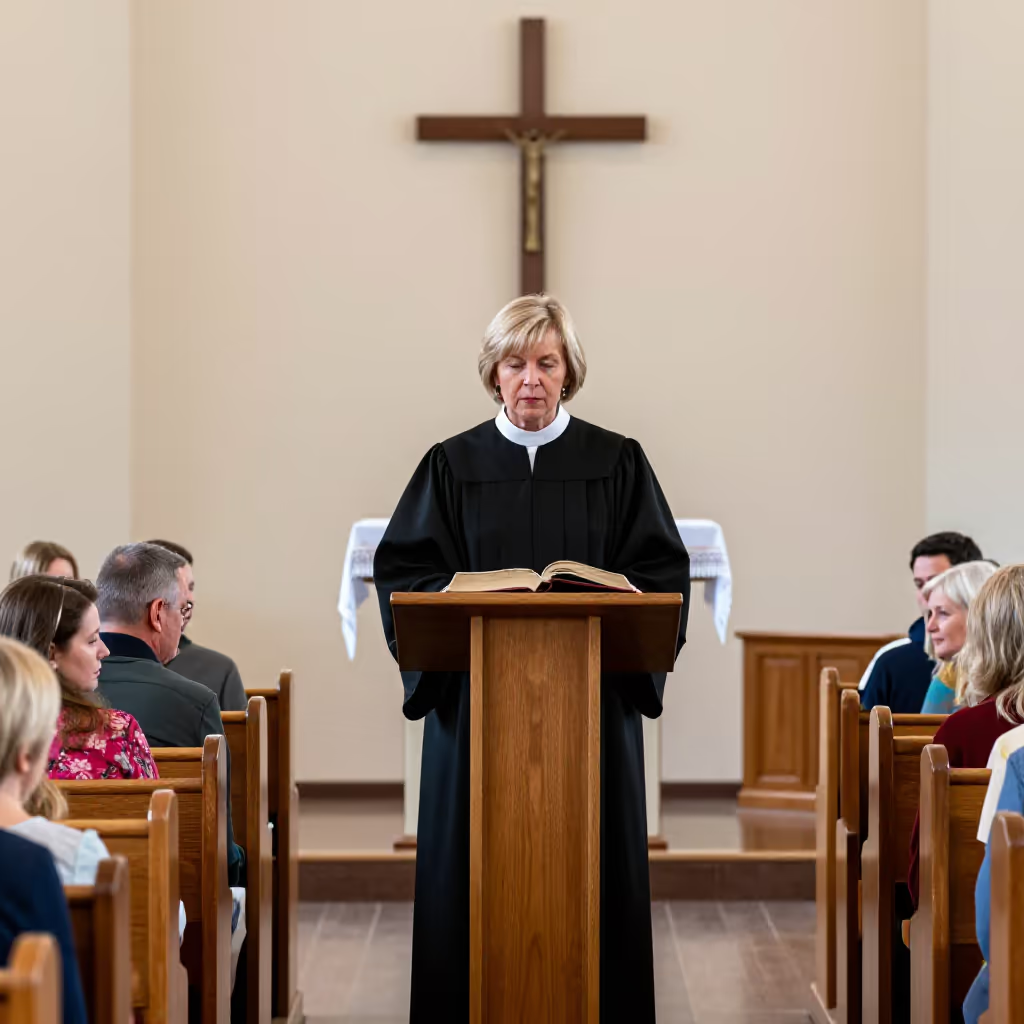
Relating to the Protestant denomination, which goes back to Martin Luther's Reformation and is one of the two major Christian churches in Germany.
example
Er ist Pfarrer in einer evangelischen Kirchengemeinde.
He is a pastor in a Protestant parish.

Usage tips
Word family
The word 'evangelisch' (Protestant/evangelical) is derived from 'das Evangelium' (the Gospel), which means 'the good news' and refers to the four Gospels in the New Testament of the Bible. This origin explains the religious meaning of the word.
EXAMPLE
Die Predigt basierte auf einem Text aus dem Evangelium.
The sermon was based on a text from the Gospel.
Typical collocations
In everyday language, 'evangelisch' (Protestant) usually refers to the Protestant church. Common combinations are 'die evangelische Kirche' (the Protestant church), 'der evangelische Glaube' (the Protestant faith), 'ein evangelischer Feiertag' (a Protestant holiday), or 'evangelisch getauft sein' (to be baptized Protestant).
EXAMPLE
Der Reformationstag ist in einigen Bundesländern ein evangelischer Feiertag.
Reformation Day is a Protestant holiday in some German federal states.
Predicative use
To express one's religious affiliation, the adjective is used predicatively. The question is often 'Sind Sie evangelisch oder katholisch?' (Are you Protestant or Catholic?), and the answer is 'Ich bin evangelisch.' (I am Protestant.)
EXAMPLE
Meine Nachbarin ist evangelisch und geht jeden Sonntag in die Kirche.
My neighbor is Protestant and goes to church every Sunday.
Context clue
The meaning 'relating to the Gospels' is less common and is found mainly in theological or philosophical texts. It is often combined with words such as 'Lehre' (teaching), 'Ethik' (ethics), or 'Prinzip' (principle).
EXAMPLE
Die evangelische Ethik betont die persönliche Verantwortung des Einzelnen.
Evangelical ethics emphasizes the personal responsibility of the individual.
Compare with
antonym · confusable
evangelisch vs katholisch
Catholic
'katholisch' and 'evangelisch' refer to two different Christian denominations. In Germany, they often stand side by side as opposites: 'katholisch' belongs to the Roman Catholic Church, while 'evangelisch' belongs to the Protestant church. They can be confused because both have to do with Christianity, churches, holidays, and religious education. When you are speaking precisely about belonging to a church, you need to choose the right word.
evangelisch
Ich besuche den evangelischen Religionsunterricht, weil meine Familie zu dieser Kirche gehört.
I attend Protestant religious education because my family belongs to that church.
katholisch
Meine Großmutter ist katholisch und geht sonntags oft in die Messe.
My grandmother is Catholic and often goes to Mass on Sundays.