

explodieren
to explode
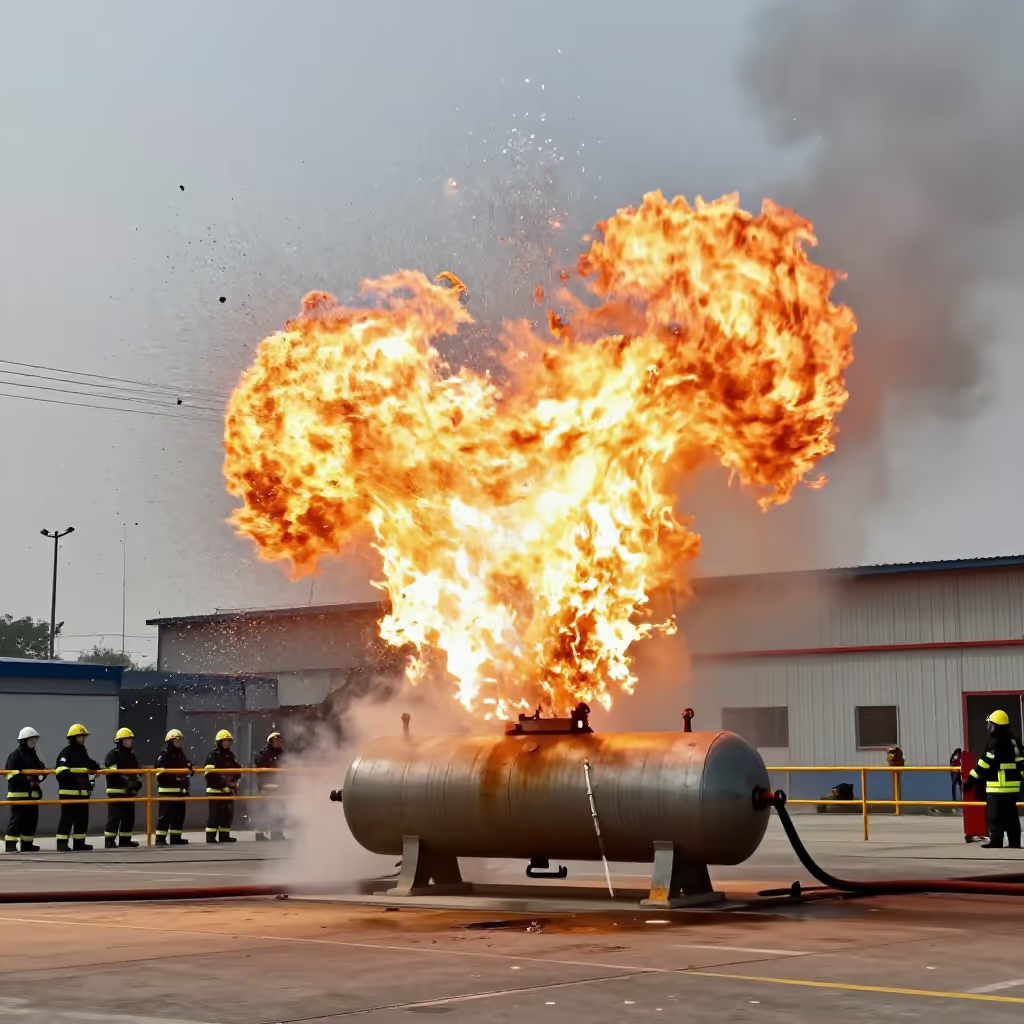
To burst suddenly and with great force due to a chemical reaction or high internal pressure.
EXAMPLE
Die alte Fabrikhalle ist bei dem Brand explodiert.
The old factory building exploded during the fire.
to explode
Loading your saved state.
to explode
To burst suddenly and with great force due to a chemical reaction or high internal pressure.
Die alte Fabrikhalle ist bei dem Brand explodiert.
The old factory building exploded during the fire.

to explode
Figuratively, to increase very quickly and sharply, as with numbers, costs, quantities, or emotions.
Seit der Ankündigung sind die Ticketpreise für das Konzert explodiert.
Since the announcement, ticket prices for the concert have exploded.

to explode
Figuratively, to have a sudden and intense outburst of anger.
Als er die schlechte Nachricht hörte, ist er vor Wut fast explodiert.
When he heard the bad news, he almost exploded with anger.
The perfect tense of 'explodieren' (to explode) is always formed with 'sein', because it describes a sudden change of state. So it is 'ist explodiert', not 'hat explodiert'.
Die Gasflasche ist wegen der großen Hitze explodiert.
The gas cylinder exploded because of the intense heat.
You can recognize the meaning from the subject: physical objects (bomb, engine) explode literally. Abstract things (prices, costs) rise sharply. People explode with anger or laughter.
Die Nachfrage nach den neuen Konsolen ist förmlich explodiert.
Demand for the new consoles has practically exploded.
In the figurative sense, 'explodieren' (to explode) is often used for economic or statistical data. Typical combinations are 'die Kosten explodieren' (costs explode), 'die Preise explodieren' (prices explode), or 'die Zahlen explodieren' (the numbers explode).
Nach der Krise sind die Energiekosten für viele Haushalte explodiert.
After the crisis, energy costs exploded for many households.
When a person 'explodiert' (explodes), the triggering emotion is indicated with the preposition 'vor' (+ dative). The most common phrases are 'vor Wut explodieren' (to explode with anger) or, less commonly, 'vor Lachen explodieren' (to explode with laughter).
Mein Chef ist heute Morgen vor Wut explodiert, weil der Bericht nicht fertig war.
My boss exploded with anger this morning because the report wasn't finished.
to burst
„Explodieren“ and „platzen“ can both describe an object suddenly bursting apart under pressure. „Explodieren“ usually emphasizes the great force and violent release of energy, while „platzen“ focuses more on the covering tearing open or bursting apart. „Platzen“ therefore often fits a tire or balloon, while „explodieren“ is more suitable for a violent explosion.

Der alte Tank explodierte plötzlich und zerbarst mit großer Gewalt.
The old tank suddenly exploded and burst apart with great force.
Der alte Fahrradreifen platzte plötzlich, als der Druck zu groß wurde.
The old bicycle tire suddenly burst when the pressure became too high.