


ausrasten
to freak out
Colloquial for losing control and having a sudden, intense fit of anger.
Als er merkte, dass sein Fahrrad gestohlen wurde, ist er komplett ausgerastet.
When he realized that his bike had been stolen, he completely freaked out.
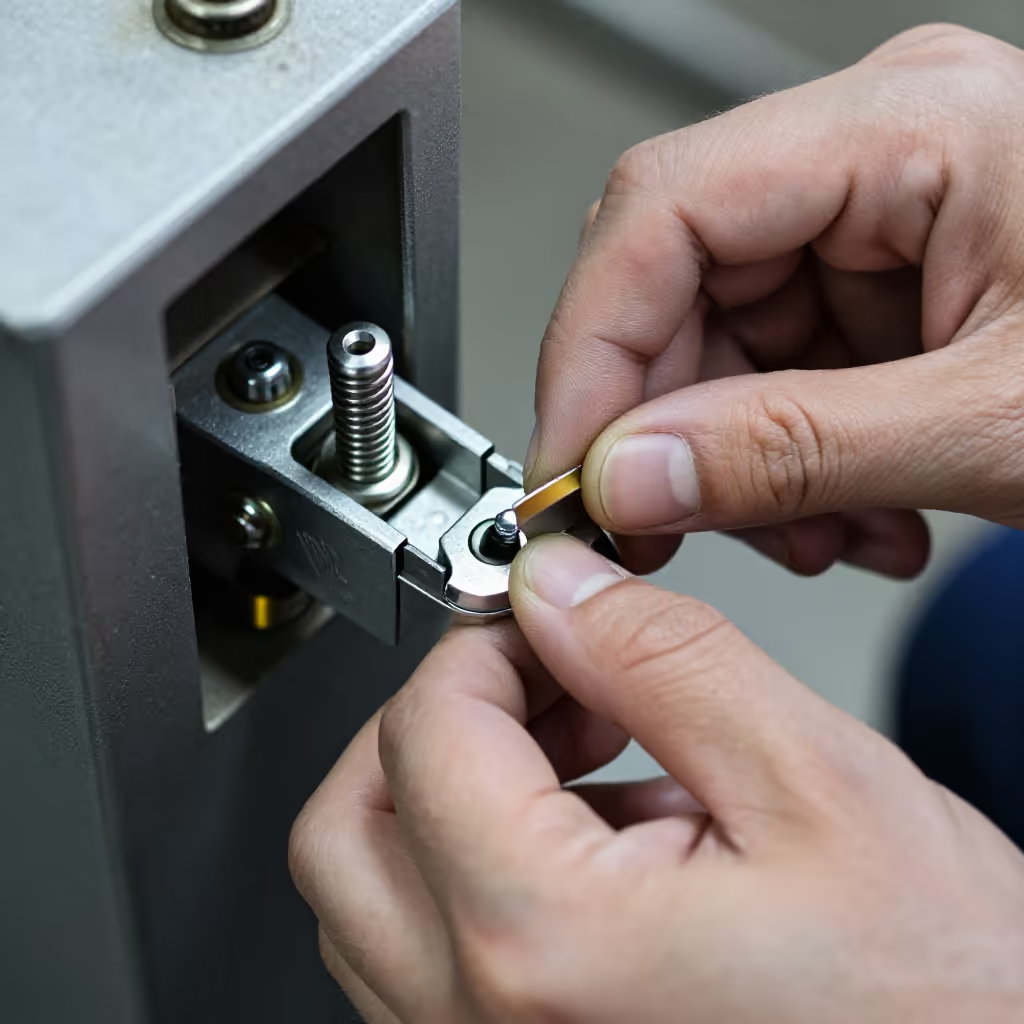
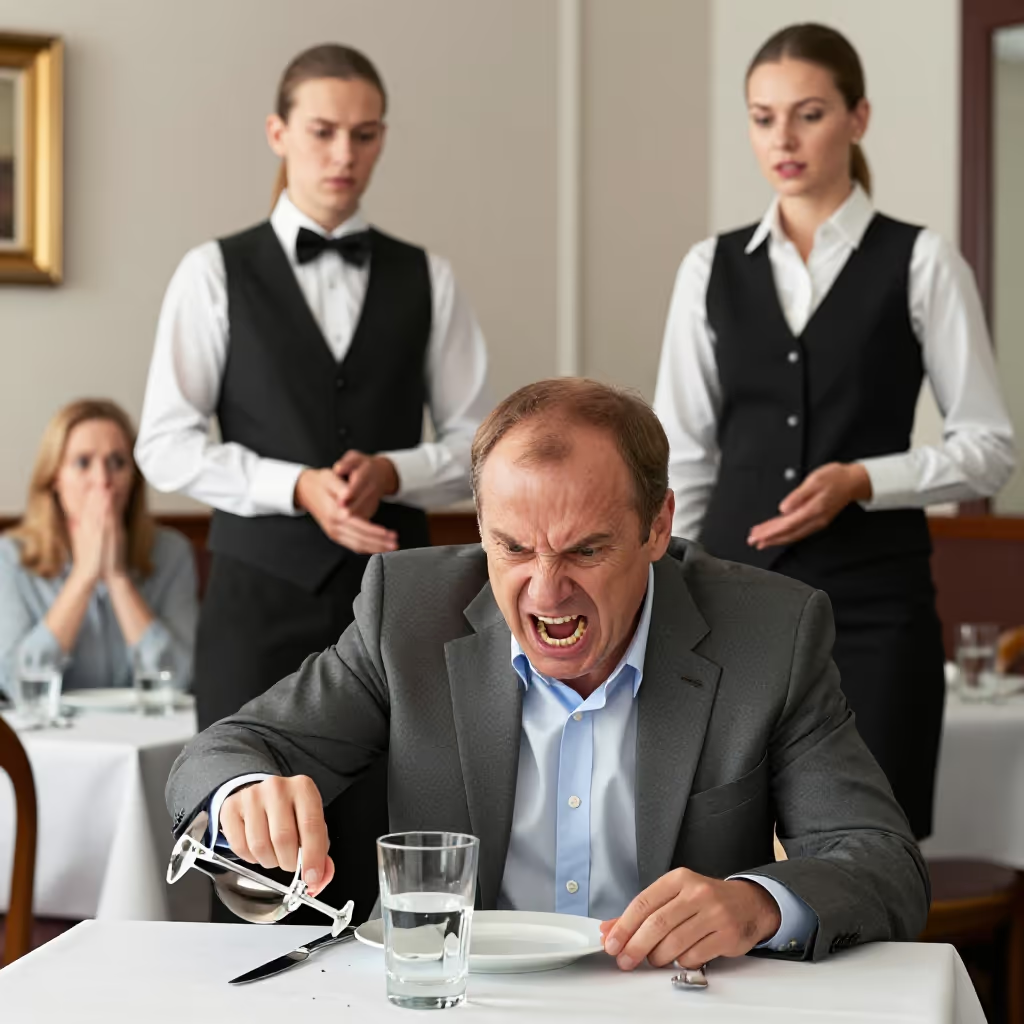
to freak out / disengage
Loading your saved state.
to freak out
Colloquial for losing control and having a sudden, intense fit of anger.
Als er merkte, dass sein Fahrrad gestohlen wurde, ist er komplett ausgerastet.
When he realized that his bike had been stolen, he completely freaked out.

'Ausrasten' (to freak out/disengage) is a separable verb. The prefix 'aus-' goes at the end in a main clause. In subordinate clauses or in the perfect tense, the verb stays together.
Wegen einer Kleinigkeit rastete er plötzlich aus.
He suddenly freaked out over a small thing.
The verb comes from 'rasten' in the sense of 'einrasten' (to click into place/engage). 'Ausrasten' is the opposite: something comes loose from its fixed position. Figuratively, it means that a person loses their (mental) composure.
Als der Hebel ausrastete, stoppte die Maschine sofort.
When the lever disengaged, the machine stopped immediately.
The perfect tense of 'ausrasten' is always formed with 'sein', since it describes a sudden change of state. So it is always 'ich bin ausgerastet' (I freaked out / I disengaged), not 'ich habe ausgerastet'.
Sie ist gestern im Büro komplett ausgerastet.
She completely freaked out at the office yesterday.
In the meaning 'to get angry', 'ausrasten' is a very colloquial word. In formal or written contexts, you would use other expressions.
Sag ihm die Wahrheit, aber pass auf, dass er nicht gleich wieder ausrastet.
Tell him the truth, but be careful that he doesn't freak out again right away.
to forget
'sich vergessen' and 'ausrasten' both have to do with losing self-control. 'sich vergessen' sounds more elevated or formal and generally means that someone behaves inappropriately. It does not always have to be a loud outburst of anger. 'ausrasten' is colloquial and much stronger: someone suddenly becomes very angry and reacts violently or intensely. In everyday life, people are more likely to say 'ausrasten' when someone shouts or gets very angry. 'sich vergessen' fits better in calm or written descriptions.

Nach dem Unfall rastet der Fahrer aus und schreit den anderen Mann an.
After the accident, the driver freaks out and shouts at the other man.
Beim Streit hat er sich kurz vergessen und sehr unhöflich gesprochen.
During the argument, he briefly lost control and spoke very rudely.