

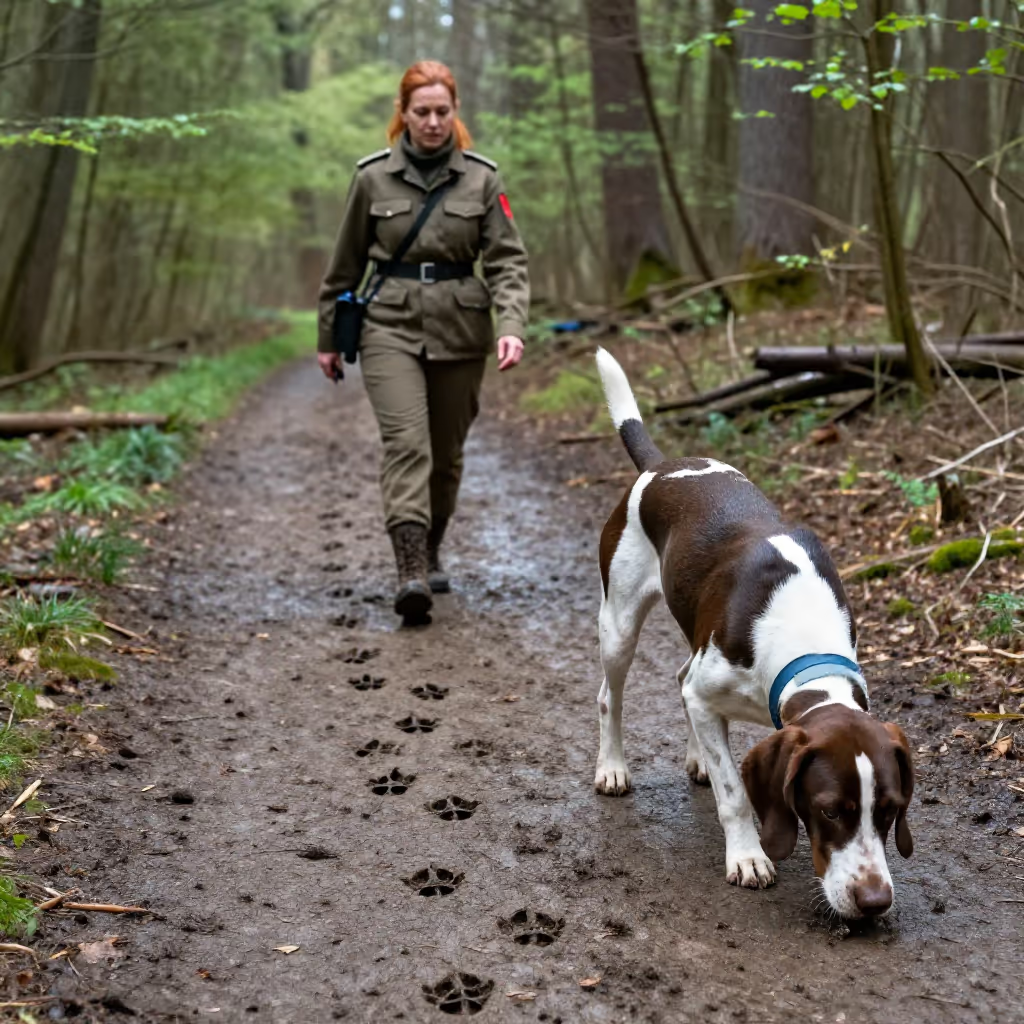
die Fährte
trail / track
The trail of prints or smells that an animal or person leaves behind and that can be followed.
EXAMPLE
Der Jäger folgte der Fährte des Rehs durch den Wald.
The hunter followed the deer's trail through the forest.
trail / track
Loading your saved state.
trail / track
The trail of prints or smells that an animal or person leaves behind and that can be followed.
Der Jäger folgte der Fährte des Rehs durch den Wald.
The hunter followed the deer's trail through the forest.

lead / clue
A clue or lead that helps in a search or investigation.
Die Polizei ist einer neuen Fährte im Fall des gestohlenen Gemäldes auf der Spur.
The police are following a new lead in the case of the stolen painting.
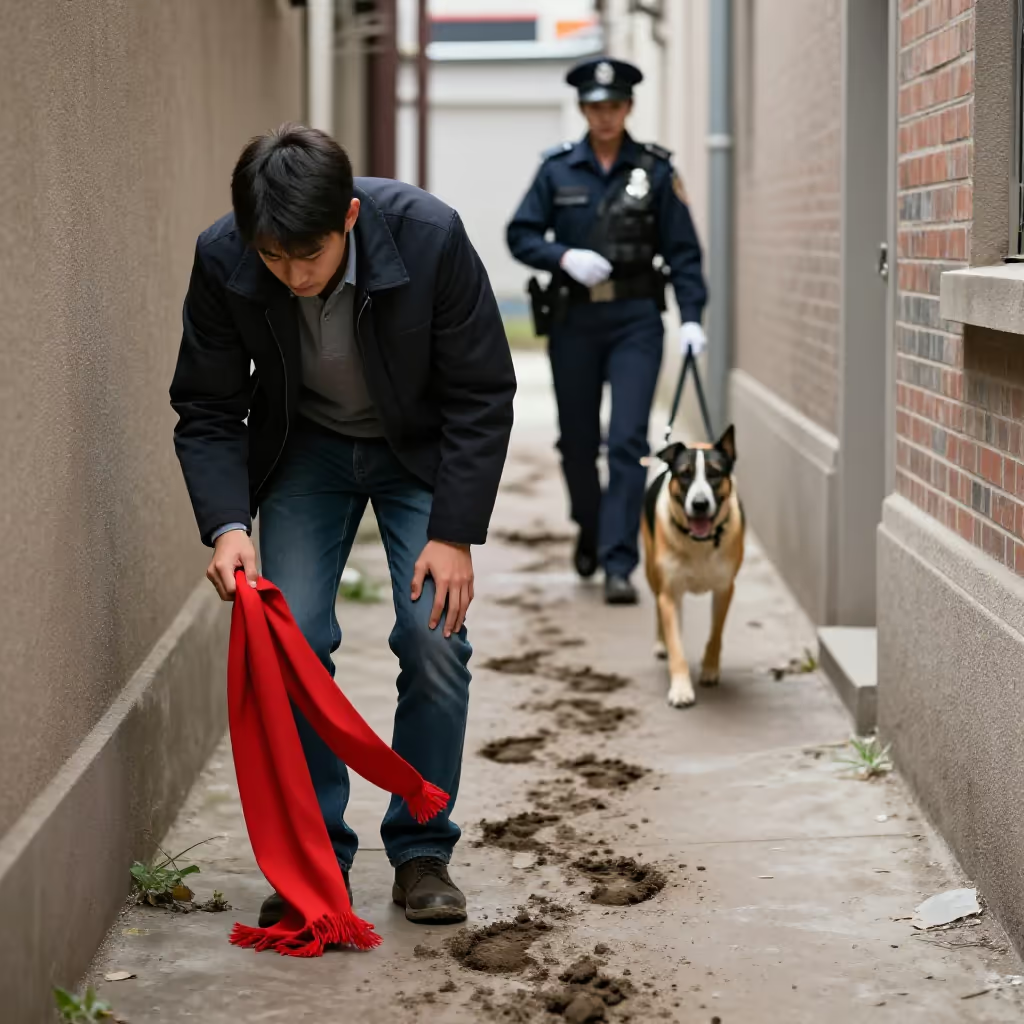
to lure onto a trail
To deliberately steer someone in a certain direction, often in order to deceive or mislead them.
Mit seiner falschen Aussage wollte der Verdächtige die Ermittler auf eine falsche Fährte locken.
With his false statement, the suspect wanted to lure the investigators onto a false trail.
The word 'Fährte' (trail/track) is historically related to the verb 'fahren' (to drive/travel). It describes the path or trail created by movement, a kind of 'Fahren' (traveling/moving). This connection helps you understand the basic idea of a track that can be followed.
Der Hund hat die Fährte des vermissten Wanderers aufgenommen.
The dog picked up the trail of the missing hiker.
In the context of animal or human tracks, 'Fährte' is often combined with certain verbs. Typical phrases are: 'eine Fährte aufnehmen' (to pick up a trail), 'einer Fährte folgen' (to follow a trail), or 'eine Fährte verlieren' (to lose a trail).
Der erfahrene Spurenleser konnte die Fährte auch auf steinigem Boden verfolgen.
The experienced tracker was able to follow the trail even on rocky ground.
You can recognize the figurative meaning 'Hinweis' (clue/lead) from the context. If the sentence is about investigations, a search, or a puzzle, it almost always refers to this figurative 'Fährte' (lead), not the trail of an animal.
Die Detektivin verfolgte eine vielversprechende Fährte, die zu einem alten Lagerhaus führte.
The detective followed a promising lead that led to an old warehouse.
The expression 'jemanden auf eine Fährte locken/führen' (to lure/lead someone onto a trail) is a fixed structure. It is often combined with the adjective 'falsch' (false/wrong) to describe deliberate misdirection.
Durch die gestreuten Gerüchte wollte er seine Konkurrenten auf eine falsche Fährte führen.
By spreading rumors, he wanted to lead his competitors onto a false trail.
track / trace
Spur is the more general term and can also refer to a single imprint left behind. Fährte typically consists of prints or scents left by a person or animal that can be followed. Fährte is therefore more suitable when you mean a trail that can be followed.

Im weichen Boden entdeckte die Försterin die Fährte des Rehs und folgte ihr.
In the soft ground, the forester spotted the deer’s trail and followed it.
Im weichen Boden entdeckte die Försterin eine einzelne Spur des Rehs.
In the soft ground, the forester spotted a single track left by the deer.