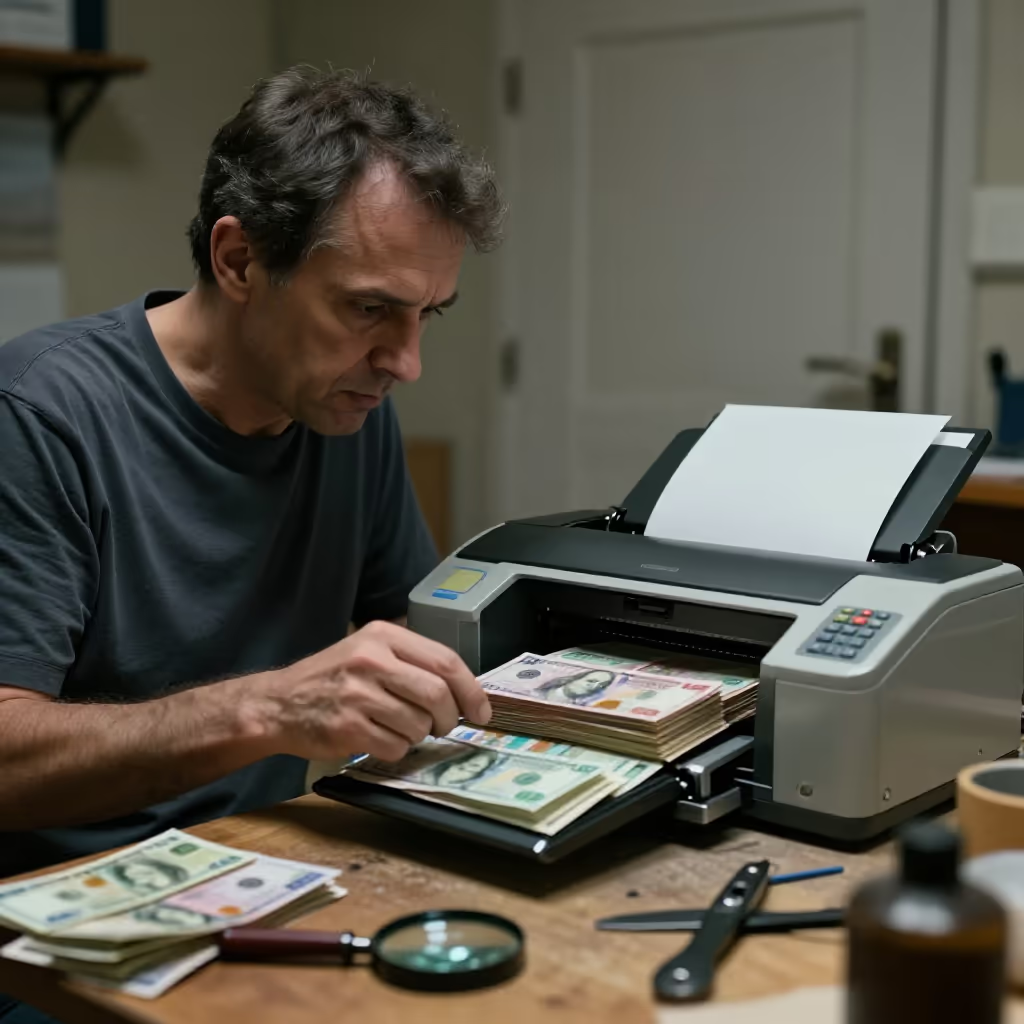
To produce an unauthorized and deceptive copy of something valuable, such as money, a document, or a work of art.
example
Die Polizei hat eine Bande verhaftet, die seit Jahren Geldscheine fälscht.
The police arrested a gang that had been forging banknotes for years.

Usage tips
Word family
The verb 'fälschen' is directly related to the adjective 'falsch' (wrong/false). It means to deliberately make something 'false' in order to deceive others.
EXAMPLE
Er hat das Datum auf dem Dokument gefälscht, um es gültig erscheinen zu lassen.
He forged the date on the document to make it appear valid.
Context clue
The object of the verb shows the exact meaning. If it refers to valuable originals such as money, art, or signatures, it is about producing a copy. If it refers to information such as data or reports, it is about changing facts.
EXAMPLE
Der Experte erkannte sofort, dass das Gemälde gefälscht war.
The expert immediately recognized that the painting was forged.
Typical objects
In the meaning of 'to produce a copy', the most common objects are things with official or material value. Typical examples are: 'Geld fälschen' (to counterfeit money), 'eine Unterschrift fälschen' (to forge a signature), 'Dokumente fälschen' (to forge documents), or 'ein Testament fälschen' (to forge a will).
EXAMPLE
Es ist eine schwere Straftat, einen Pass zu fälschen.
It is a serious criminal offense to forge a passport.
Typical objects
When it is about changing information, the typical objects are more abstract. Common combinations are: 'Daten fälschen' (to falsify data), 'Ergebnisse fälschen' (to falsify results), 'eine Statistik fälschen' (to falsify statistics), or 'einen Bericht fälschen' (to falsify a report).
EXAMPLE
Der Wissenschaftler musste seine Karriere beenden, weil er Studienergebnisse gefälscht hatte.
The scientist had to end his career because he had falsified study results.
Compare with
near_synonym · confusable
fälschen vs manipulieren
to manipulate
'manipulieren' and 'fälschen' can both mean that something is deliberately changed so that others believe something false. 'manipulieren' is more general: you can influence data, results, devices, situations, or people. 'fälschen' is more precise when someone creates a deceptive copy or changes information so that it appears false, for example a document, money, or a result. The words are easy to confuse because both are often connected to fraud. When it is about a fake copy or a false official result, 'fälschen' is usually more precise. When it is about deliberate influence or change, 'manipulieren' fits better.
fälschen
Am Bahnhof hat ein Mann versucht, ein gefälschtes Ticket zu benutzen.
At the train station, a man tried to use a forged ticket.
manipulieren
Sie manipuliert die Zahlen im Bericht, damit das Projekt erfolgreicher aussieht.
She manipulates the figures in the report so that the project looks more successful.