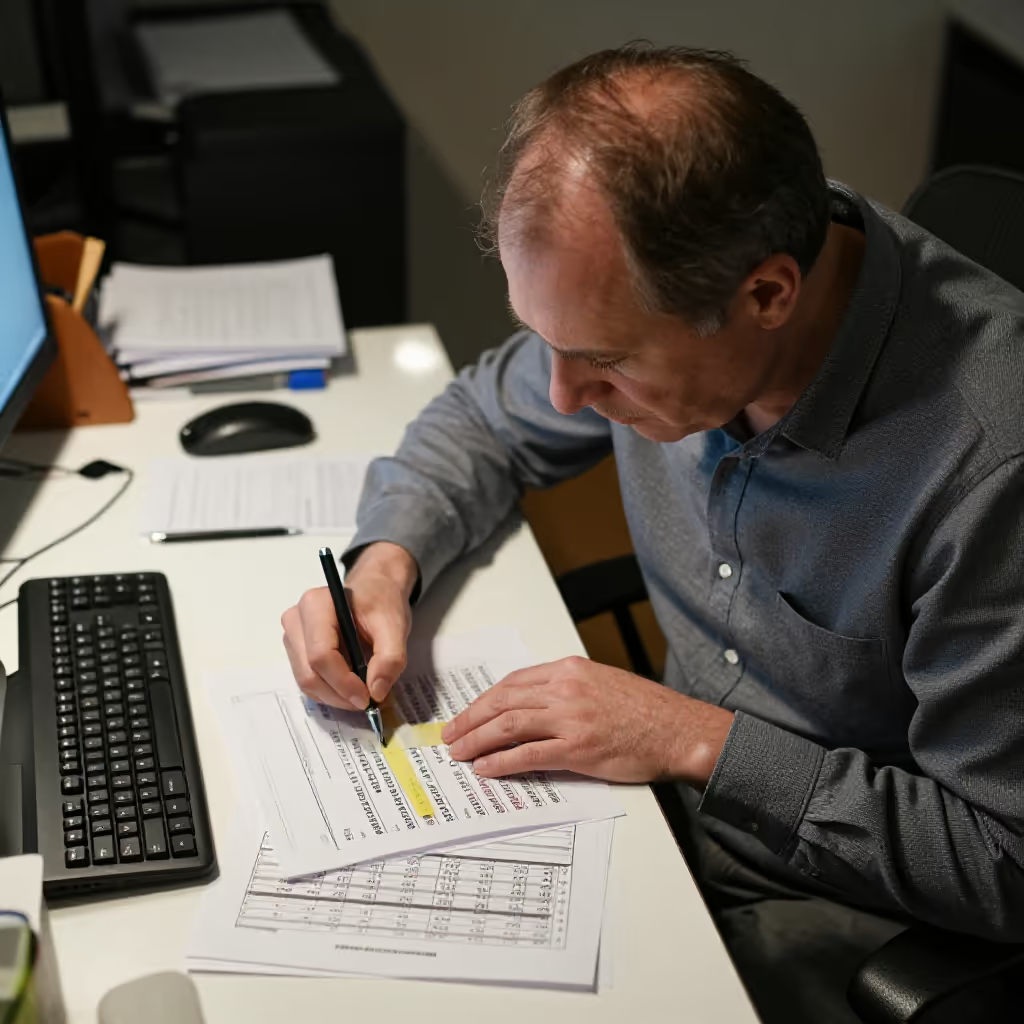
To change something so that it no longer corresponds to the truth, the original, or reality. This often happens with the intention to deceive.
example
Er wurde beschuldigt, die wissenschaftlichen Studienergebnisse verfälscht zu haben.
He was accused of having falsified the scientific study results.
Usage tips
Word structure
The verb 'verfälschen' (to falsify/adulterate) is derived from the adjective 'falsch' (false/wrong). The prefix 'ver-' here expresses that something is deliberately made false.
EXAMPLE
Jede Änderung an dem Dokument könnte das Ergebnis verfälschen.
Any change to the document could falsify the result.
Inseparable verb
'Verfälschen' (to falsify/adulterate) is an inseparable verb. The prefix 'ver-' remains firmly attached to the verb in all sentence forms and is not placed at the end of the sentence.
EXAMPLE
Er verfälschte die Unterschrift auf dem Vertrag.
He falsified the signature on the contract.
Style and connotation
This word has a strongly negative meaning. It always implies a deliberate intention to deceive and is often used in connection with fraud, manipulation, or illegal actions.
EXAMPLE
Wer absichtlich die Wahrheit verfälscht, macht sich nicht beliebt.
Anyone who deliberately falsifies the truth does not make themselves popular.
Typical collocations
In this meaning, 'verfälschen' (to falsify) is often combined with abstract things such as 'Ergebnisse' (results), 'Daten' (data), 'eine Statistik' (a statistic), 'die Wahrheit' (the truth), or 'ein Zitat' (a quote).
EXAMPLE
Die Umfrageergebnisse wurden offenbar verfälscht, um die öffentliche Meinung zu beeinflussen.
The survey results were apparently falsified in order to influence public opinion.
Typical collocations
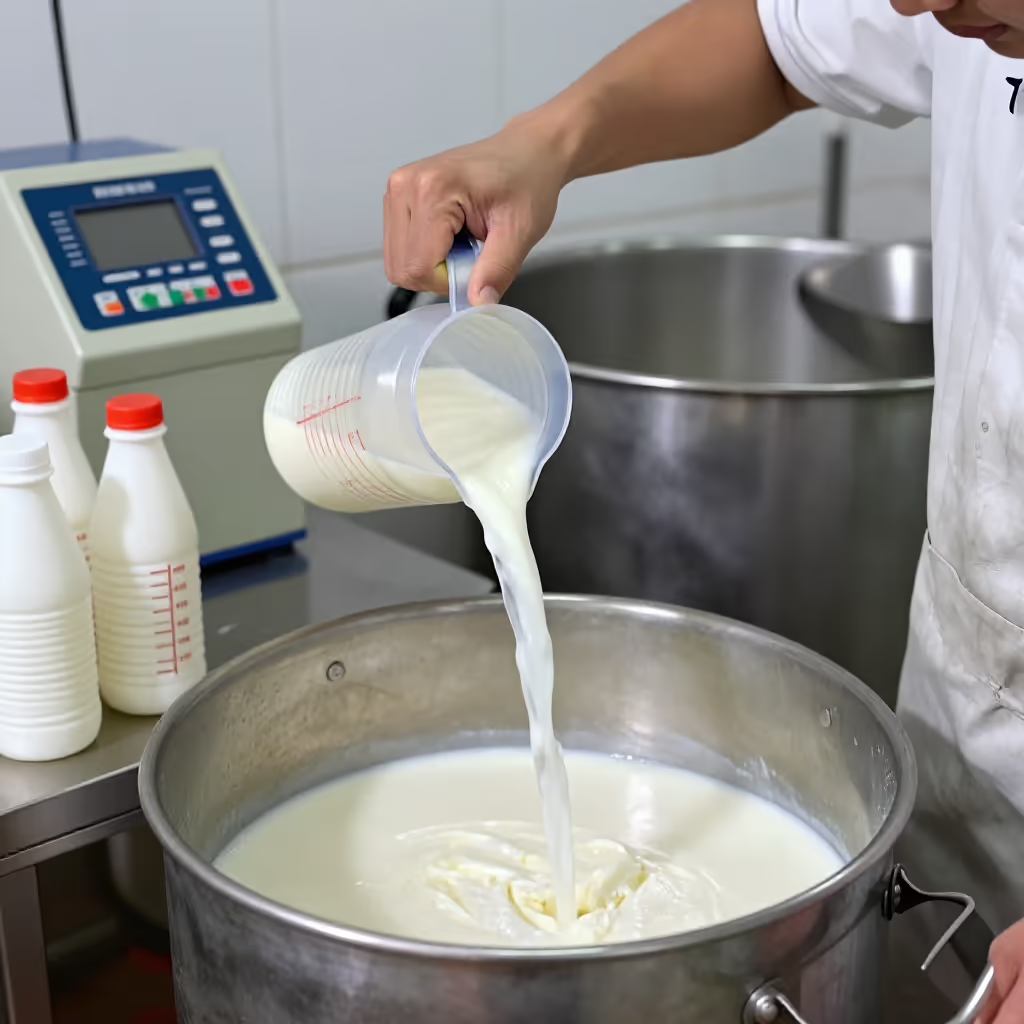
When the topic is products, 'verfälschen' (to adulterate) is often used with 'Lebensmittel' (food), 'Wein' (wine), 'Honig' (honey), 'Öl' (oil), or also 'Medikamente' (medications).
EXAMPLE
Es ist illegal, teuren Safran mit anderen Substanzen zu verfälschen.
It is illegal to adulterate expensive saffron with other substances.
Compare with
confusable
verfälschen vs verändern
to change
'verändern' and 'verfälschen' both have to do with something becoming different or being made different. 'verändern' is neutral: something gets a different form, a different state, or a different character. That can be good, bad, or simply different. 'verfälschen' is not neutral. It means that something is changed in such a way that it is no longer true, genuine, or original. It often suggests deception. Learners may confuse the words because 'verfälschen' is a special kind of change. For normal changes, you say 'verändern'. For false or manipulated results, you say 'verfälschen'.
verfälschen
Ein falscher Wert kann das Ergebnis der Untersuchung verfälschen.
One incorrect value can falsify the result of the investigation.
verändern
Die Chefin hat den Plan geändert, weil viele Mitarbeiter krank sind.
The boss changed the plan because many employees are sick.