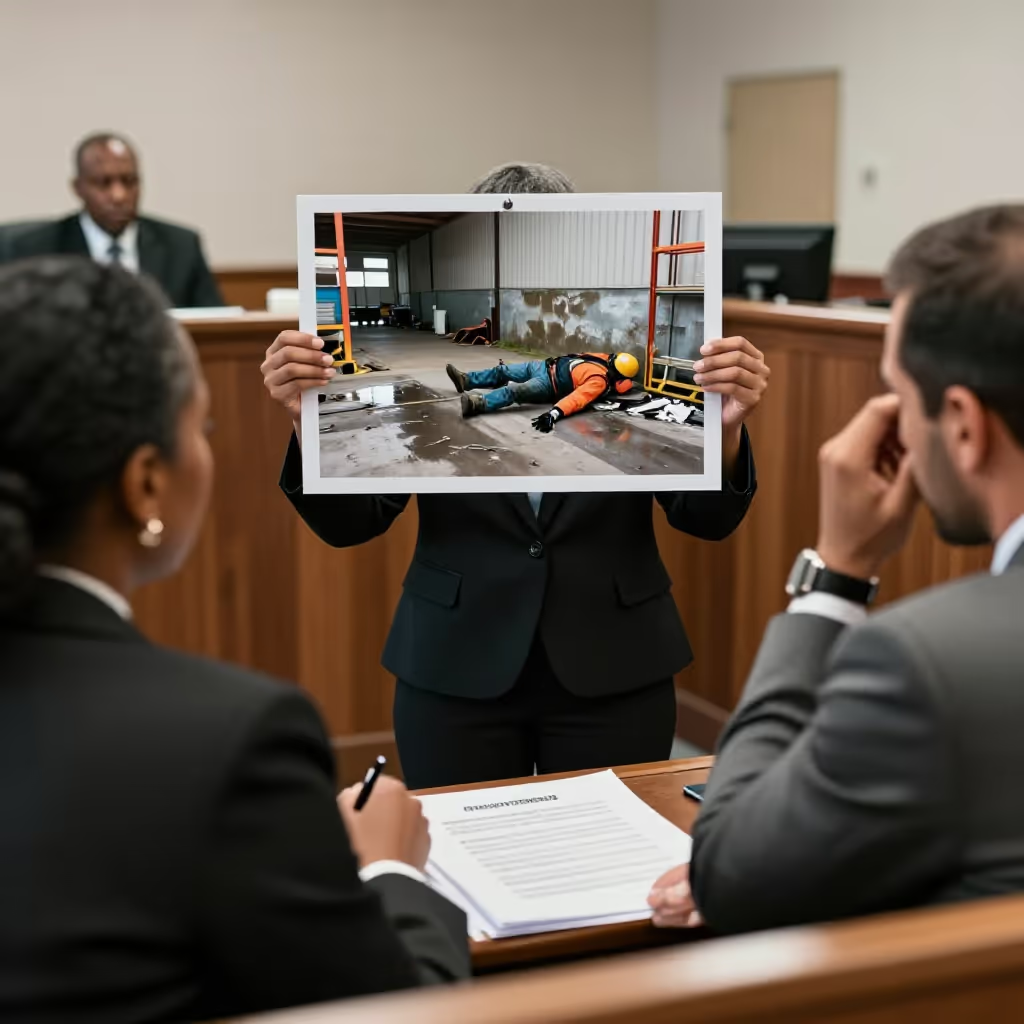
The failure to exercise the required care, often resulting in damage or harm. Especially a term from the legal field.
example
Der Unfall wurde durch grobe Fahrlässigkeit des Fahrers verursacht.
The accident was caused by the driver's gross negligence.

Usage tips
Word structure
'Fahrlässigkeit' (negligence) is the noun formed from the adjective 'fahrlässig' (negligent). The ending '-keit' is often used to turn an adjective into a noun that describes the quality itself.
EXAMPLE
Seine Fahrlässigkeit hat zu einem großen Schaden geführt.
His negligence caused major damage.
Use with 'aus'
To state the reason for an action, 'Fahrlässigkeit' (negligence) is very often used with the preposition 'aus'. The construction is then: 'aus Fahrlässigkeit etwas tun' (to do something out of negligence).
EXAMPLE
Er hat aus reiner Fahrlässigkeit vergessen, die Tür abzuschließen.
Out of sheer negligence, he forgot to lock the door.
Register: legal language
In legal contexts, the word is very common. A distinction is often made between 'leichter Fahrlässigkeit' (minor negligence) and 'grober Fahrlässigkeit' (gross negligence, a serious breach of the duty of care).
EXAMPLE
Das Gericht warf ihm grobe Fahrlässigkeit vor.
The court accused him of gross negligence.
Compare with
antonym · confusable
Fahrlässigkeit vs Vorsatz
resolution / intent / endpaper
'der Vorsatz' and 'die Fahrlässigkeit' are in clear contrast, especially in law. With 'Vorsatz' (intent), someone acts consciously and wants the action or deliberately accepts it. With 'Fahrlässigkeit' (negligence), someone acts carelessly or without enough care, without directly wanting the harm. The words can be confused because both explain how damage or a criminal offense came about. But the difference is important: 'Vorsatz' means intentionally, while 'Fahrlässigkeit' means through carelessness. In everyday language, 'Fahrlässigkeit' can also simply mean carelessness or negligence.
Fahrlässigkeit
Aus Fahrlässigkeit ließ Paul die Kerze brennen und ging aus dem Zimmer.
Out of negligence, Paul left the candle burning and went out of the room.
Vorsatz
Die Polizei fand Hinweise auf Vorsatz, weil der Täter die Tat lange geplant hatte.
The police found evidence of intent because the perpetrator had planned the act for a long time.