

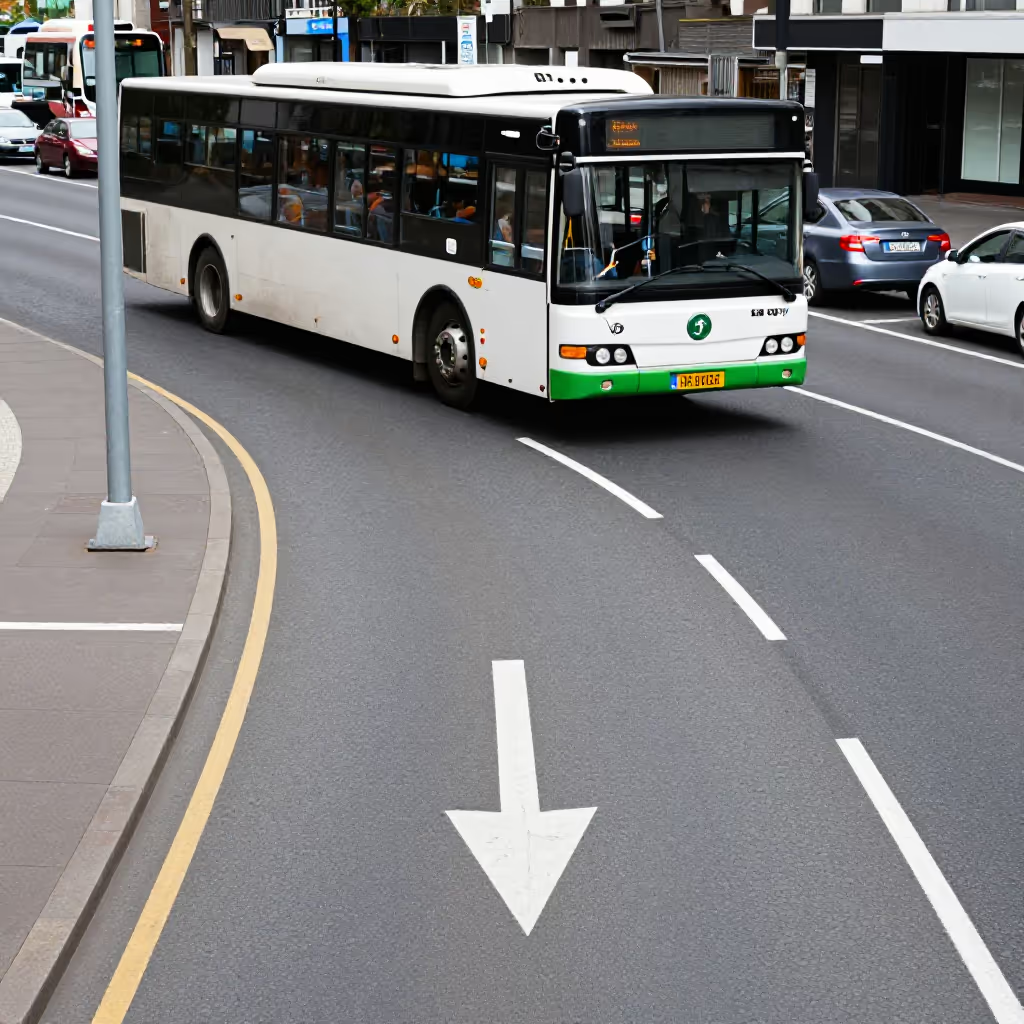
The direction in which a vehicle is moving or is supposed to move.
example
Der Geisterfahrer war in der falschen Fahrtrichtung auf der Autobahn unterwegs.
The wrong-way driver was traveling in the wrong direction of travel on the highway.
Usage tips
Compound structure
'Fahrtrichtung' (direction of travel) is a compound noun made from 'die Fahrt' (journey/drive) and 'die Richtung' (direction). The meaning is literal: the direction of a journey or drive.
EXAMPLE
Bitte achten Sie auf die angegebene Fahrtrichtung im Parkhaus.
Please pay attention to the indicated direction of travel in the parking garage.
Important prepositions
The most important expressions are 'in Fahrtrichtung' (in the direction of travel) and 'gegen die Fahrtrichtung' (against the direction of travel). These describe the position or movement relative to the vehicle.
EXAMPLE
Der Beifahrersitz ist in Fahrtrichtung montiert.
The passenger seat is mounted facing the direction of travel.
Typical verbs
Common verbs in connection with 'Fahrtrichtung' (direction of travel) are 'ändern' (to change), 'wechseln' (to switch), and 'beibehalten' (to maintain). A very important fixed expression is 'in die falsche Fahrtrichtung fahren' (to drive in the wrong direction of travel).
EXAMPLE
Auf der Autobahn dürfen Sie die Fahrtrichtung nicht ändern.
On the highway, you must not change the direction of travel.
Compare with
near_synonym · confusable
Fahrtrichtung vs Richtung
direction
'die Richtung' and 'die Fahrtrichtung' both mean where something is moving. 'Richtung' is general and can be used for people, things, gazes, paths, or developments. 'Fahrtrichtung' is more precise and is used only when a vehicle is moving or is supposed to move, for example a train, bus, car, or bicycle. Learners may confuse the words because both occur in contexts involving routes and traffic. If it is not about a vehicle, 'Richtung' is correct. If it is about a seat, a platform, or a moving vehicle, 'Fahrtrichtung' is more precise.
Fahrtrichtung
Im Zug sitze ich lieber in Fahrtrichtung, weil mir sonst schlecht wird.
On the train, I prefer to sit facing the direction of travel, because otherwise I feel sick.
Richtung
Sie zeigte mit der Hand in die Richtung des Bahnhofs.
She pointed with her hand in the direction of the train station.