

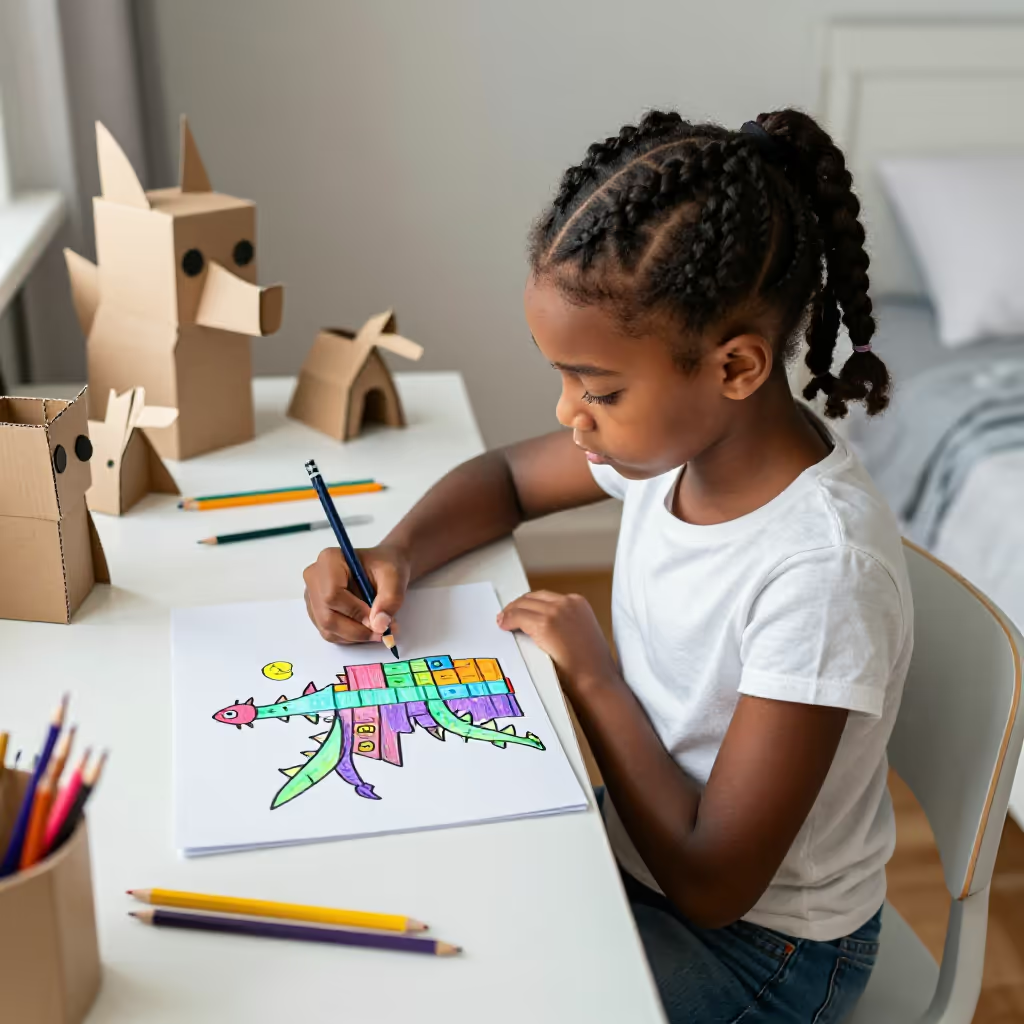
die Fantasie
imagination
The human ability to imagine things that are not real or that one does not perceive; the power of imagination.
EXAMPLE
Ein gutes Buch regt die Fantasie des Lesers an.
A good book stimulates the reader's imagination.
imagination / fantasy
Loading your saved state.
imagination
The human ability to imagine things that are not real or that one does not perceive; the power of imagination.
Ein gutes Buch regt die Fantasie des Lesers an.
A good book stimulates the reader's imagination.
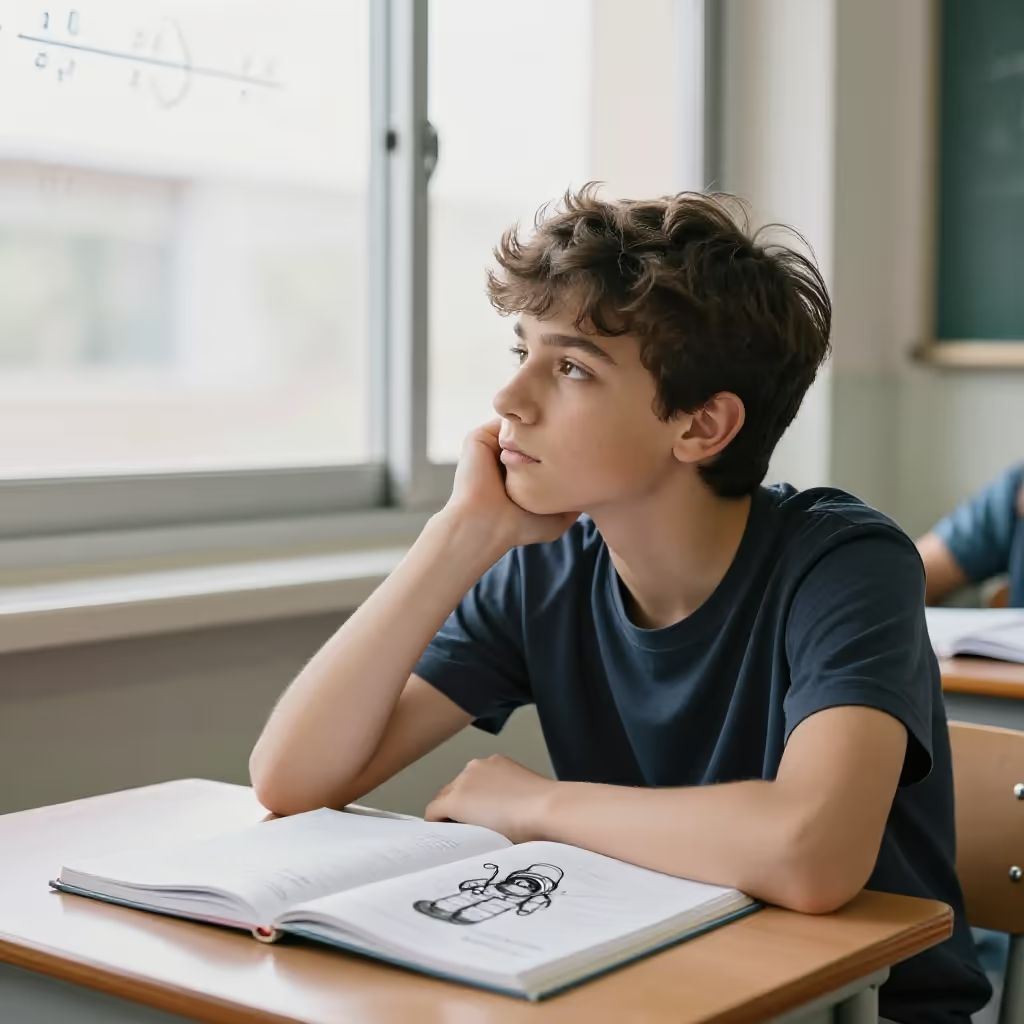
fantasy
An idea or thought that does not correspond to reality; a figment of the imagination or daydream.
Sein Plan, im Lotto zu gewinnen und nie wieder zu arbeiten, ist doch nur eine Fantasie.
His plan to win the lottery and never work again is just a fantasy.
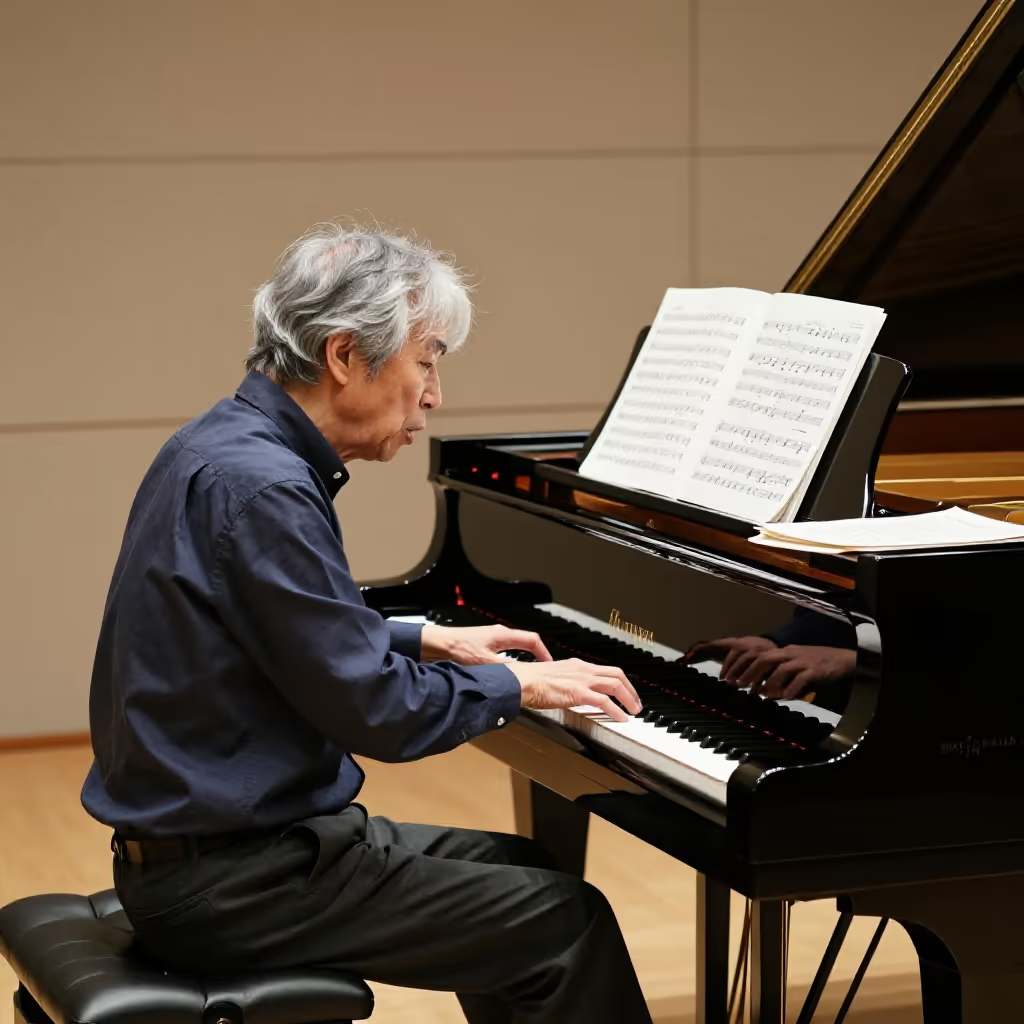
fantasia
A piece of music that does not follow strict formal rules and often has an improvisational character.
Der Pianist spielte Chopins „Fantasie-Impromptu“ mit großer Leidenschaft.
The pianist played Chopin's 'Fantaisie-Impromptu' with great passion.
The noun 'Fantasie' (imagination / fantasy) is the basis for the adjective 'fantastisch' (fantastic). Something that comes from the imagination or stimulates it can be described as 'fantastisch'.
Kinder lieben fantastische Geschichten über Drachen und Zauberer.
Children love fantastic stories about dragons and wizards.
In the sense of 'Vorstellungskraft' (imagination), 'Fantasie' is often used in fixed expressions. Typical ones are 'seiner Fantasie freien Lauf lassen' (to let one's imagination run free), 'eine lebhafte Fantasie haben' (to have a vivid imagination), or 'die Fantasie anregen' (to stimulate the imagination).
Lassen Sie Ihrer Fantasie freien Lauf und gestalten Sie den Raum, wie er Ihnen gefällt.
Let your imagination run free and design the room however you like.
When 'Fantasie' describes a concrete, unreal idea, it often appears with words like 'nur' (only / just), 'bloß' (merely), or 'reine' (pure). By contrast, 'die Fantasie' as a general ability refers to imagination itself.
Seine Angst vor Monstern unter dem Bett ist doch nur reine Fantasie.
His fear of monsters under the bed is really just pure fantasy.
You can clearly recognize the meaning as a piece of music from the context. The word is then used in connection with composers, instruments, or concerts.
Die Pianistin spielte eine Fantasie von Mozart.
The pianist played a fantasia by Mozart.
idea / performance / introduction
Both words can refer to an inner image or a thought. „Die Vorstellung“ can refer to something real or planned, whereas „die Fantasie“ especially means an invented or unrealistic idea. Use „Vorstellung“ for a specific image and „Fantasie“ for an invented idea.

In ihrer Fantasie wird das kleine Zimmer zu einem Schloss.
In her fantasy, the small room becomes a castle.
Ich habe eine genaue Vorstellung von dem Zimmer, das wir renovieren wollen.
I have a precise idea of the room we want to renovate.