

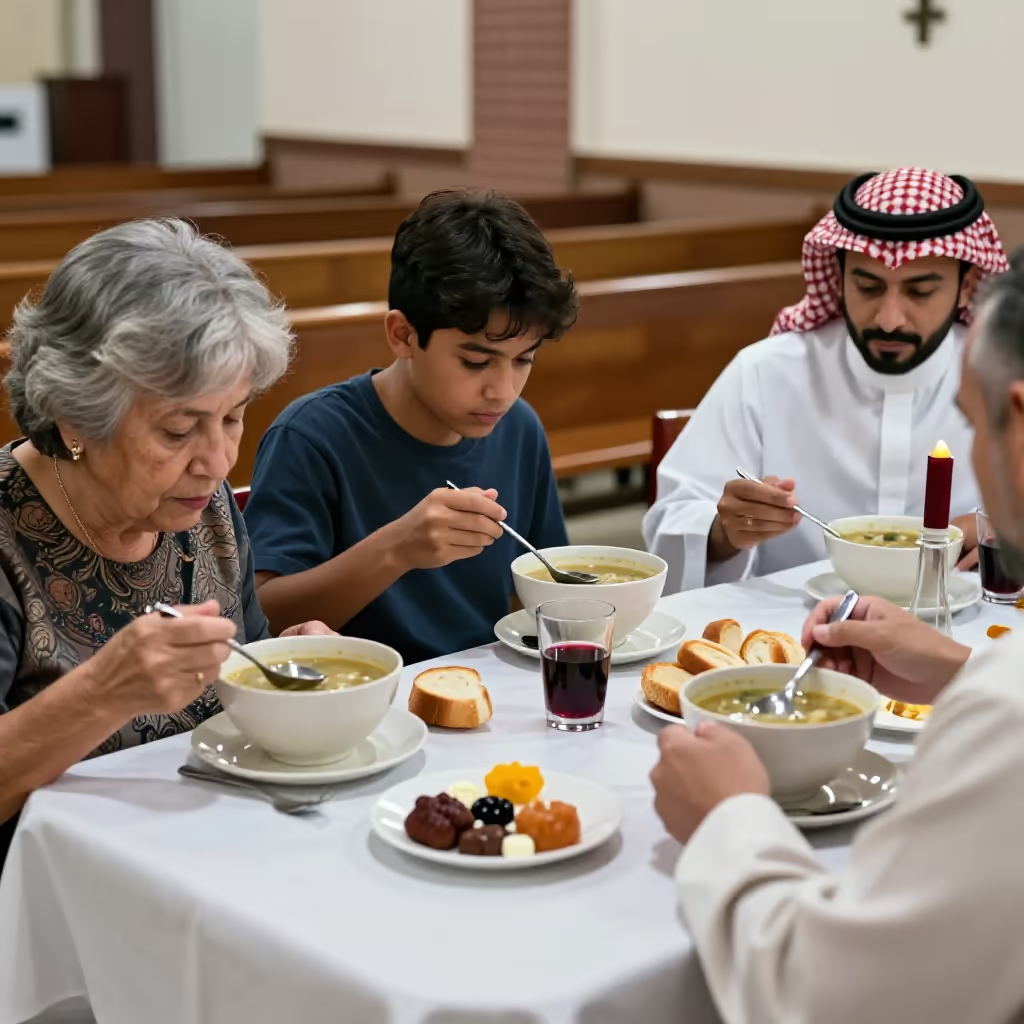
A period established in many religions during which people fast or consciously give up certain foods and stimulants. In a Christian context, it usually refers to the 40 days before Easter.
example
Während der Fastenzeit verzichtet er traditionell auf Alkohol und Süßigkeiten.
During Lent, he traditionally gives up alcohol and sweets.
Usage tips
Compound word
The word is a clear compound made from the verb 'fasten' (to fast) and the noun 'die Zeit' (time/period). So it literally refers to a time during which people fast.
EXAMPLE
Die Fastenzeit ist für viele Menschen eine Zeit der Besinnung.
For many people, Lent is a time of reflection.
Cultural context
In the Christian cultural sphere, 'die Fastenzeit' specifically refers to the 40-day period before Easter, which begins on Ash Wednesday. It is a time of preparation and abstinence.
EXAMPLE
Die Fastenzeit beginnt dieses Jahr schon im Februar.
Lent begins as early as February this year.
Typical collocations
In connection with Lent, the verb 'verzichten auf' (+ accusative) is used very frequently to express what someone does not consume.
EXAMPLE
In der Fastenzeit verzichten viele auf Süßigkeiten.
During Lent, many people give up sweets.
Compare with
confusable
Fastenzeit vs Fastnacht
carnival
'Fastnacht' and 'Fastenzeit' sound similar and are connected in time, but in terms of tradition they almost mean the opposite. 'Fastnacht' is the period of festivals, parades, and costumes before the Christian Lent. 'Fastenzeit' is the period after that, when many people give something up or consciously live more simply. The words are easy to confuse because both are connected to 'fasten' (to fast). The order is important: first people celebrate 'Fastnacht', then 'Fastenzeit' begins.
Fastenzeit
Während der Fastenzeit verzichtet meine Nachbarin auf Süßigkeiten.
During Lent, my neighbor gives up sweets.
Fastnacht
In der Schule basteln die Kinder Masken für die Fastnacht.