

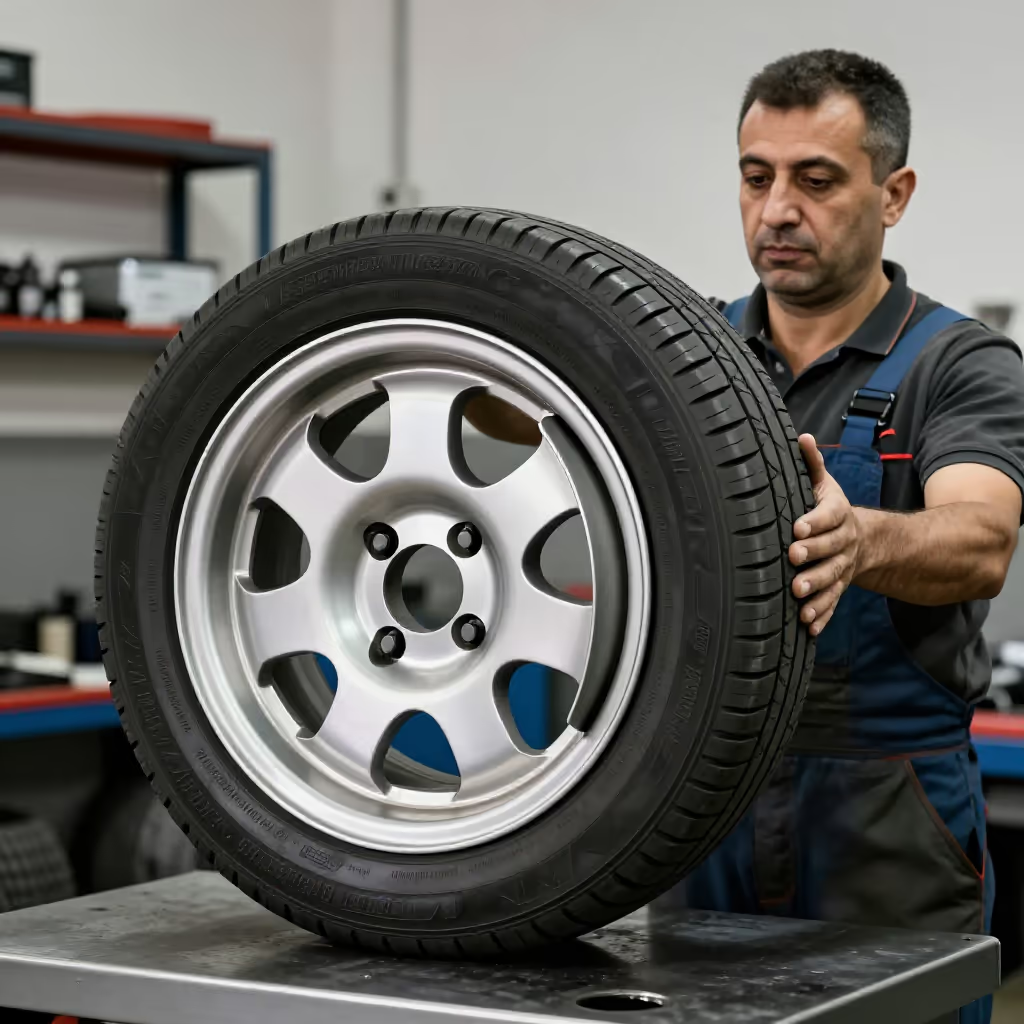
die Felge
rim
The outer ring of a wheel, usually made of metal, onto which the tire is mounted.
EXAMPLE
Er hat sich teure Alufelgen für sein neues Auto gekauft.
He bought expensive alloy rims for his new car.
rim
Loading your saved state.
rim
The outer ring of a wheel, usually made of metal, onto which the tire is mounted.
Er hat sich teure Alufelgen für sein neues Auto gekauft.
He bought expensive alloy rims for his new car.
Rims are often named according to their material. The most common compounds are 'die Alufelge' (alloy rim/aluminum rim) and 'die Stahlfelge' (steel rim).
Im Winter fahre ich mit Stahlfelgen, im Sommer mit Alufelgen.
In winter I drive with steel rims, in summer with alloy rims.
Although every wheel has a rim, you most often hear the word in connection with cars, motorcycles, and bicycles, often when it is about appearance or maintenance.
Nach dem Kontakt mit dem Bordstein war die Felge zerkratzt.
After contact with the curb, the rim was scratched.
Common verbs used with 'Felge' (rim) describe actions such as 'Felgen montieren' (to mount rims), 'Felgen wechseln' (to change rims), or 'Felgen reinigen' (to clean rims).
In der Werkstatt können Sie Ihre neuen Felgen montieren lassen.
At the garage, you can have your new rims mounted.