

fauchen
to hiss
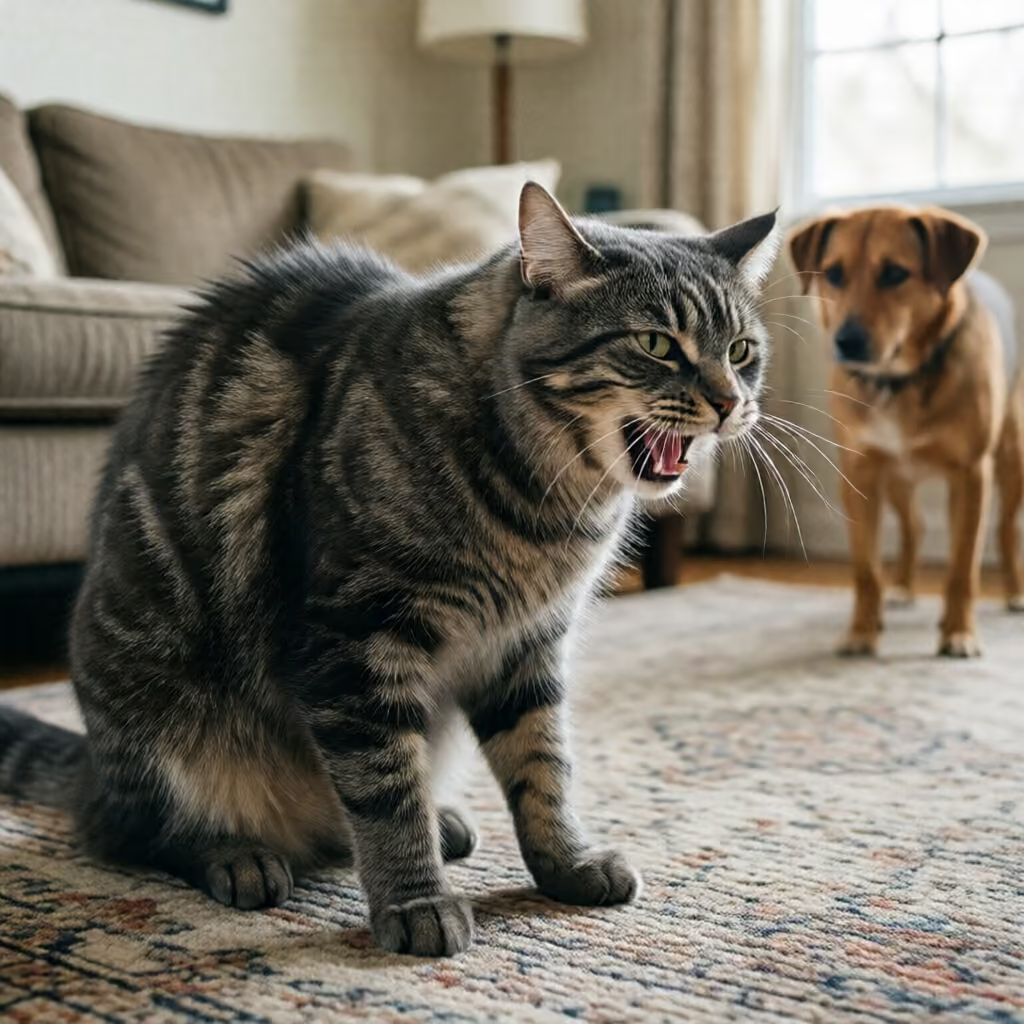
To make a hissing, sharp sound, especially as a cat, snake, or escaping steam.
EXAMPLE
Die Katze begann zu fauchen, als der Hund näher kam.
The cat began to hiss when the dog came closer.
to hiss
fauchen – fauchte – hat gefaucht
Loading your saved state.
to hiss
To make a hissing, sharp sound, especially as a cat, snake, or escaping steam.
Die Katze begann zu fauchen, als der Hund näher kam.
The cat began to hiss when the dog came closer.

to hiss
To speak or make a sound in a sharp, angry voice.
„Lass mich in Ruhe!“, fauchte sie wütend.
“Leave me alone!” she hissed angrily.
| ich | fauche |
|---|---|
| du | fauchst |
| er/sie/es | faucht |
| wir | fauchen |
| ihr | faucht |
| sie | fauchen |
| ich | fauchte |
|---|---|
| du | fauchtest |
| er/sie/es | fauchte |
| wir | fauchten |
| ihr | fauchtet |
| sie | fauchten |
| ich | habe gefaucht |
|---|---|
| du | hast gefaucht |
| er/sie/es | hat gefaucht |
| wir | haben gefaucht |
| ihr | habt gefaucht |
| sie | haben gefaucht |
| du | fauch! fauche! |
|---|---|
| ihr | faucht! |
| Sie | fauchen Sie! |
| ich | hatte gefaucht |
|---|---|
| du | hattest gefaucht |
| er/sie/es | hatte gefaucht |
| wir | hatten gefaucht |
| ihr | hattet gefaucht |
| sie | hatten gefaucht |
| ich | werde fauchen |
|---|---|
| du | wirst fauchen |
| er/sie/es | wird fauchen |
| wir | werden fauchen |
| ihr | werdet fauchen |
| sie | werden fauchen |
| ich | fauche |
|---|---|
| du | fauchest |
| er/sie/es | fauche |
| wir | fauchen |
| ihr | fauchet |
| sie | fauchen |
Used for reported speech.
| ich | fauchte |
|---|---|
| du | fauchtest |
| er/sie/es | fauchte |
| wir | fauchten |
| ihr | fauchtet |
| sie | fauchten |
Used for wishes and “would”.
| infinitive | fauchen |
|---|---|
| with zu | zu fauchen |
| present participle | fauchend |
| past participle | gefaucht |
Pay attention to who or what is hissing: with animals, it often signals a threat, while with technical devices, it refers to a sound. With people, direct speech or words like “Antwort” (reply) often indicate that the angry manner of speaking is meant.
Der Kater fauchte, als ich ihn hochheben wollte.
The tomcat hissed when I tried to pick him up.
Aus dem Ventil entwich fauchend heißer Dampf.
Hot steam escaped from the valve with a hissing sound.
„Fass das nicht an!“, fauchte mein Bruder.
“Don't touch that!” my brother hissed.
With cats, “fauchen” (to hiss) often appears together with “drohend” (threateningly) or “böse” (angrily). It is also often described that the cat lays back its ears or arches its back.
Die Katze legte die Ohren an und fauchte drohend.
The cat laid back its ears and hissed threateningly.
“Fauchen” (to hiss) can accompany direct speech and describe the manner of speaking. If the reporting clause follows the direct speech, the subject comes directly after the verb.
„Verschwinde endlich!“, fauchte sie.
“Go away already!” she hissed.