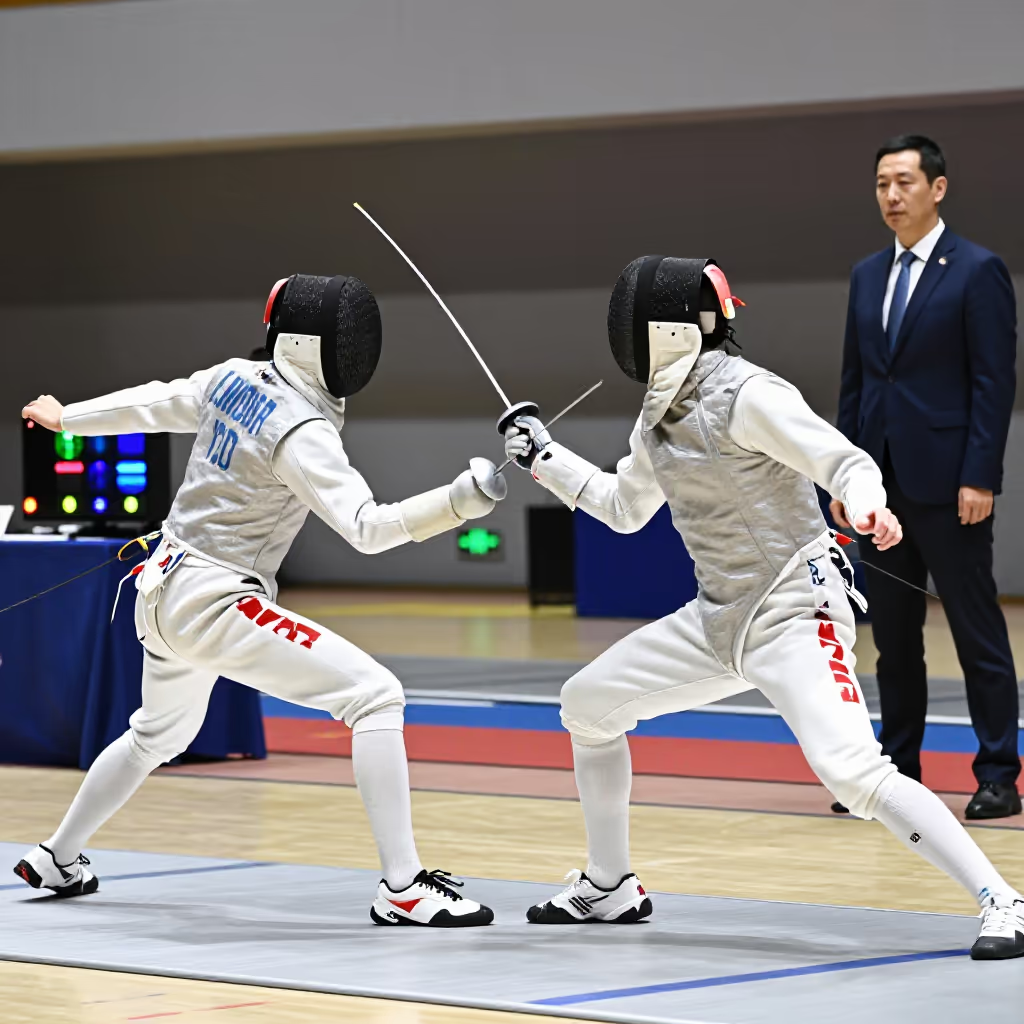
To practice the sport of fencing, in which people fight according to fixed rules with bladed weapons such as an épée, foil, or saber.
example
Sie ficht seit ihrer Kindheit im Verein und hat schon viele Turniere gewonnen.
She has fenced at a club since childhood and has already won many tournaments.
Usage tips
Context clues
You can recognize the meaning from the context: If the verb appears with weapons like 'Degen' (épée) or in a sports context, it refers to the sport. The preposition 'um' indicates the figurative fight. Without an object in a context of poverty, it means 'betteln' (to beg).
EXAMPLE
Er ficht seit zehn Jahren mit dem Säbel.
He has been fencing with the saber for ten years.
Typical collocations
In a sports context, 'fechten' (to fence) is often combined with types of weapons, for example 'mit dem Degen fechten' (to fence with the épée) or 'mit dem Florett fechten' (to fence with the foil). The phrase 'gegen jemanden fechten' (to fence against someone) is also common.
EXAMPLE
Bei den Olympischen Spielen focht sie gegen die Weltmeisterin.
At the Olympic Games, she fenced against the world champion.
Fixed preposition
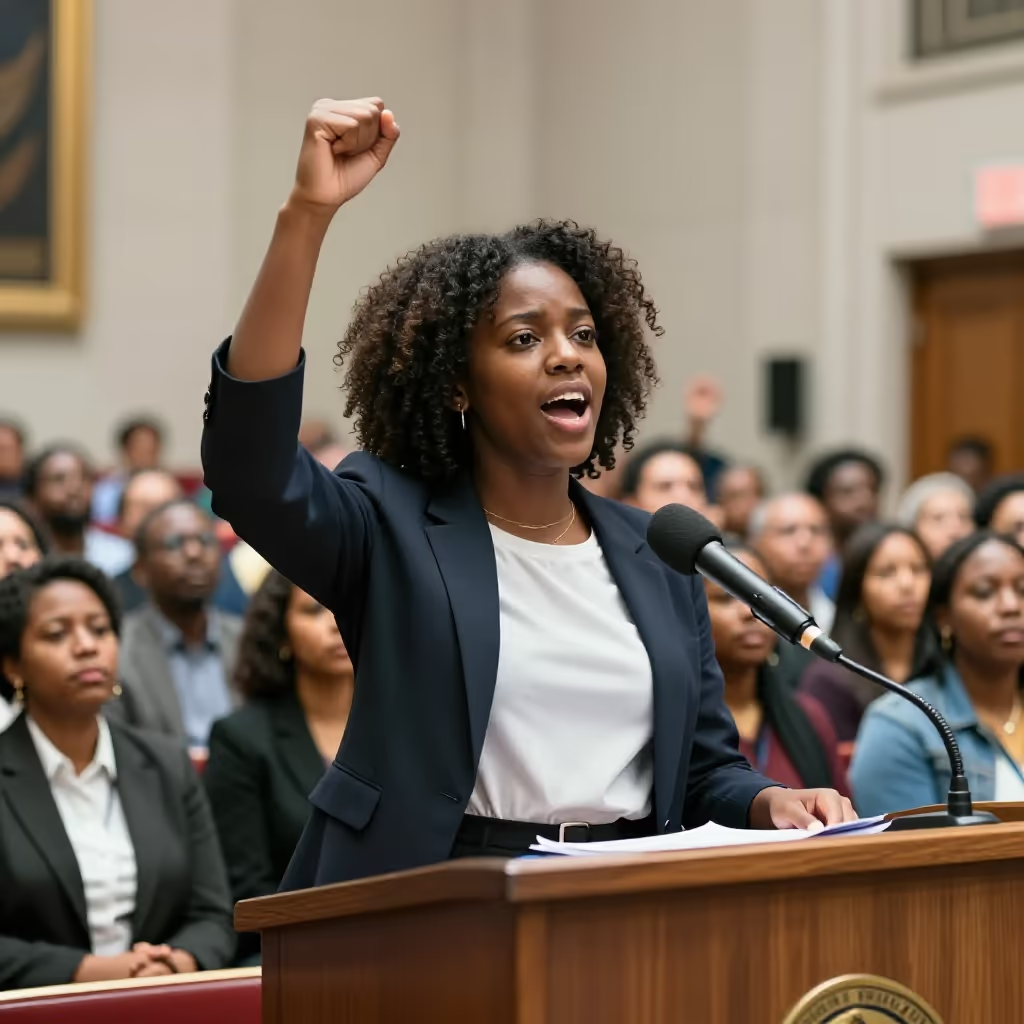
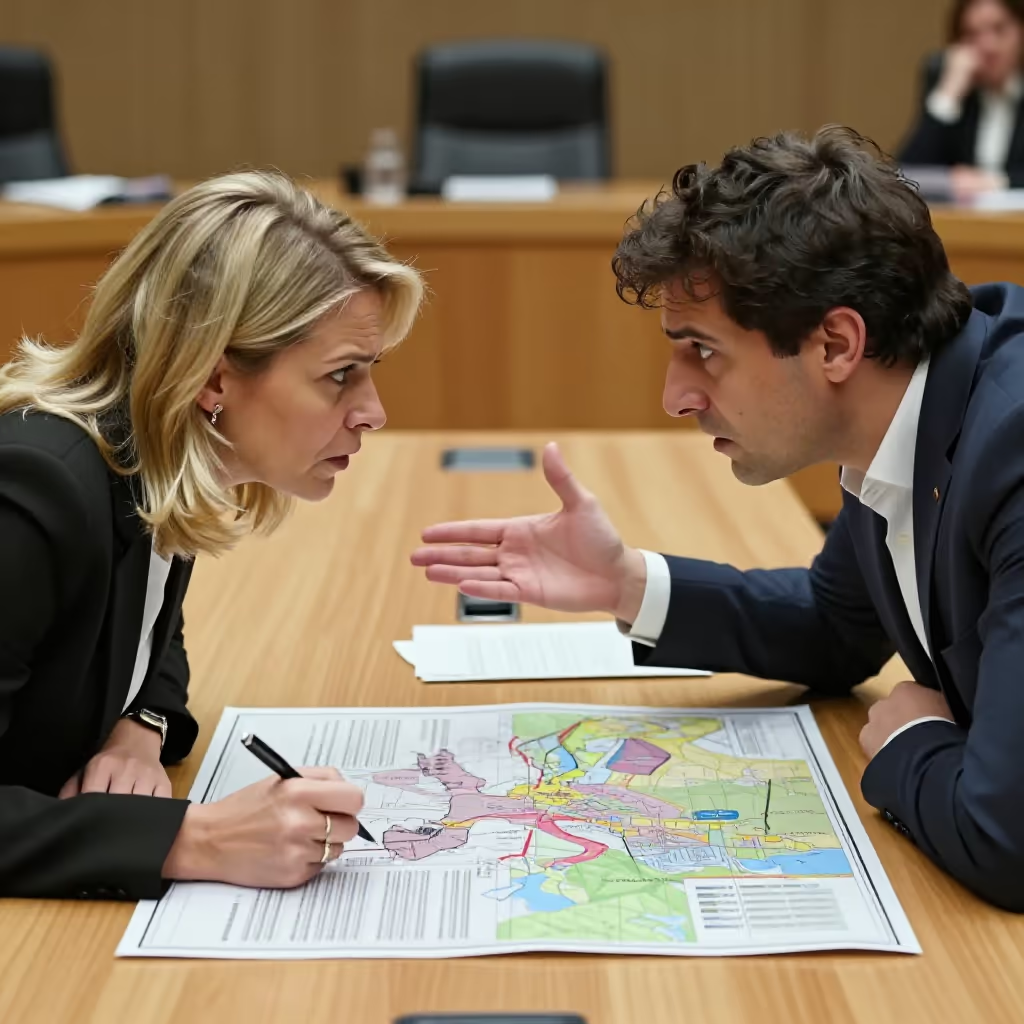
In the figurative meaning 'kämpfen um' (to fight for), 'fechten' (to fight) is always used with the preposition 'um' and the accusative. You fight for a goal or a right.
EXAMPLE
Die Partei focht um die Stimmen der unentschlossenen Wähler.
The party fought for the votes of undecided voters.
Elevated style
The expression 'um etwas fechten' (to fight for something) belongs to an elevated, rather written style. It is often found in legal, political, or literary texts.
EXAMPLE
Der Anwalt focht leidenschaftlich um den Freispruch seines Mandanten.
The lawyer fought passionately for his client's acquittal.
Outdated usage
The meaning 'betteln' (to beg) is colloquial and is considered outdated today. It is only rarely used now, mostly in an ironic or historical context.
EXAMPLE
Er hat kein Geld dabei und muss bei seinen Freunden um eine Zigarette fechten.
He doesn't have any money with him and has to beg his friends for a cigarette.
Compare with
near_synonym · confusable
fechten vs kämpfen
to fight
'kämpfen' and 'fechten' can both describe a confrontation or fight. 'kämpfen' is the general word: it fits physical fights, war, sports, and also goals or problems. Today, 'fechten' usually means the sport of fencing with an épée, foil, or saber. The figurative meaning 'um etwas fechten' (to fight for something) sounds elevated and is much rarer than 'kämpfen um'. Learners may confuse the words because fencing also involves fighting. In everyday language, however, you almost always say 'kämpfen', unless it is really about the sport of fencing or about a deliberately elevated style.
fechten
Seit zwei Jahren fechtet Lisa jeden Mittwoch im Sportverein.
Lisa has been fencing every Wednesday at the sports club for two years.
kämpfen
Die Mannschaft kämpft bis zur letzten Minute um den Sieg.
The team fights for victory until the very last minute.