

kämpfen
to fight
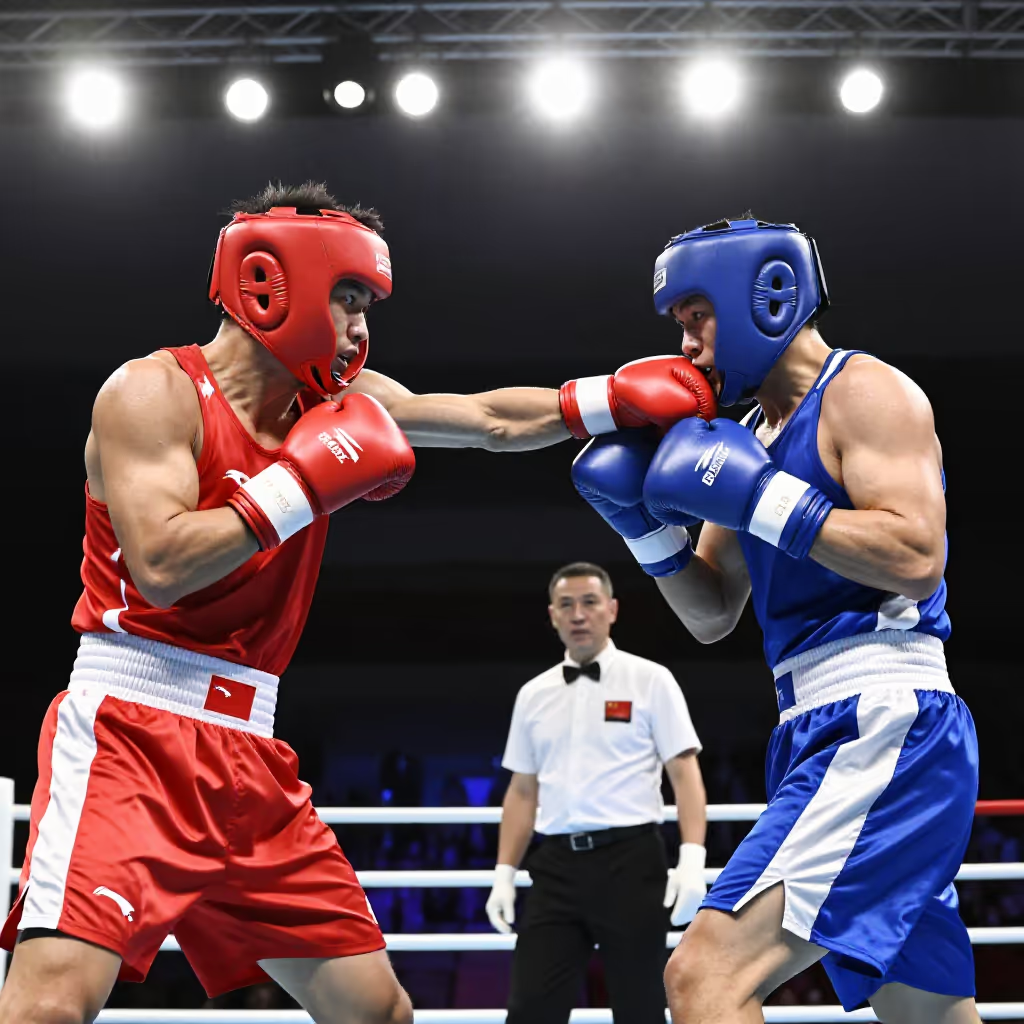
To engage in a physical or military confrontation with an opponent.
EXAMPLE
Die beiden Boxer kämpften bis zur letzten Runde.
The two boxers fought until the final round.
to fight
Loading your saved state.
to fight
To engage in a physical or military confrontation with an opponent.
Die beiden Boxer kämpften bis zur letzten Runde.
The two boxers fought until the final round.

to fight for
To commit oneself with great effort and determination to a goal, person, or cause.
Die Aktivisten kämpfen für den Schutz der Umwelt.
The activists are fighting for the protection of the environment.

to fight against
To try to overcome or eliminate something negative, such as an illness, problem, or injustice.
Sie kämpft seit Jahren gegen die schwere Krankheit.
She has been fighting against the serious illness for years.

to struggle with
To wrestle with and be troubled by a difficulty, problem, or inner state.
Er kämpft oft mit Selbstzweifeln.
He often struggles with self-doubt.
'Kämpfen' (to fight) is the verb that belongs to the noun 'der Kampf' (the fight/struggle). If you know the noun, you can easily work out the meaning of the verb.
Der Kampf gegen die Armut ist eine globale Herausforderung.
The fight against poverty is a global challenge.
The prepositions 'für' (for) and 'um' (for/over) have different meanings. You fight 'für' (+ accusative) an ideal cause, such as peace or justice. You fight 'um' (+ accusative) something concrete that you want to win or keep, such as a title or your life.
Die Bürgerinitiative kämpft für den Erhalt des alten Parks.
The citizens' initiative is fighting for the preservation of the old park.
The preposition 'gegen' (+ accusative) is used to name an opponent or a negative phenomenon that you want to overcome. These can be people, illnesses, or problems.
Er kämpft schon lange gegen seine Flugangst.
He has been fighting against his fear of flying for a long time.
The preposition 'mit' (+ dative) describes an inner or personal struggle with a difficulty. This is not about an opponent, but about a burden or problem that one is wrestling with.
Viele Studenten kämpfen mit dem Prüfungsstress.
Many students struggle with exam stress.
to argue / dispute
Both words can describe a confrontation between people. „Kämpfen“ refers here to a physical confrontation, while „streiten“ means a verbal confrontation or quarrel. Use „kämpfen“ when physical violence is the focus, and „streiten“ when the people are mainly talking angrily to each other.

Die beiden Männer kämpften wegen des Parkplatzes miteinander.
The two men fought each other over the parking space.
Die beiden Nachbarn stritten wegen des Parkplatzes miteinander.
The two neighbors argued with each other over the parking space.