

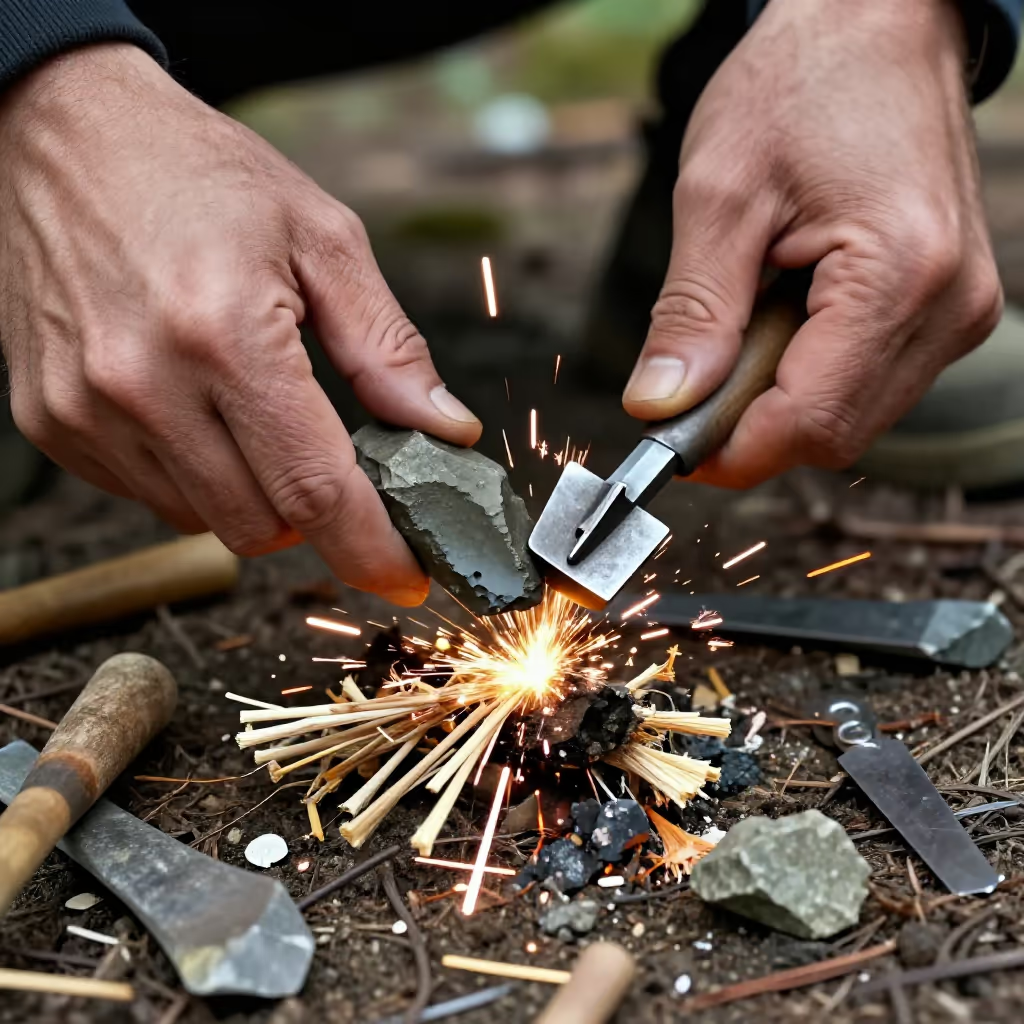
A very hard, siliceous rock that produces sparks when struck with steel and was formerly used for making fire as well as for making tools.
example
Am Strand fanden die Kinder einen glatt geschliffenen Feuerstein.
On the beach, the children found a smoothly polished piece of flint.
Usage tips
Compound word
The word is clearly made up of 'Feuer' (fire) and 'Stein' (stone). It names the stone after its most important historical function: producing fire.
EXAMPLE
In der Steinzeit nutzten die Menschen Feuersteine, um ein Lagerfeuer zu entzünden.
In the Stone Age, people used flints to light a campfire.
Historical context
'Feuerstein' (flint) is strongly associated with prehistory and early history. People often talk about tools, weapons, or arrowheads made of flint that come from this period.
EXAMPLE
Im Museum sind viele Werkzeuge aus Feuerstein ausgestellt.
Many tools made of flint are on display in the museum.
Cultural reference
A well-known mnemonic is the cartoon series 'The Flintstones', which is called 'Familie Feuerstein' in German and is set in a stylized Stone Age.
EXAMPLE
Die Hauptfiguren der Serie 'Familie Feuerstein' leben in einer Höhle.
The main characters of the series 'Familie Feuerstein' live in a cave.
Compare with
synonym
Feuerstein vs Flint
flint
'Flint' and 'Feuerstein' mean the same hard rock. Both words fit when talking about Stone Age tools or about sparks for making fire. 'Feuerstein' is usually easier to understand in everyday language because the word directly reminds you of fire. 'Flint' is a bit more technical or shorter and also appears in factual texts. In terms of meaning, there is no important difference here.
Feuerstein
Mit einem Feuerstein und einem Stück Stahl schlug Tom kleine Funken.
With a piece of flint and a piece of steel, Tom struck small sparks.
Flint
Im Museum zeigt der Führer ein Messer aus Flint.
In the museum, the guide shows a knife made of flint.