

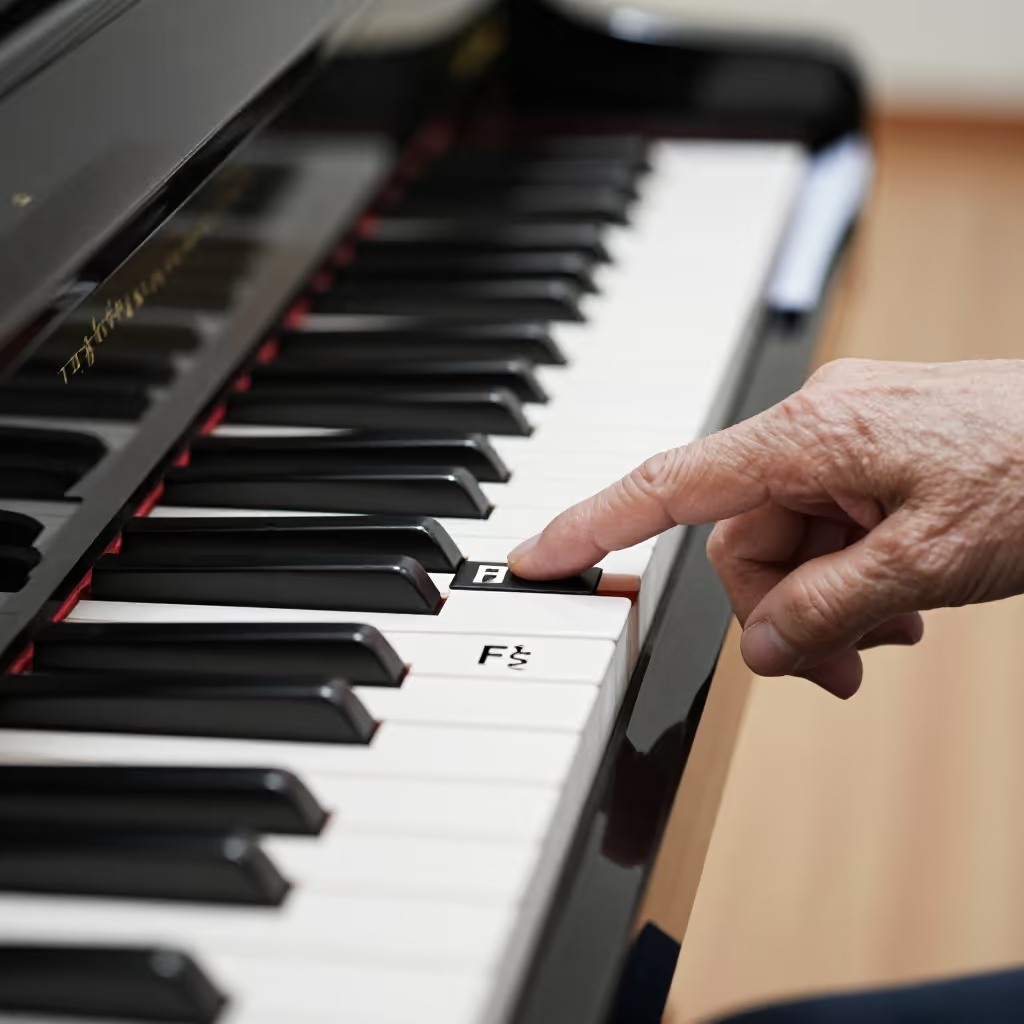
In music, the note that is a semitone higher than F. On a piano keyboard, it is represented by the black key to the right of F.
example
Der Geiger musste kurz nachstimmen, weil das Fis zu tief war.
The violinist had to retune briefly because the F-sharp was too low.
Usage tips
Structure of the note
In German note names, the ending '-is' is added to a note name to indicate that it is raised by a semitone. So 'Fis' (F-sharp) is the note 'F' + 'is' (raised).
EXAMPLE
Die Note nach dem F ist auf der schwarzen Taste das Fis.
The note after F on the black key is F-sharp.
Typical collocations
'Fis' (F-sharp) is very often used in connection with keys. The most important ones are 'Fis-Dur' (F-sharp major) and 'fis-Moll' (F-sharp minor).
EXAMPLE
Dieses Klavierstück steht in Fis-Dur.
This piano piece is in F-sharp major.
Register
'Fis' (F-sharp) is a technical term from music theory. Outside this context, the word is not used.
EXAMPLE
Im Musikunterricht lernen wir heute die Noten Cis, Dis und Fis.
In music class today, we are learning the notes C-sharp, D-sharp, and F-sharp.
Compare with
confusable
Fis vs F
F
'das F' and 'das Fis' both belong to music and refer to notes. The important difference is the pitch: 'das F' is a specific basic note, while 'das Fis' is a semitone higher. On the piano, 'Fis' is the black key directly to the right of 'F'. The words are easy to confuse because they look and sound similar. But to be precise: 'Fis' is not just another word for 'F', but a different note.
Fis
Auf dem Klavier liegt das Fis direkt rechts neben dem F.
On the piano, the F-sharp is directly to the right of the F.
F
Beim Singen trifft Lena das F noch nicht ganz sauber.
When singing, Lena still does not hit the F quite cleanly.