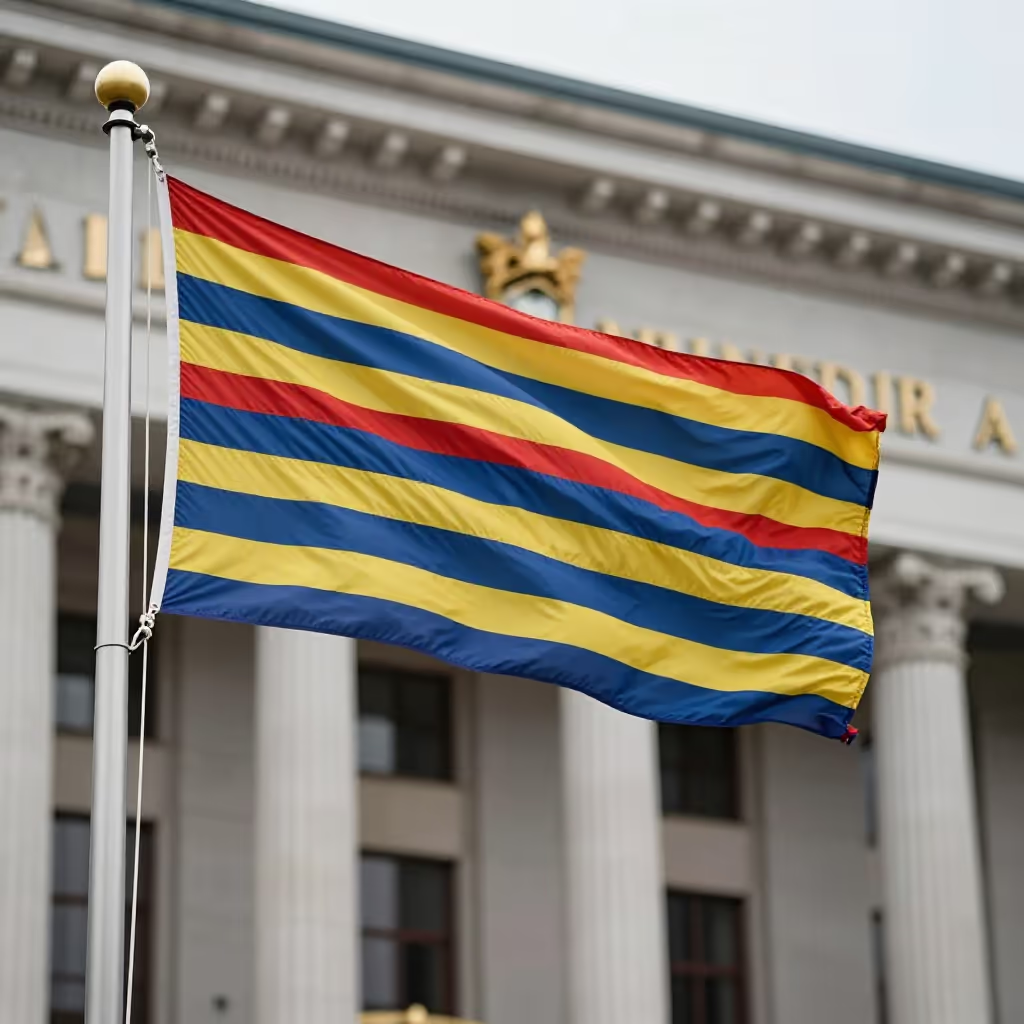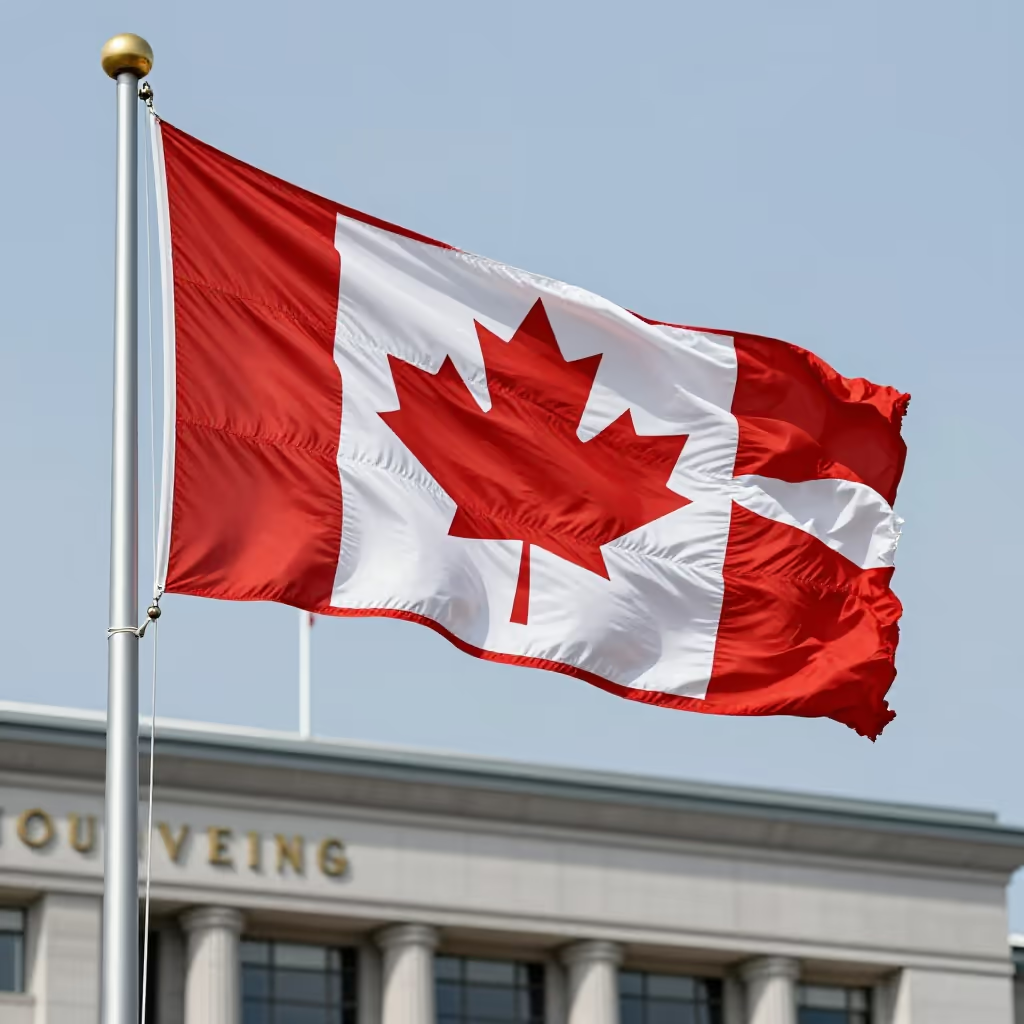
A piece of cloth with a specific pattern and colors that serves as a symbol for a country, organization, or group and is often attached to a pole.
example
Vor dem Rathaus weht die deutsche Flagge.
The German flag is flying in front of the town hall.
Usage tips
Typical verbs
Certain verbs are often combined with 'Flagge' (flag): you can 'hissen' (hoist) a flag, 'einholen' (lower) it, or 'auf halbmast setzen' (set it at half-mast) as a sign of mourning.
EXAMPLE
Jeden Morgen wird vor dem Gebäude die Flagge gehisst.
Every morning, the flag is hoisted in front of the building.
Fixed expression
The idiom 'Flagge zeigen' (to show one's colors) means to publicly and clearly stand by one's opinion or position, especially in a difficult situation.
EXAMPLE
Es ist an der Zeit, in der Klimadebatte klar Flagge zu zeigen.
It is time to clearly show our colors in the climate debate.
Fixed expression
Another important idiom is 'unter falscher Flagge segeln' (to sail under a false flag). It means that someone hides their true identity or intention and presents themselves as something else.
EXAMPLE
Der Spion operierte jahrelang unter falscher Flagge.
The spy operated under a false flag for years.
Compare with
synonym · confusable
Flagge vs Fahne
flag
'Flagge' and 'Fahne' often mean the same thing: a piece of cloth with colors or symbols that represents a country, club, or group. In many everyday situations, you can use both words. 'Flagge' is especially common for countries, official symbols, or international situations. 'Fahne' is also normal, especially when you see, carry, or wave the piece of fabric. Confusing them is usually not a big problem here, because the basic meaning is the same. The only important point is that 'Fahne' has other meanings too, for example colloquially for alcohol breath, but 'Flagge' does not have this meaning.
Flagge
Vor dem Rathaus hängt die Flagge der Stadt.
The city's flag is hanging in front of the town hall.