

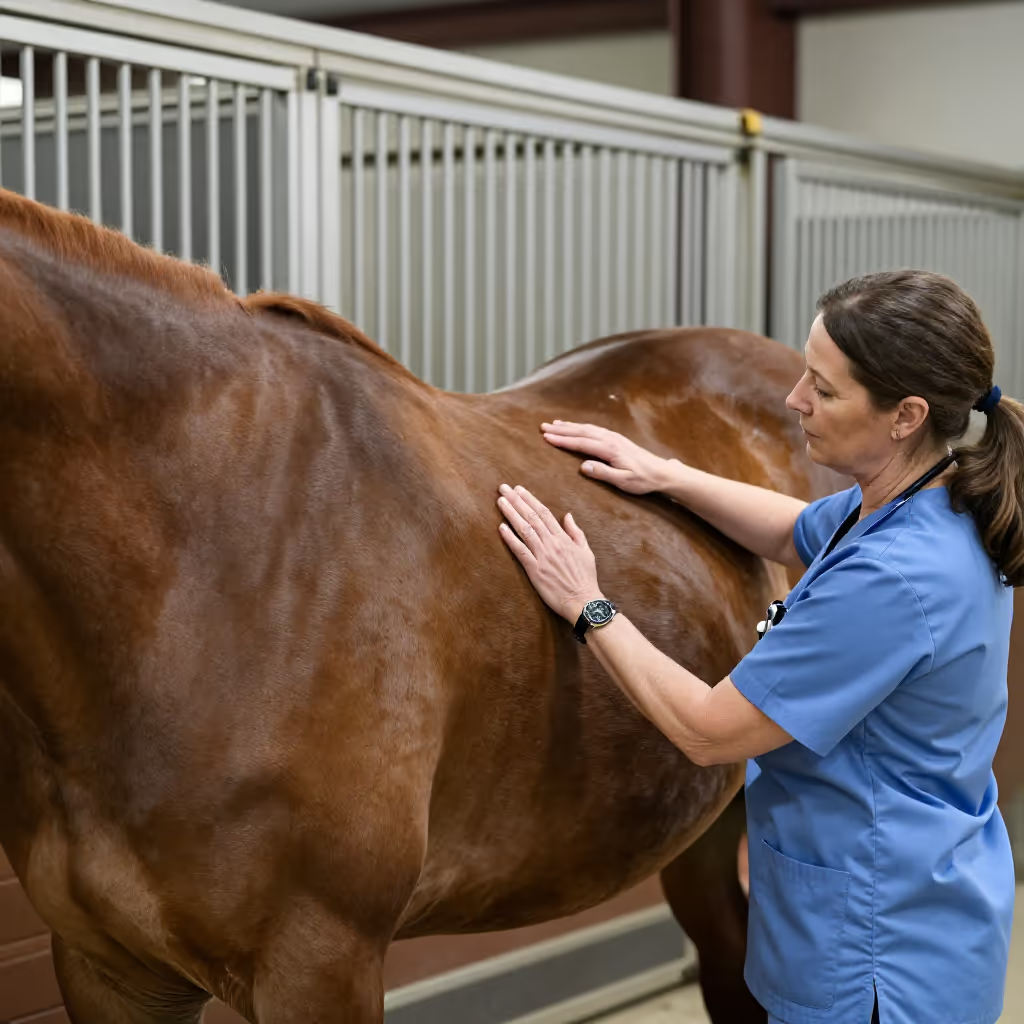
die Flanke
flank
The side part of a human or animal body between the ribs and the hip.
EXAMPLE
Der Boxer erhielt einen Treffer in die linke Flanke.
The boxer took a hit to the left flank.
flank / cross
Loading your saved state.
flank
The side part of a human or animal body between the ribs and the hip.
Der Boxer erhielt einen Treffer in die linke Flanke.
The boxer took a hit to the left flank.
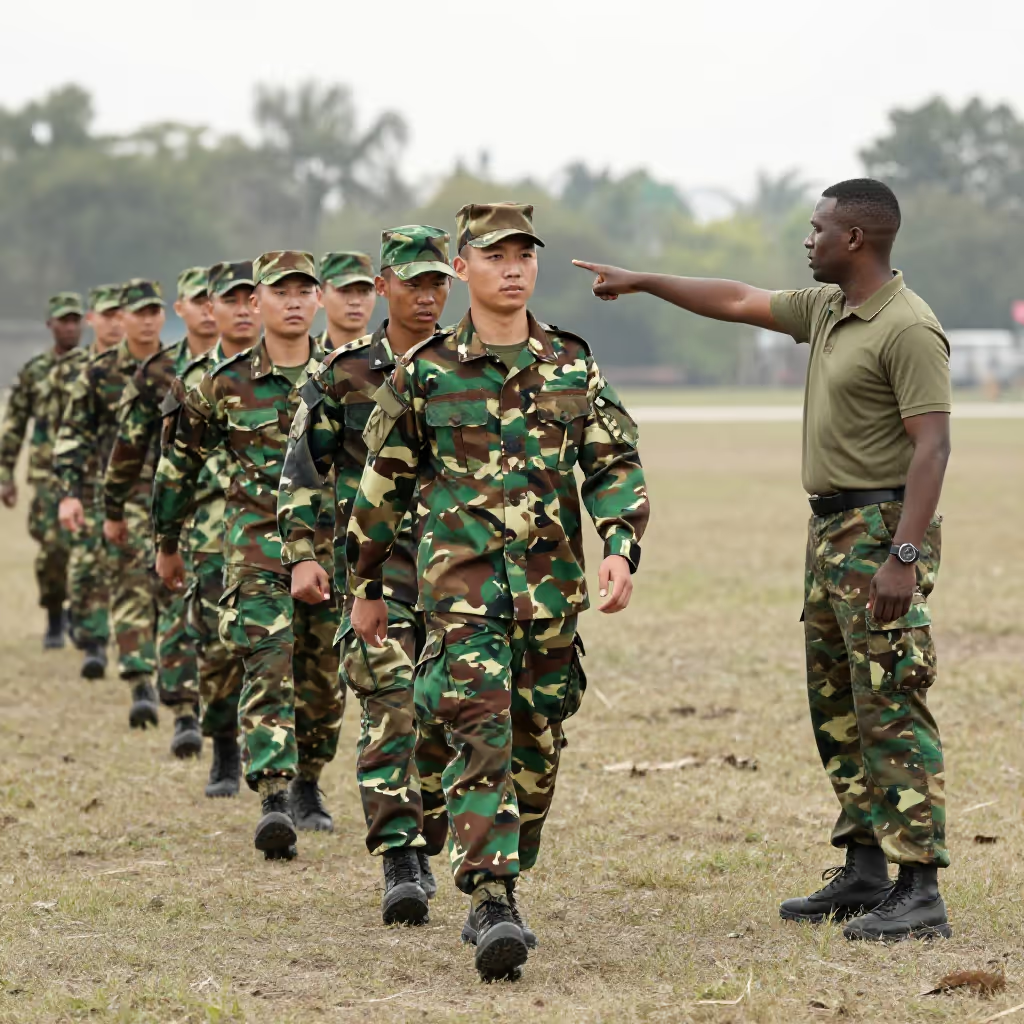
flank
In military contexts or sports, the side edge of a formation or playing field.
Der Angriff erfolgte über die rechte Flanke des Gegners.
The attack came over the opponent's right flank.
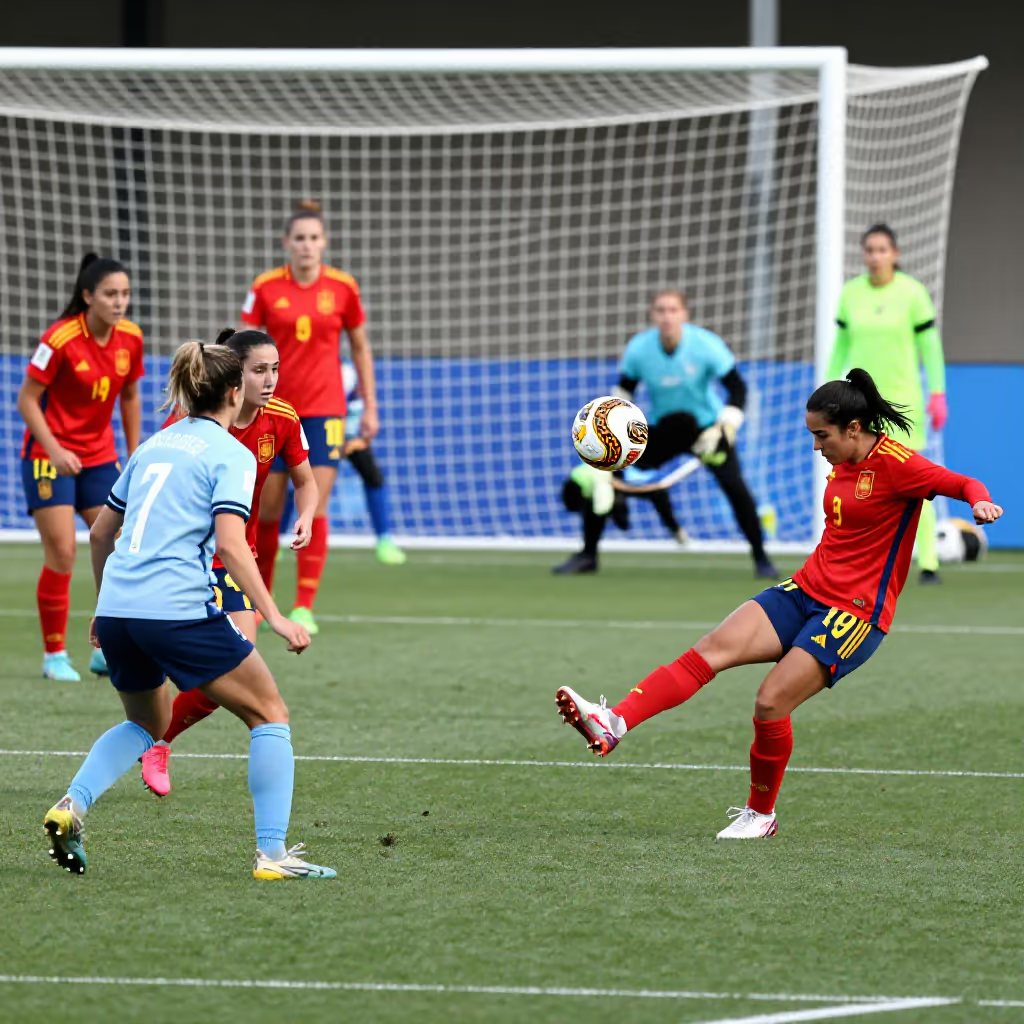
cross
In sports, especially soccer, a high pass from the side of the field into the center in front of the opposing goal.
Er schlug eine präzise Flanke auf den Stürmer.
He sent a precise cross to the striker.
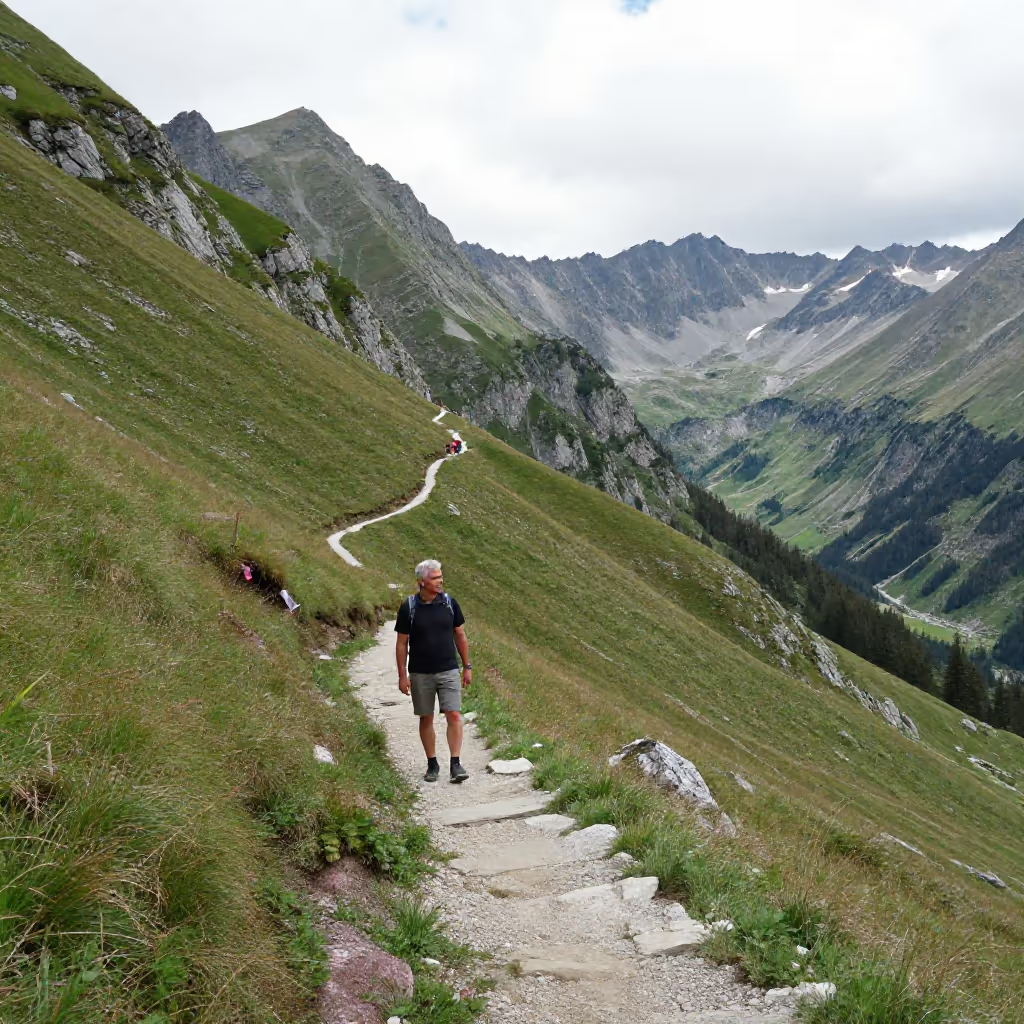
flank
The side slope of a mountain, hill, or mountain range.
Die Lawine löste sich an der steilen Nordflanke des Berges.
The avalanche broke loose on the steep north flank of the mountain.
The word 'Flanke' (flank) always means a kind of 'side'. The context makes clear which side is meant: the side of a body, a military formation, a mountain, or a playing field.
Der Soldat sicherte die linke Flanke der Einheit.
The soldier secured the unit's left flank.
In soccer, this kind of pass is often combined with the verbs 'schlagen' (to hit/send), 'geben' (to give), or 'bringen' (to deliver). People speak of a 'hohe Flanke' (high cross) or a 'scharfe Flanke' (driven cross).
Der Außenspieler schlug eine perfekte Flanke in den Strafraum.
The winger sent a perfect cross into the penalty area.
In strategic contexts such as the military or team sports, 'Flanke' (flank) is often used with verbs like 'angreifen' (to attack), 'sichern' (to secure), or 'decken' (to cover).
Der General befahl, die gegnerische Flanke anzugreifen.
The general ordered them to attack the enemy flank.
When talking about mountains, 'Flanke' (flank) is often combined with compass directions to describe a specific side. Typical adjectives are 'steil' (steep) or 'felsig' (rocky).
Die Wanderroute führt entlang der sonnigen Südflanke des Berges.
The hiking route runs along the sunny south flank of the mountain.
page / side
Both Seite and Flanke can refer to a position at the side of a formation or on a playing field. Seite is the general spatial term, while Flanke defines this area more clearly in tactical or spatial terms. Use Seite for a neutral location, and Flanke for a clearly bounded edge area.

Die Spieler sicherten die rechte Flanke der Formation.
The players secured the formation's right flank.
Die Spieler standen auf der rechten Seite des Spielfelds.
The players stood on the right side of the field.