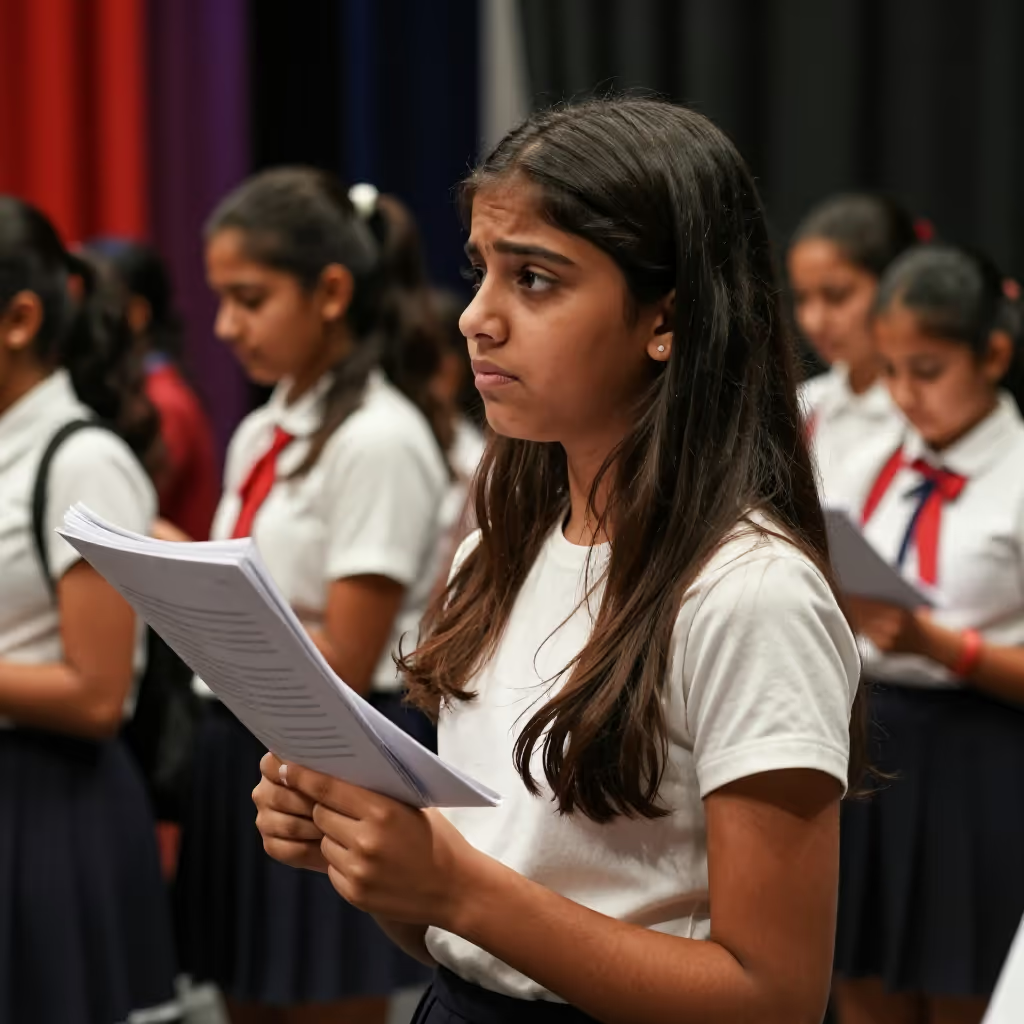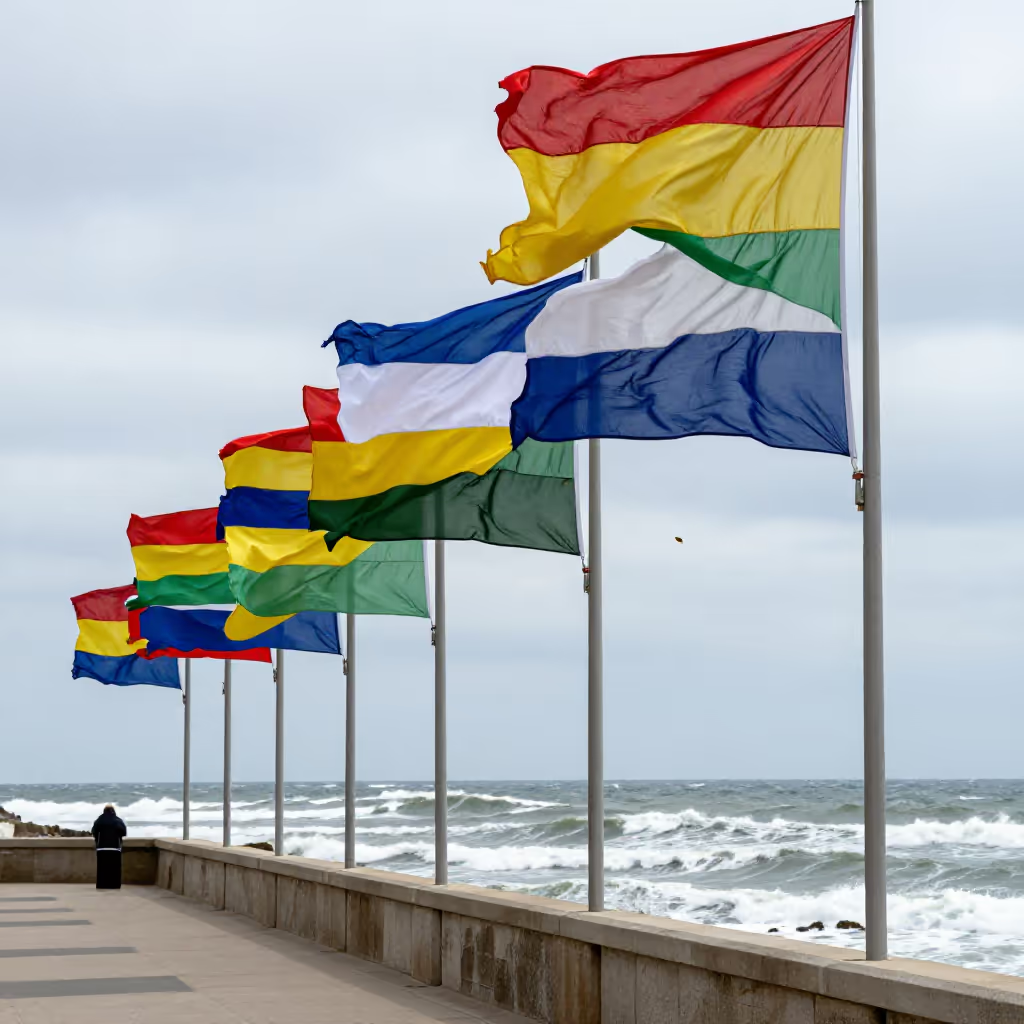
To move quickly and irregularly back and forth in the air, often caused by the wind. Typical of light things such as flags, leaves, or the wings of butterflies.
example
Die Wäsche flatterte auf der Leine im Wind.
The laundry fluttered on the line in the wind.

Usage tips
Context clues
You can recognize the meaning of 'flattern' (to flutter) from the subject: Is it light objects in the wind (flag, leaf), mail (bill, letter), or 'Nerven' (nerves)?
EXAMPLE
Die Blätter flatterten von den Bäumen.
The leaves fluttered down from the trees.
Auxiliary verb: haben or sein?
The perfect tense is formed with 'haben' when the movement takes place in one location. If it describes movement from A to B, you use 'sein'.
EXAMPLE
Die Papiere haben auf dem Schreibtisch geflattert.
The papers fluttered on the desk.
Colloquial expression
The expression 'ins Haus flattern' is used colloquially for mail arriving, often with a slightly negative or ironic connotation when referring to bills.
EXAMPLE
Schon wieder ist eine Mahnung ins Haus geflattert.
Yet another reminder notice arrived in the mail.
Fixed expression with dative
In the meaning 'nervös sein' (to be nervous), 'flattern' is used in the fixed expression 'die Nerven flattern' (one's nerves are on edge). The person who is nervous is in the dative.
EXAMPLE
Vor jeder Prüfung flattern mir die Nerven.
Before every exam, I get nervous.
Compare with
near_synonym · confusable
flattern vs fliegen
to fly
'fliegen' and 'flattern' both have to do with movement in the air. 'fliegen' is the general word: a bird, an airplane, or an insect moves through the air. 'flattern' describes a fast, irregular back-and-forth movement, often of wings or light things in the wind. Learners may confuse the words because a butterfly can both 'fliegen' and 'flattern'. 'fliegen' says that it is moving through the air; 'flattern' describes how restless or light that movement looks.
flattern
Am Fenster flattert der Vorhang im Wind.
The curtain is fluttering in the wind by the window.