

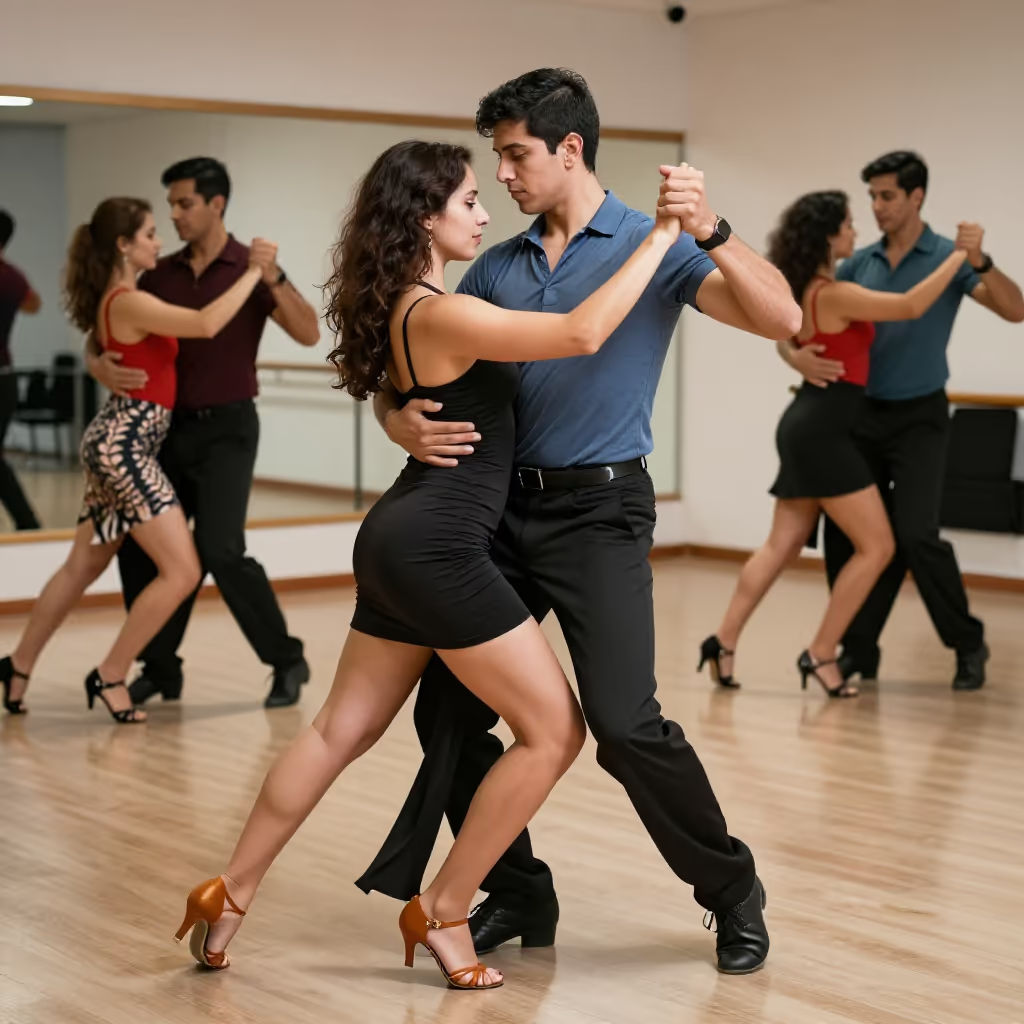
tanzen
to dance
To move rhythmically, usually to music, often as a social activity or art form.
EXAMPLE
Auf der Hochzeit haben wir bis in den Morgen getanzt.
At the wedding, we danced until morning.
to dance
Loading your saved state.
to dance
To move rhythmically, usually to music, often as a social activity or art form.
Auf der Hochzeit haben wir bis in den Morgen getanzt.
At the wedding, we danced until morning.

to dance
To move quickly, lightly, and irregularly. Often used figuratively for things like leaves, snowflakes, or reflections of light.
Die Schneeflocken tanzten im Wind vor dem Fenster.
The snowflakes danced in the wind in front of the window.

to dance to someone's tune
To submit to another person's will and do exactly what that person demands.
Er hat es satt, immer nur nach der Pfeife seines Chefs zu tanzen.
He is tired of always dancing to his boss's tune.
The perfect tense of 'tanzen' (to dance) is usually formed with 'haben' when it is about the activity itself. But when movement from one place to another is described, 'sein' is used.
Wir haben die ganze Nacht getanzt.
We danced the whole night.
'Tanzen' (to dance) can be used with different complements: you can dance a specific dance (accusative), dance with someone (preposition 'mit'), or dance to music (preposition 'zu').
Er hat auf der Feier einen Tango getanzt.
He danced a tango at the party.
In this meaning, 'tanzen' (to dance) is often used poetically for things that move lightly and irregularly. Typical subjects are leaves, snowflakes, flames, or reflections of light.
Die Blätter tanzten im Herbstwind.
The leaves danced in the autumn wind.
The idiom 'nach jemandes Pfeife tanzen' (to dance to someone's tune) is a fixed structure. The part 'jemandes' is often replaced by a possessive article (e.g., 'seiner') or a 'von + Dativ' construction.
Ich lasse mir nicht vorschreiben, was ich tun soll. Ich tanze nicht nach seiner Pfeife.
I won't let anyone tell me what to do. I don't dance to his tune.
dance
Tanzen and der Tanz both relate to rhythmic movement to music. Tanzen refers to the activity itself, while der Tanz more often names this movement as a form or process. Use tanzen when someone is carrying out the activity, and Tanz when describing it as a thing.
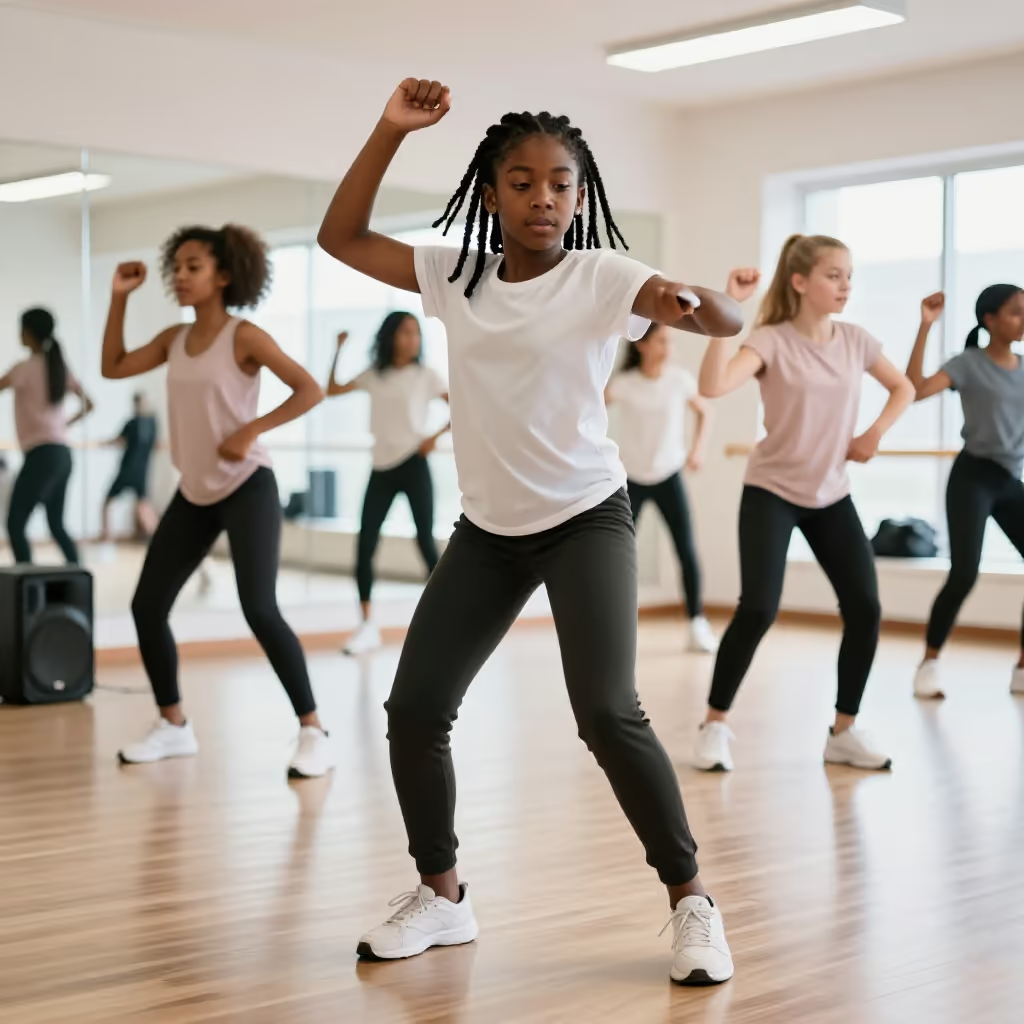
Die Gäste tanzen im Saal zur Musik.
The guests are dancing to the music in the hall.
Der Tanz der Gäste im Saal wirkt sehr lebhaft.
The guests' dance in the hall seems very lively.