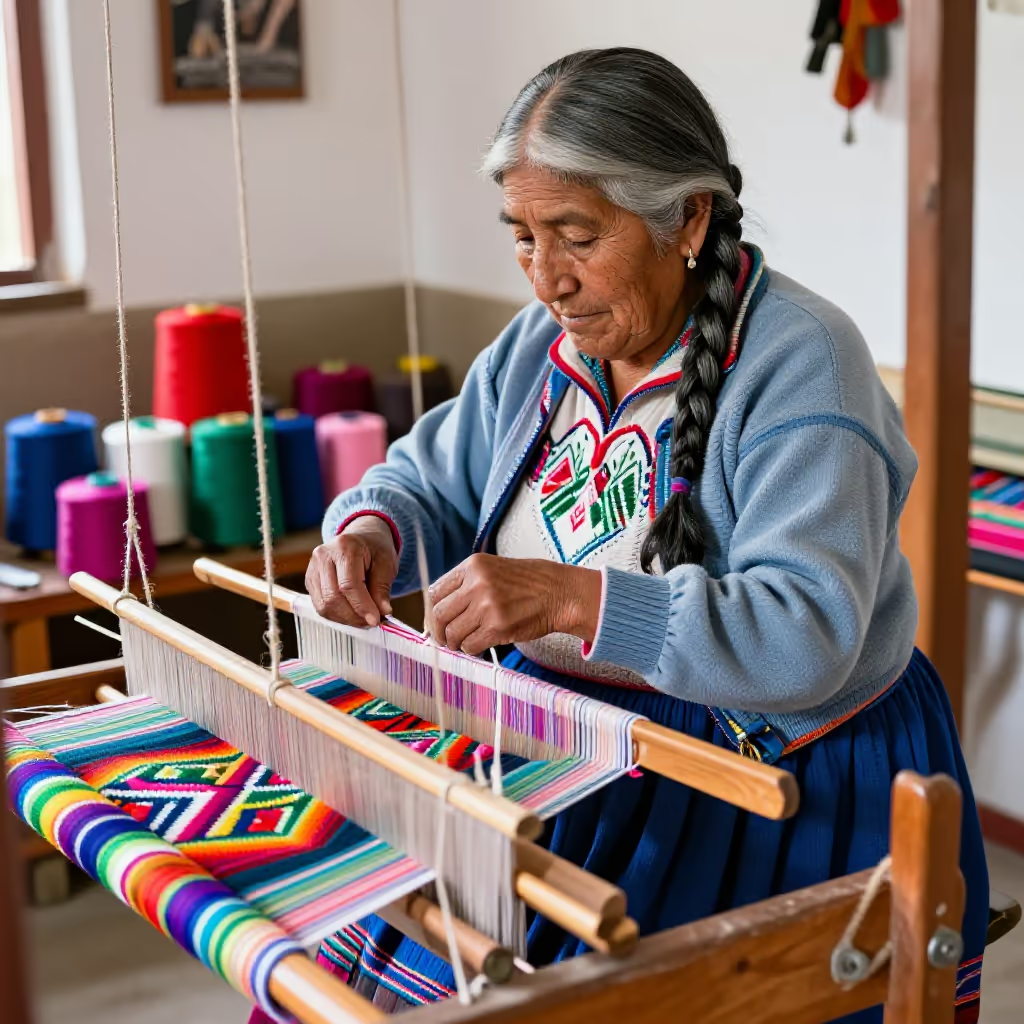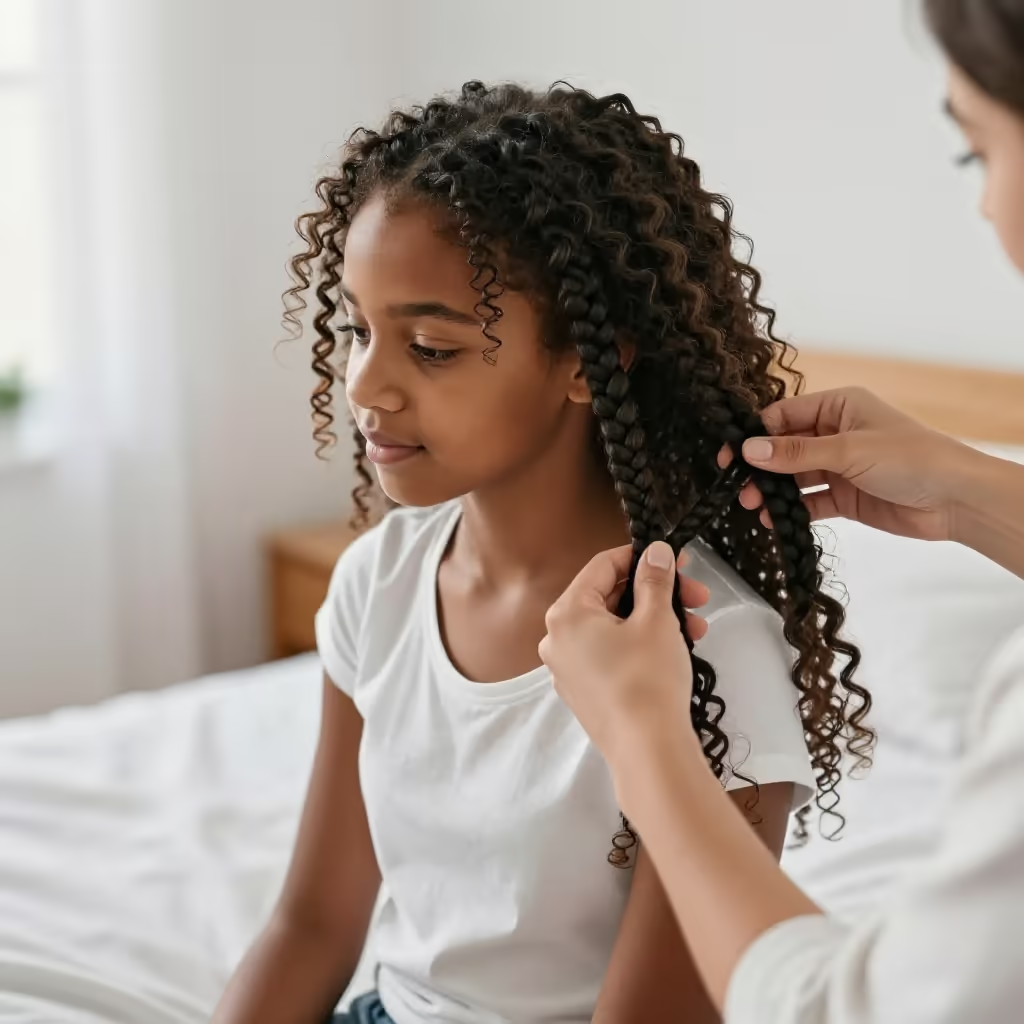
To systematically intertwine three or more strands of a flexible material, such as hair, ropes, or straw, in order to form a connected structure.
example
Sie hat ihrer Tochter die Haare zu einem Zopf geflochten.
She braided her daughter's hair into a plait.
Usage tips
Sentence structure and usage patterns
A typical sentence structure is 'etwas aus etwas flechten' (to braid/weave something from something), used to describe what something is made from. The material is in the dative case.
EXAMPLE
Die Kinder haben gelernt, wie man aus langen Grashalmen kleine Figuren flicht.
The children learned how to weave small figures from long blades of grass.
Sentence structure with 'zu'
Another common construction is 'etwas zu etwas flechten' (to braid/weave something into something). This expresses what form or object is created by braiding or weaving.
EXAMPLE
Sie flocht die bunten Bänder zu einem Freundschaftsarmband.
She braided the colorful ribbons into a friendship bracelet.
Typical collocations
When it refers to intertwining strands, 'flechten' (to braid) is very often used in connection with hair. Typical objects are 'Haare' (hair), 'einen Zopf' (a braid/plait), or 'Strähnen' (strands).
EXAMPLE
Kannst du mir bitte die Haare flechten?
Can you please braid my hair?
Typical objects
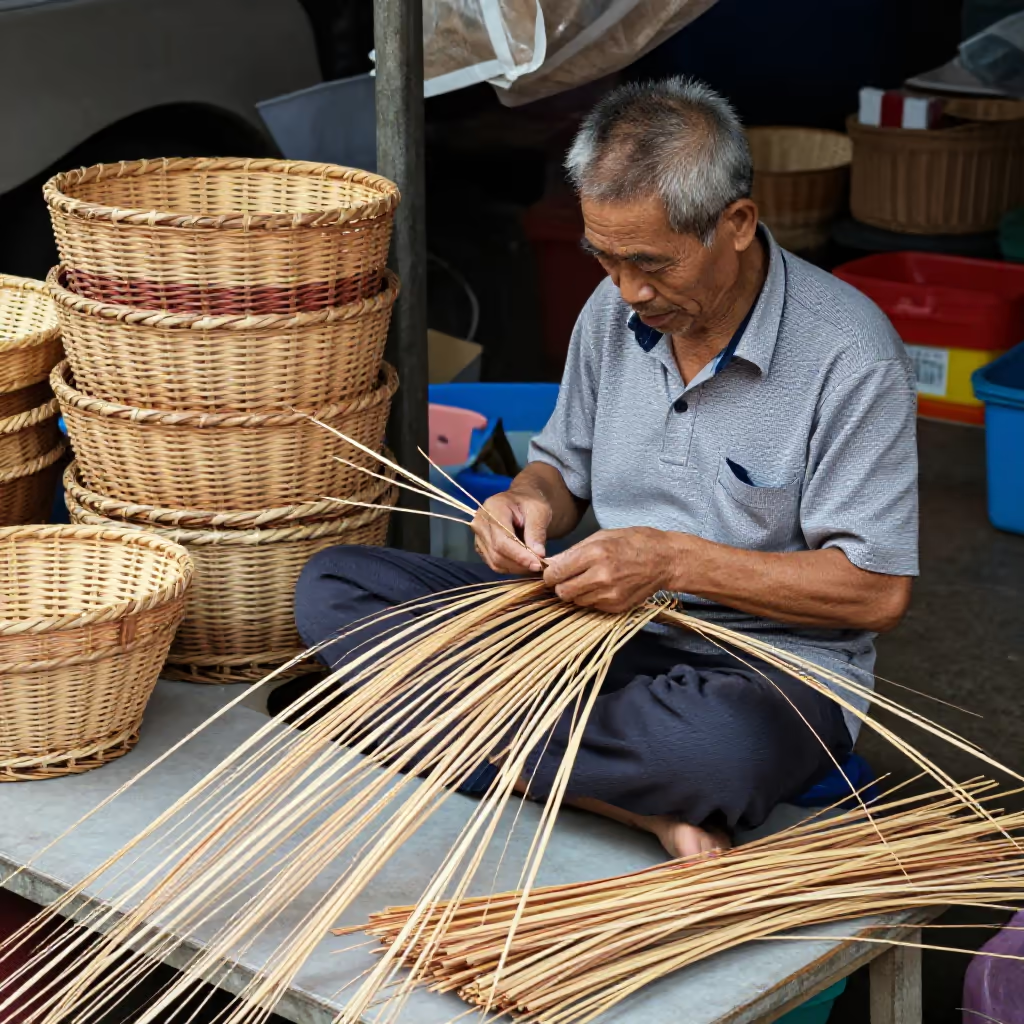
When the meaning is making an object, typical objects are 'einen Korb' (a basket), 'einen Kranz' (a wreath), or 'eine Matte' (a mat).
EXAMPLE
Zum Erntedankfest werden traditionell Kränze aus Getreide geflochten.
For the harvest festival, wreaths are traditionally woven from grain.
Compare with
near_synonym · confusable
flechten vs binden
to tie / bind
'binden' and 'flechten' both have to do with connecting flexible material. 'binden' is used when something is fastened or held together with a string, ribbon, or knot. 'flechten' means that several strands are placed regularly over and under each other, for example hair, ropes, or straw. The words can be confused because in both cases something holds together in the end. The difference is the technique: when you use 'binden', you usually make a knot or a bow; when you use 'flechten', a pattern made of several strands is created.
flechten
Im Park flechtet Anna ihrer Tochter einen Zopf.
In the park, Anna braids her daughter's hair.
binden
Zu Hause bindest du die Pakete mit festem Band zu.
At home, you tie up the packages with strong tape.