


fließend
fluent
Refers to the ability to speak a language effortlessly, correctly, and without hesitation.
EXAMPLE
Nach einem Jahr in Spanien sprach sie fließend Spanisch.
After a year in Spain, she spoke fluent Spanish.
fluent / flowing
Loading your saved state.
fluent
Refers to the ability to speak a language effortlessly, correctly, and without hesitation.
Nach einem Jahr in Spanien sprach sie fließend Spanisch.
After a year in Spain, she spoke fluent Spanish.
flowing
Describes the movement of liquids or gases; moving continuously.
In unserer Hütte gab es kein fließendes Wasser.
There was no running water in our cabin.
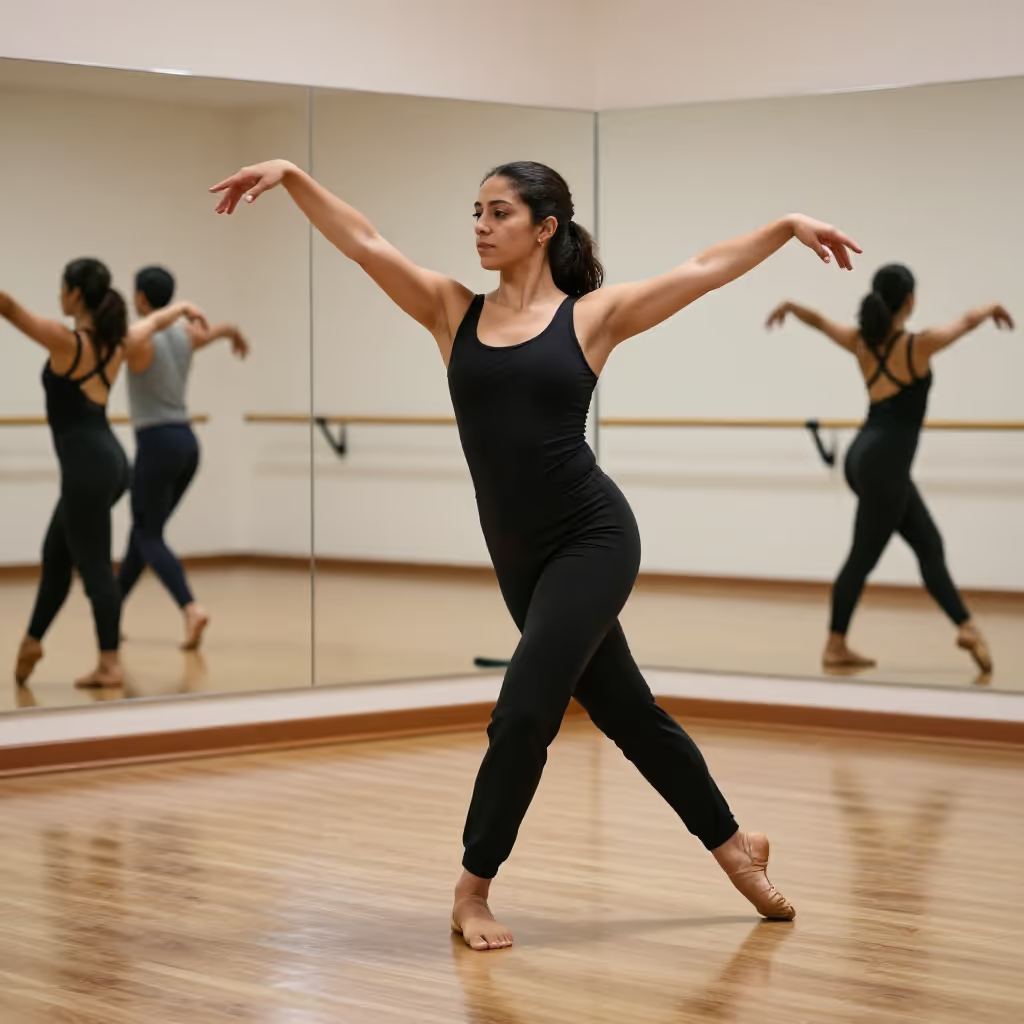
smooth
Describes a gentle, harmonious, and uninterrupted transition or movement.
Der Übergang zwischen den beiden Szenen im Film war sehr fließend.
The transition between the two scenes in the film was very smooth.
The word 'fließend' (fluent/flowing) is the present participle of the verb 'fließen' (to flow). This origin explains all its meanings: a language can 'fließen' like water (you speak effortlessly), liquids 'fließen', and transitions can also be 'fließend' (that is, seamless).
Der Redner beeindruckte durch seine fließende Ausdrucksweise.
The speaker impressed everyone with his fluent way of expressing himself.
When it comes to languages, 'fließend' (fluent) is almost always used as an adverb with verbs like 'sprechen' (to speak) or 'beherrschen' (to master). It describes how well someone speaks a language.
Sie spricht fließend drei Sprachen.
She speaks three languages fluently.
In the literal meaning, 'fließend' (flowing) is often combined with 'Wasser' (water) or 'Verkehr' (traffic). 'Fließendes Wasser' is a fixed term for running water from the tap.
Trotz der Hauptverkehrszeit war der Verkehr fließend.
Despite rush hour, the traffic was flowing.
To describe a seamless process, 'fließend' (smooth/flowing) is often combined with nouns such as 'Übergang' (transition) or 'Bewegung' (movement).
Die Choreografie zeichnete sich durch fließende Bewegungen aus.
The choreography was characterized by flowing movements.
ongoing / continual
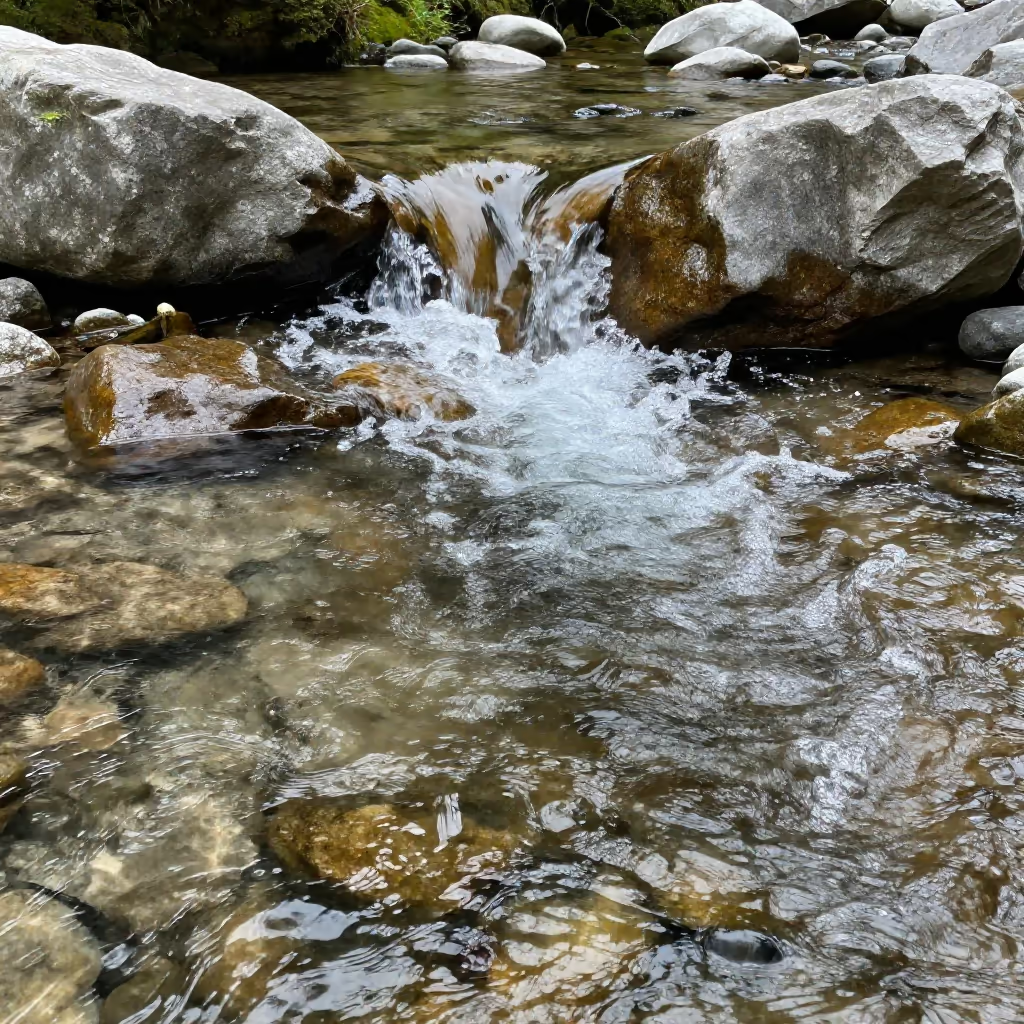
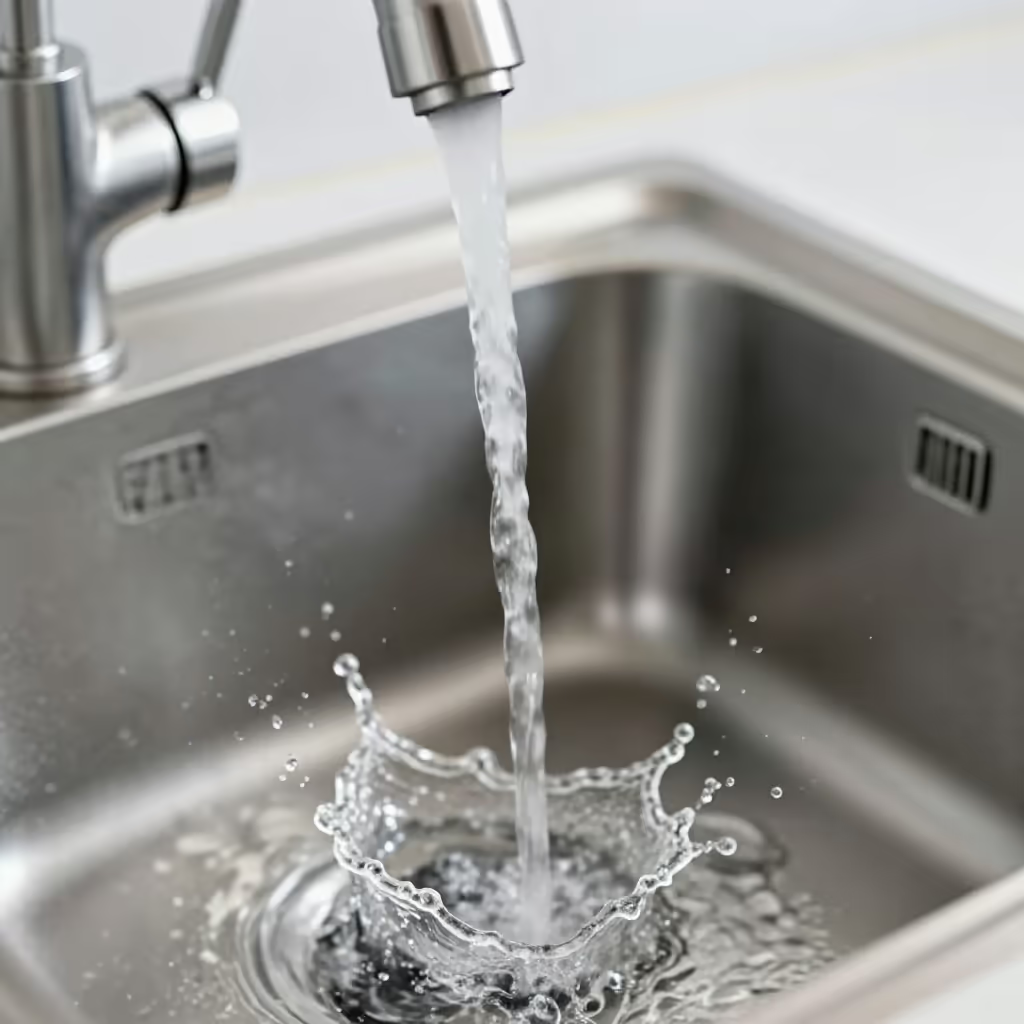
Both words can refer to water in motion. „Fließend“ generally describes a liquid flowing continuously, while „laufend“ is used especially for water coming from, for example, a tap. Use „fließend“ for streams and „laufend“ for water flowing out.
Im Bach sahen wir fließendes Wasser zwischen den Steinen.
We saw water flowing between the stones in the stream.
Aus dem Hahn lief laufendes Wasser in den Eimer.
Running water flowed from the tap into the bucket.