

flöten
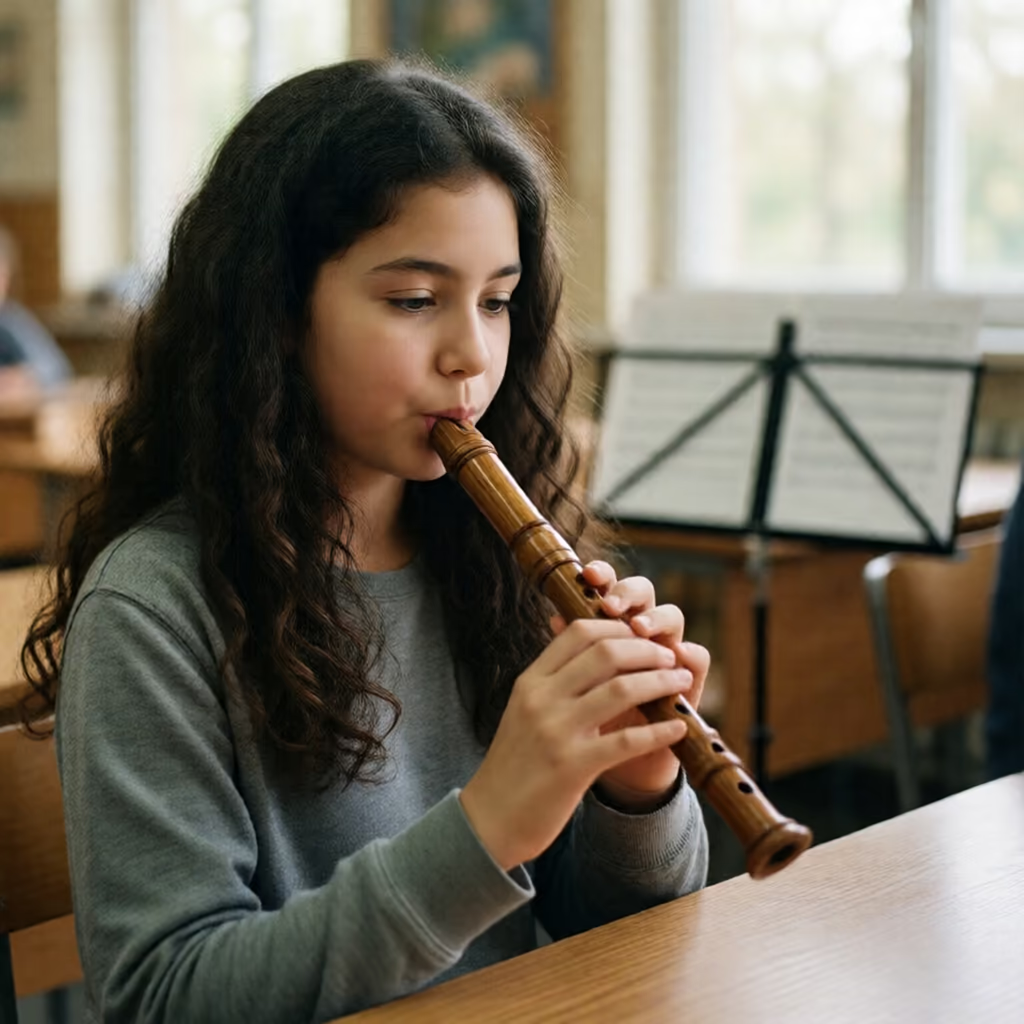
to play the flute
To play a piece of music or a melody on a flute.
EXAMPLE
Sie flötet jeden Abend ein paar Minuten auf ihrer Blockflöte.
She plays her recorder for a few minutes every evening.
to play the flute / to whistle
flöten – flötete – hat geflötet
Loading your saved state.
to play the flute
To play a piece of music or a melody on a flute.
Sie flötet jeden Abend ein paar Minuten auf ihrer Blockflöte.
She plays her recorder for a few minutes every evening.

to whistle
To produce a whistling or flute-like, often melodic sound.
Der Junge flötet leise vor sich hin.
The boy quietly whistles to himself.

to go missing
Colloquial: to be lost or disappear.
Meine Geldbörse ist gestern im Zug flöten gegangen.
My wallet went missing on the train yesterday.
| ich | flöte |
|---|---|
| du | flötest |
| er/sie/es | flötet |
| wir | flöten |
| ihr | flötet |
| sie | flöten |
| ich | flötete |
|---|---|
| du | flötetest |
| er/sie/es | flötete |
| wir | flöteten |
| ihr | flötetet |
| sie | flöteten |
| ich | habe geflötet |
|---|---|
| du | hast geflötet |
| er/sie/es | hat geflötet |
| wir | haben geflötet |
| ihr | habt geflötet |
| sie | haben geflötet |
| du | flöte! flöt! |
|---|---|
| ihr | flötet! |
| Sie | flöten Sie! |
| ich | hatte geflötet |
|---|---|
| du | hattest geflötet |
| er/sie/es | hatte geflötet |
| wir | hatten geflötet |
| ihr | hattet geflötet |
| sie | hatten geflötet |
| ich | werde flöten |
|---|---|
| du | wirst flöten |
| er/sie/es | wird flöten |
| wir | werden flöten |
| ihr | werdet flöten |
| sie | werden flöten |
| ich | flöte |
|---|---|
| du | flötest |
| er/sie/es | flöte |
| wir | flöten |
| ihr | flötet |
| sie | flöten |
Used for reported speech.
| ich | flötete |
|---|---|
| du | flötetest |
| er/sie/es | flötete |
| wir | flöteten |
| ihr | flötetet |
| sie | flöteten |
Used for wishes and “would”.
| infinitive | flöten |
|---|---|
| with zu | zu flöten |
| present participle | flötend |
| past participle | geflötet |
The meaning can often be recognized from the surrounding words: „auf der Flöte“ (on the flute) points to the musical instrument, „vor sich hin“ (to oneself) indicates quiet whistling or playing without a specific audience, and „gehen“ (to go) is part of the fixed expression „flöten gehen“ (to go missing).
Sie flötet auf ihrer neuen Flöte ein Weihnachtslied.
She plays a Christmas carol on her new flute.
Während der Arbeit flötet er leise vor sich hin.
While working, he quietly whistles to himself.
Wegen der Grippe ist mein ganzer Urlaub flöten gegangen.
Because of the flu, my entire vacation went up in smoke.
When playing an instrument, „auf“ (on) is often used with the dative: You can „auf der Flöte“ (on the flute) or „auf einer Blockflöte“ (on a recorder) flöten. A melody or song can also follow „flöten“ directly.
Das Kind flötet auf der Blockflöte eine einfache Melodie.
The child plays a simple melody on the recorder.
For quiet, unplanned music-making, the expression „vor sich hin flöten“ (to quietly whistle or play to oneself) is especially common. It often describes an activity done on the side, without a performance or audience.
Im Garten flötete sie vor sich hin und vergaß die Zeit.
In the garden, she quietly whistled to herself and lost track of time.
„Flöten gehen“ (to go missing) is a fixed, colloquial expression. In the main clause, „gehen“ (to go) is conjugated, while „flöten“ remains unchanged and comes later in the sentence („geht flöten“). In the perfect tense, „flöten“ comes before the participle („ist flöten gegangen“).
Wenn wir nicht aufpassen, geht der ganze Plan flöten.
If we're not careful, the whole plan will go up in smoke.