

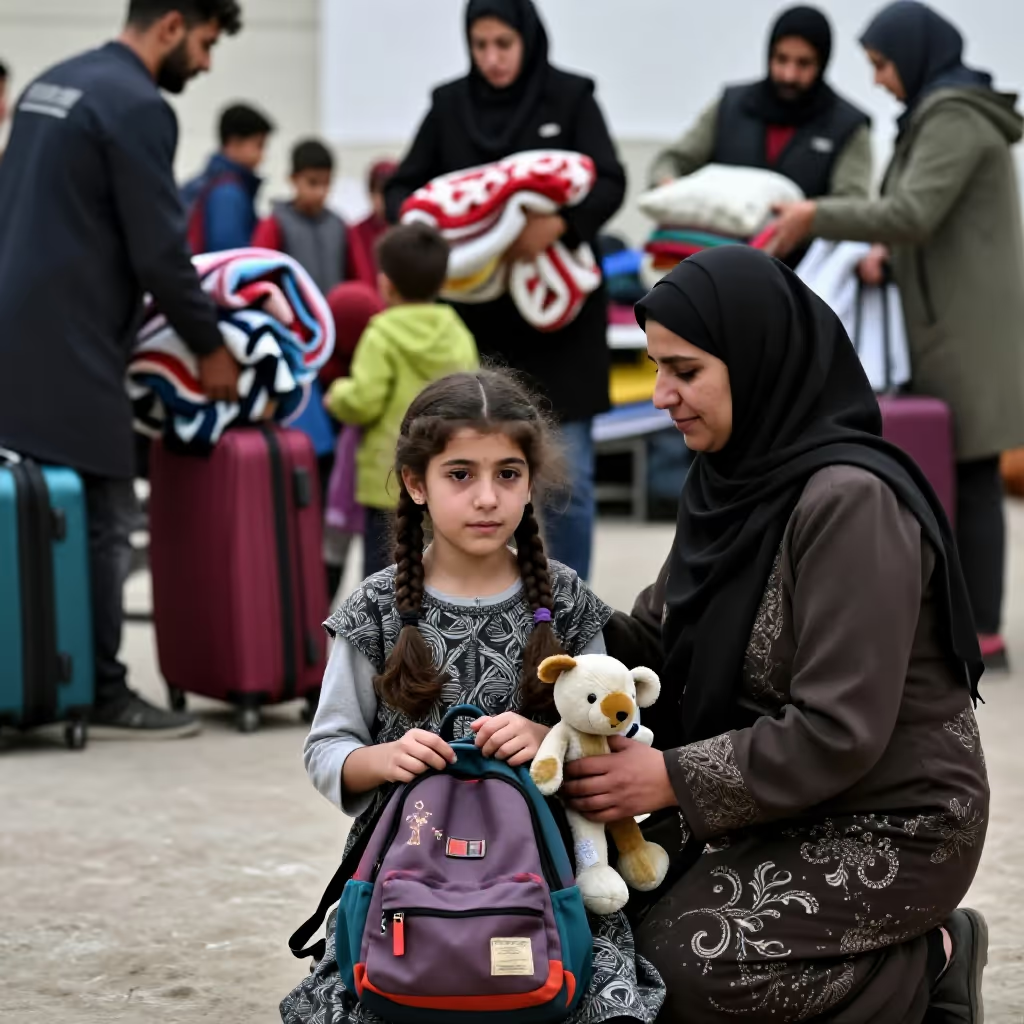
A child who has had to flee their homeland because, for example, there is war, persecution, or a natural disaster there, and who seeks protection in another country.
example
In der Schule wurde eine spezielle Klasse für die neu angekommenen Flüchtlingskinder eingerichtet.
A special class was set up at the school for the newly arrived refugee children.
Usage tips
Compound word
'Flüchtlingskind' (refugee child) is a compound noun made up of 'der Flüchtling' (the refugee) and 'das Kind' (the child). The 's' in between is a linking element. The article 'das' is determined by the head word 'Kind' (child).
EXAMPLE
Das Flüchtlingskind vermisste seine Heimat sehr.
The refugee child missed his homeland very much.
Word family
The word belongs to the word family of 'flüchten' (to flee; to run away, escape). A 'Flüchtling' (refugee) is a person who flees, and a 'Flüchtlingskind' (refugee child) is therefore a child who is fleeing or displaced.
EXAMPLE
Die Familie musste aus ihrer Heimat flüchten.
The family had to flee their homeland.
Typical verbs
In connection with refugee children, verbs that describe help and integration are often used. Common combinations are 'Flüchtlingskinder aufnehmen' (to take in refugee children), 'unterstützen' (to support), or 'integrieren' (to integrate).
EXAMPLE
Viele Freiwillige helfen dabei, die Flüchtlingskinder zu unterstützen.
Many volunteers help support the refugee children.