

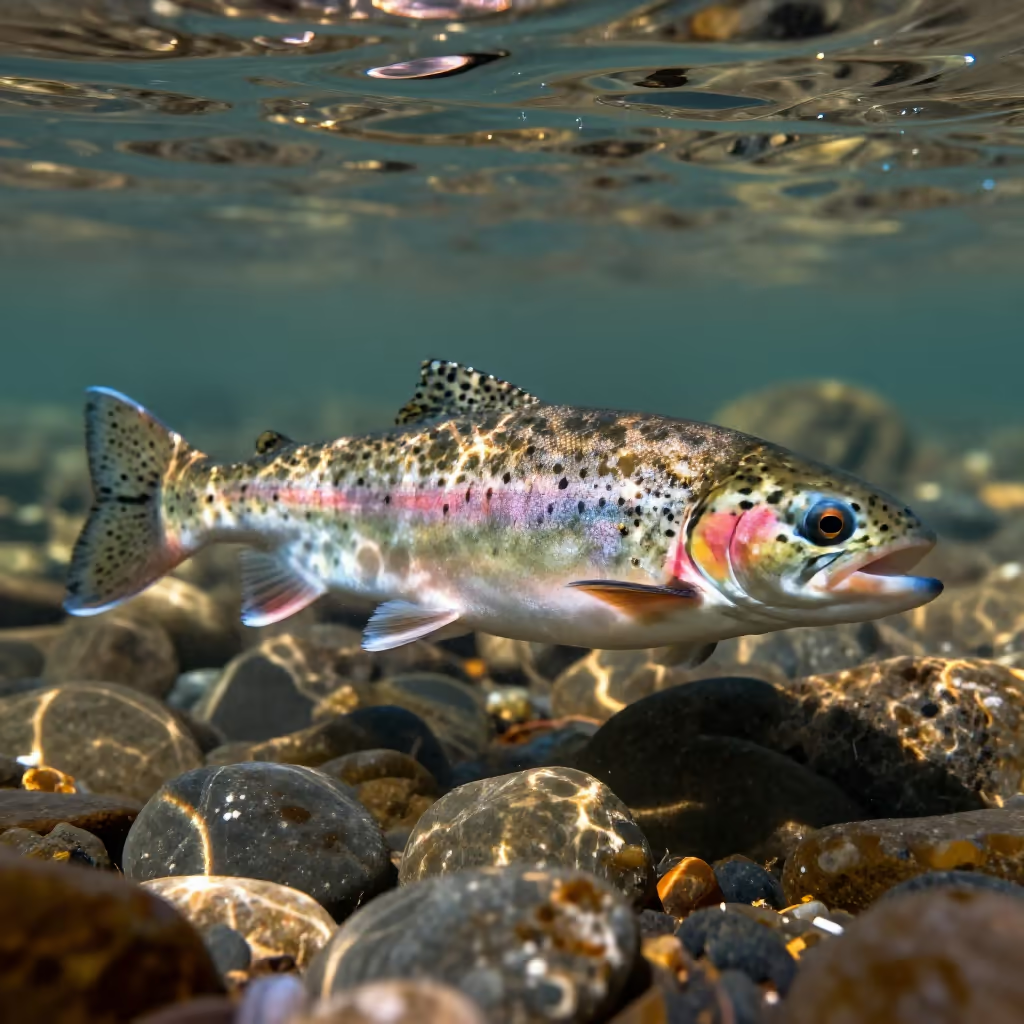
A freshwater fish from the salmon family that is very popular as a food fish. There are different species, such as brown trout or rainbow trout.
example
Zum Abendessen gab es gebratene Forelle mit Salzkartoffeln.
For dinner there was fried trout with boiled potatoes.
Usage tips
Two main contexts
The word 'Forelle' (trout) is used in two contexts: as a living animal in bodies of water (e.g., in a stream or lake) and as food (e.g., in a restaurant or supermarket).
EXAMPLE
Im klaren Bergsee schwammen viele Forellen.
Many trout were swimming in the clear mountain lake.
Typical preparation methods
When 'Forelle' (trout) is meant as food, it often appears with adjectives that describe how it is prepared. Typical examples are 'gebratene Forelle' (fried trout), 'geräucherte Forelle' (smoked trout), or 'Forelle blau' (a special cooking method).
EXAMPLE
Geräucherte Forelle schmeckt sehr gut auf frischem Brot.
Smoked trout tastes very good on fresh bread.
Typical verbs
When talking about trout as an animal, the typical verbs are 'angeln' (to fish) and 'fangen' (to catch). The location is often mentioned too, e.g., 'Forellen im Bach fangen' (to catch trout in the stream).
EXAMPLE
Mein Großvater geht am Wochenende gerne Forellen angeln.
My grandfather likes to go trout fishing on the weekend.
Compare with
confusable
Forelle vs Lachs
salmon
'der Lachs' and 'die Forelle' are both fish and are often mentioned as food. That is why learners can easily confuse them. 'Lachs' means a large fish that often comes from cold seas, and its flesh is typically pink to reddish. 'Forelle' is a freshwater fish and is often fried or smoked whole. So when talking about food, you say 'Lachs' when you mean the pink fish meat, and 'Forelle' when this specific freshwater fish is meant.
Forelle
Beim Einkaufen nimmt sie eine frische Forelle für den Grill mit.
While shopping, she picks up a fresh trout for the grill.
Lachs
Zum Abendessen gibt es Lachs mit Reis und Gemüse.
For dinner there is salmon with rice and vegetables.