

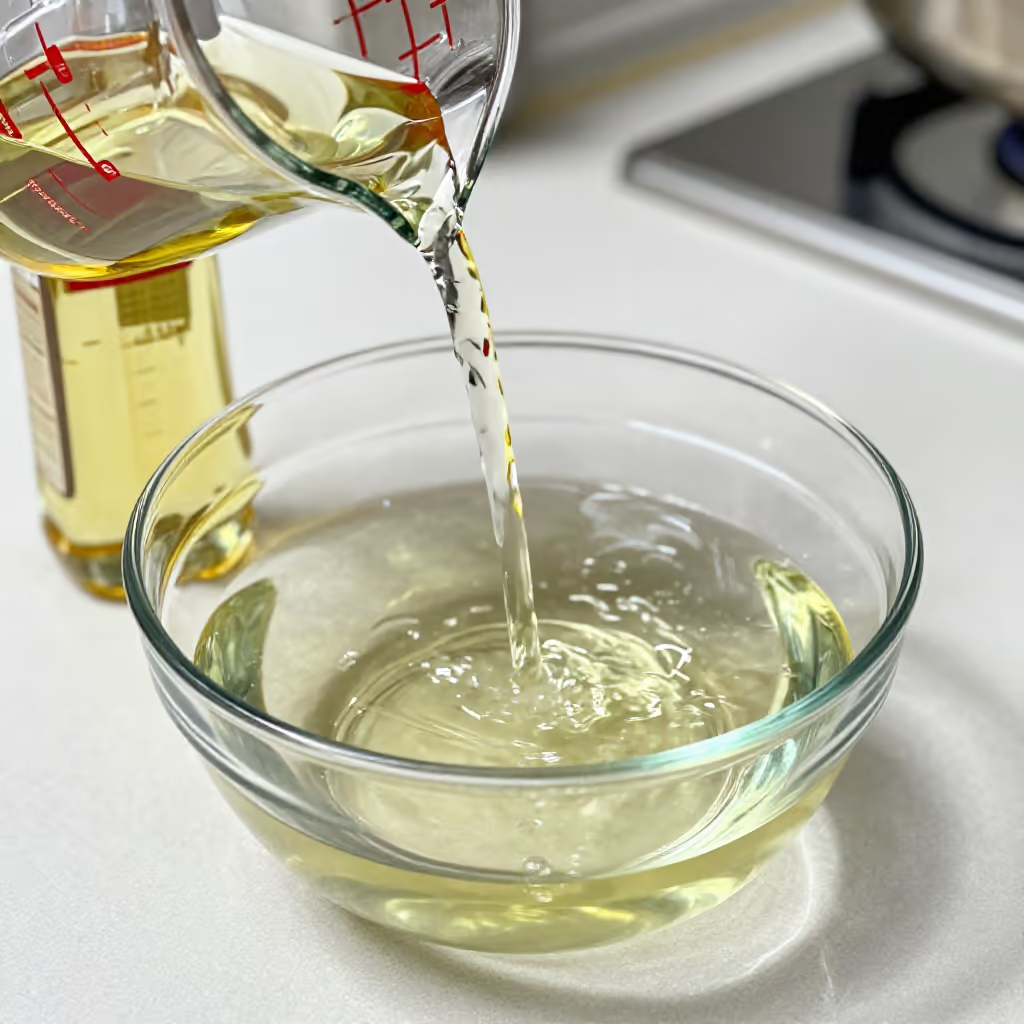
die Flüssigkeit
liquid
A substance that can flow and has no fixed shape, such as water or oil.
EXAMPLE
Bei Fieber sollte man viel Flüssigkeit zu sich nehmen.
When you have a fever, you should take in plenty of fluids.
liquid
Loading your saved state.
liquid
A substance that can flow and has no fixed shape, such as water or oil.
Bei Fieber sollte man viel Flüssigkeit zu sich nehmen.
When you have a fever, you should take in plenty of fluids.
The word is formed from the adjective 'flüssig' (liquid) and the ending '-keit'. The ending '-keit' turns adjectives into nouns that describe a quality or state. 'Flüssigkeit' is therefore the quality of being liquid, or a substance with this quality.
Honig verliert bei Erwärmung seine Zähigkeit und gewinnt an Flüssigkeit.
When heated, honey loses its viscosity and becomes more fluid.
'Flüssigkeit' (liquid/fluid) belongs to the word family of the verb 'fließen' (to flow). Everything that can flow is a 'Flüssigkeit'. The noun 'der Fluss' (the river) also belongs to this family.
Das Wasser fließt den Berg hinab.
The water flows down the mountain.
In everyday life, especially in connection with health, 'Flüssigkeit' (fluid) is often used with the verbs 'trinken' (to drink) or 'zu sich nehmen' (to take in/consume). It is a general term for anything one drinks.
Der Arzt hat mir geraten, mehr Flüssigkeit zu trinken.
The doctor advised me to drink more fluids.
'Flüssigkeit' (liquid/fluid) is a neutral to slightly formal term. It is often used in scientific, medical, or technical contexts in order to be precise. In normal everyday life, people often simply say 'Getränk' (drink) or 'etwas zu trinken' (something to drink).
Vorsicht, diese chemische Flüssigkeit ist ätzend!
Careful, this chemical liquid is corrosive!
moisture
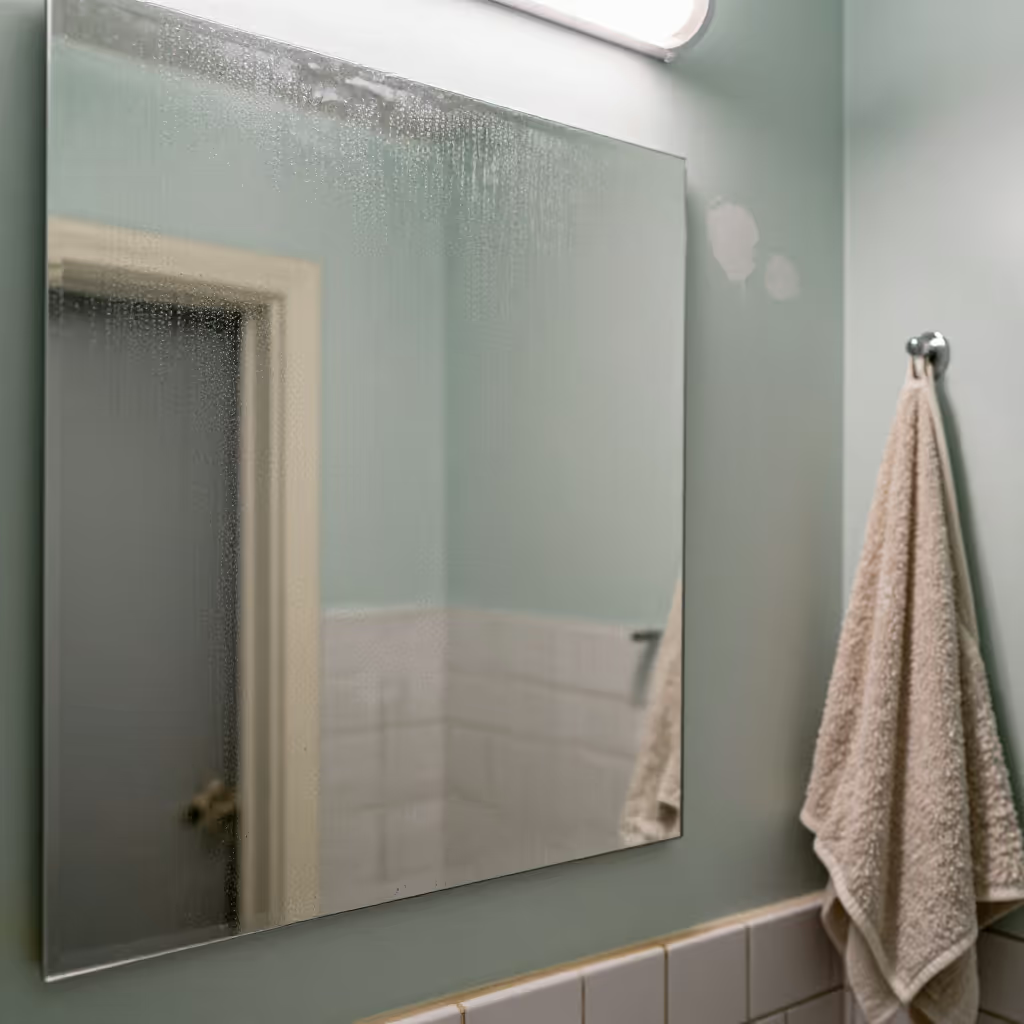
A Flüssigkeit is a free-flowing substance without a fixed shape. Feuchtigkeit, by contrast, refers only to a small amount of water in the air, in a material, or on a surface. When talking about the water itself, use Flüssigkeit; for slight wetness or dampness, use Feuchtigkeit.
Wasser ist eine Flüssigkeit, die aus der undichten Leitung austritt.
Water is a liquid that is leaking from the faulty pipe.
Wegen der undichten Leitung ist Feuchtigkeit an der Wand zu sehen.
Because of the faulty pipe, moisture is visible on the wall.