

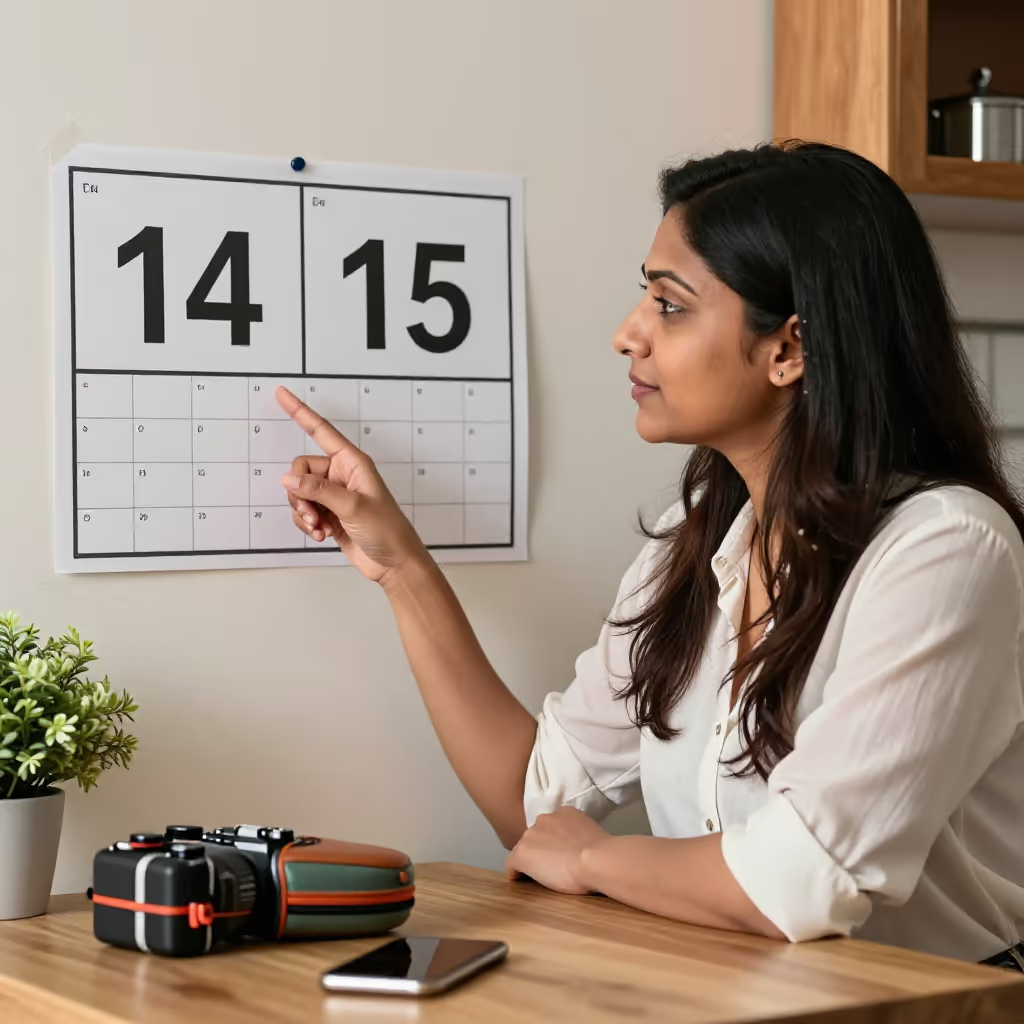
The day that immediately follows a specific, previously mentioned day.
example
Die Konferenz endete am Freitag; am Folgetag reisten alle Teilnehmer ab.
The conference ended on Friday; on the following day, all participants departed.
Usage tips
Compound word
'Der Folgetag' (the following day) is made up of 'die Folge' (sequence, in the sense of order) and 'der Tag' (day). So it is literally the day that comes next in the sequence.
EXAMPLE
Das Meeting ist am Montag, der Workshop findet am Folgetag statt.
The meeting is on Monday; the workshop takes place on the following day.
Use in a sentence
'Folgetag' (following day) is almost always used with the preposition 'am' to indicate a point in time. The phrase 'am Folgetag' (on the following day) often appears at the beginning of a sentence.
EXAMPLE
Am Folgetag fühlte er sich schon viel besser.
On the following day, he already felt much better.
Register and style
This word belongs more to written language or to a more formal style, for example in reports, news, or narratives. It helps describe events in a clear chronological sequence.
EXAMPLE
Der Sturm zog in der Nacht auf. Am Folgetag waren die Straßen voller Äste.
The storm came up during the night. On the following day, the streets were full of branches.
Compare with
near_synonym · confusable
Folgetag vs morgen
tomorrow / morning
'morgen' and 'der Folgetag' can both mean the next day. The most important difference is the reference point. 'morgen' means the day after today and is completely normal in everyday language. 'der Folgetag' means the day after a previously mentioned day. So that day does not have to be tomorrow from today's point of view. The word sounds more formal and fits well in reports, plans, or narratives. Learners may confuse the words because both express 'the next day'. Memory tip: 'morgen' refers to today, while 'Folgetag' refers to a mentioned day.
Folgetag
Nach der Operation blieb sie bis zum Folgetag im Krankenhaus.
After the operation, she stayed in the hospital until the following day.