

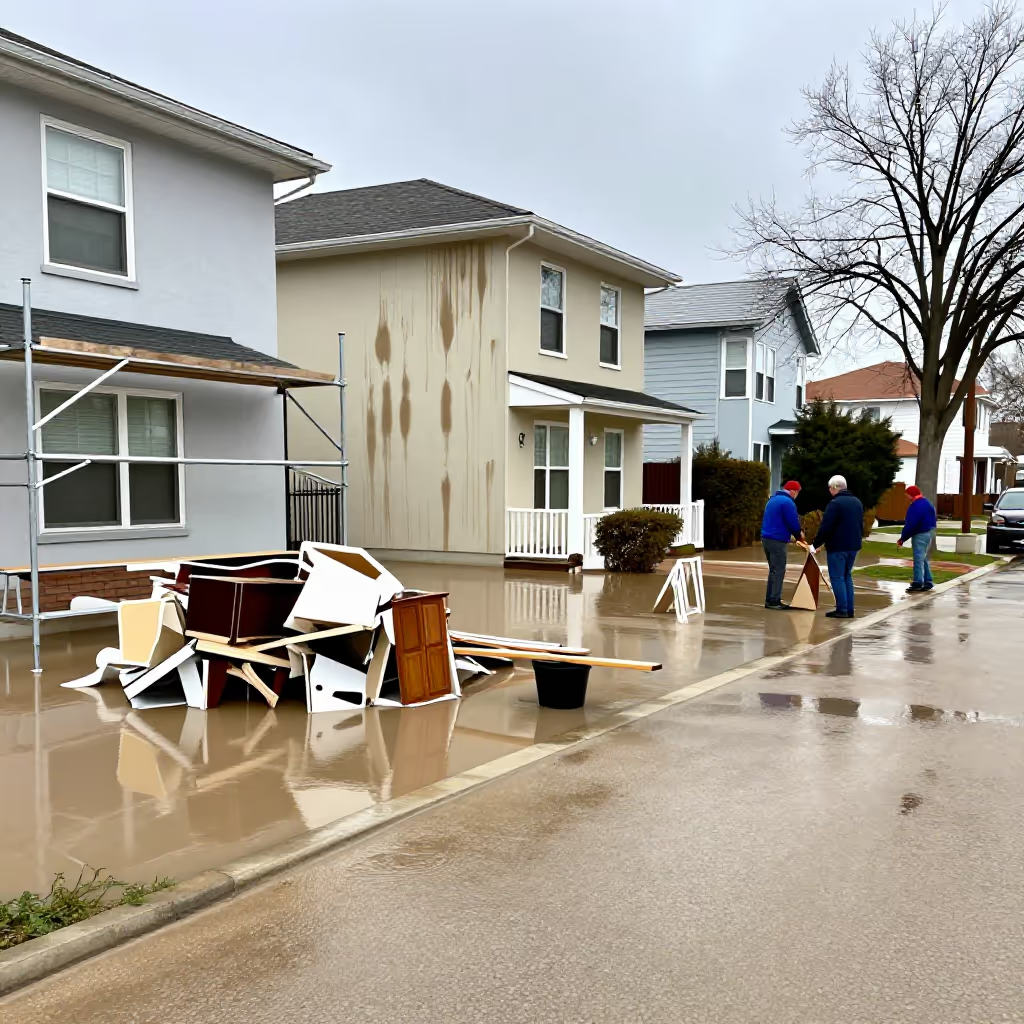
die Folgezeit
subsequent period
The period of time that follows a specific event or era.
EXAMPLE
In der Folgezeit nach dem Krieg wurde das Land langsam wieder aufgebaut.
In the period following the war, the country was slowly rebuilt.
subsequent period
Loading your saved state.
subsequent period
The period of time that follows a specific event or era.
In der Folgezeit nach dem Krieg wurde das Land langsam wieder aufgebaut.
In the period following the war, the country was slowly rebuilt.
This word is a clear compound of 'die Folge' (the consequence/result) and 'die Zeit' (the time/period). It literally means 'the time that follows' and is therefore easy to understand.
Die Erfindung des Buchdrucks veränderte die Welt in der Folgezeit komplett.
The invention of the printing press completely changed the world in the period that followed.
'Folgezeit' (subsequent period) is almost always used in the fixed phrase 'in der Folgezeit' (in the period that followed). This expression often introduces a sentence or subordinate clause that describes the consequences of an event.
Das Unternehmen machte große Verluste. In der Folgezeit mussten viele Mitarbeiter entlassen werden.
The company made large losses. In the period that followed, many employees had to be laid off.
The word 'Folgezeit' (subsequent period) belongs more to written language and is often used in historical, journalistic, or formal texts. It is less common in spoken language.
In der Folgezeit der industriellen Revolution entstanden neue soziale Klassen.
In the period following the Industrial Revolution, new social classes emerged.