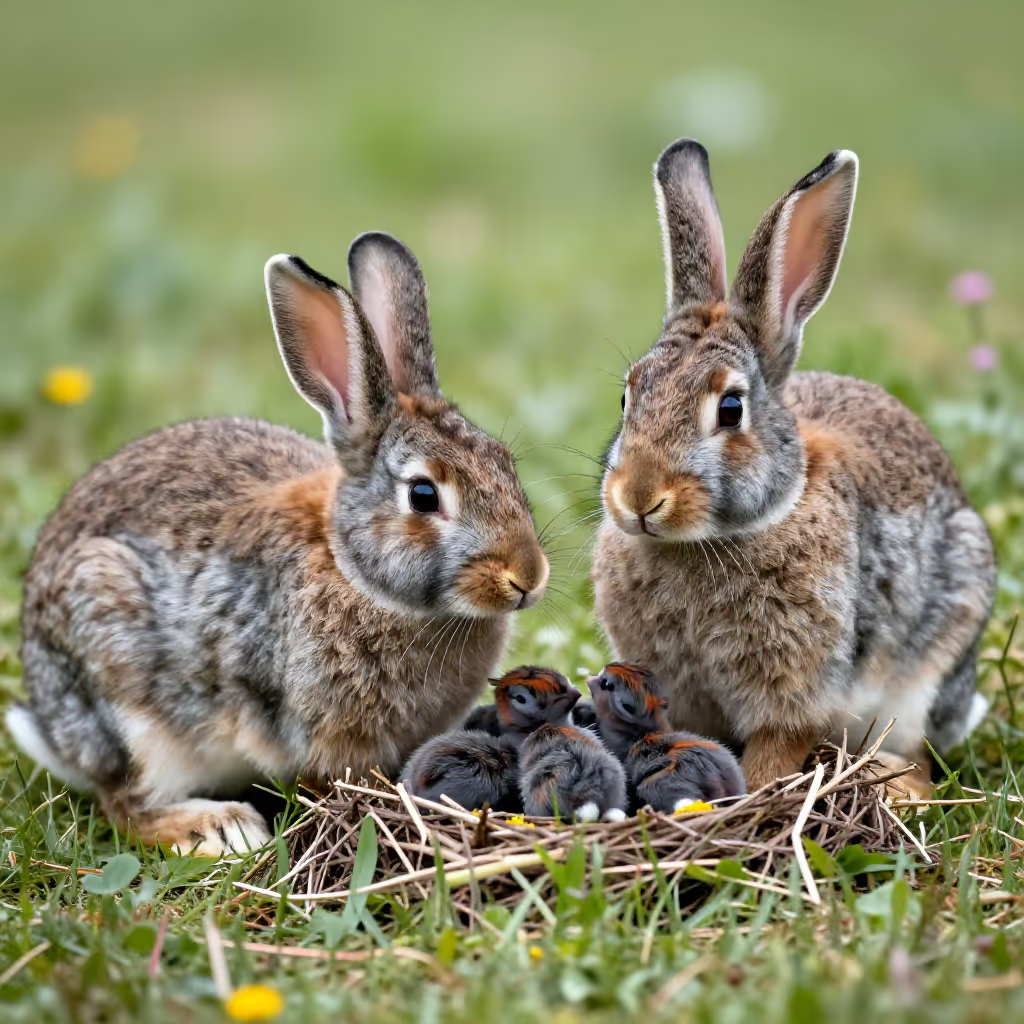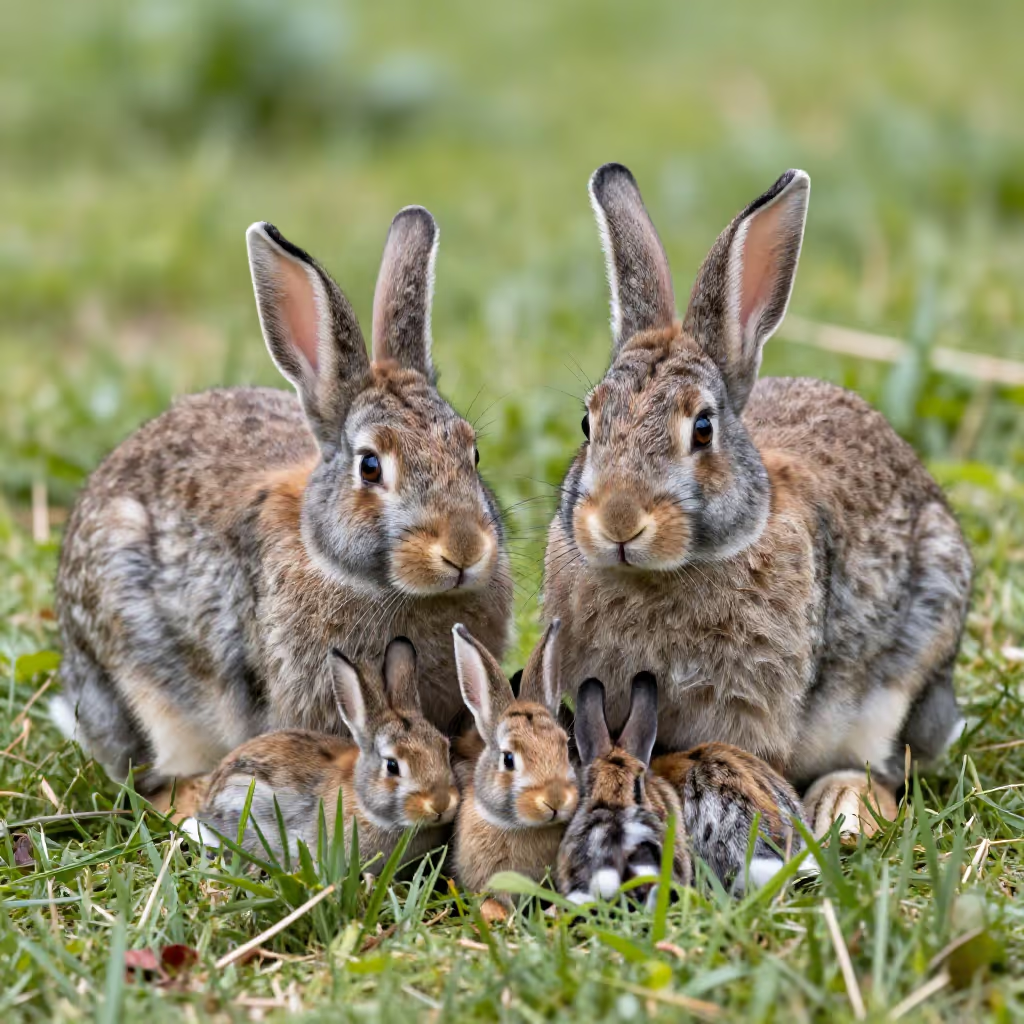
To produce offspring; to multiply. This refers to living beings such as animals, plants, and humans.
example
Viele Fische kehren zum Laichen an den Ort zurück, an dem sie sich selbst fortgepflanzt haben.
Many fish return to spawn at the place where they themselves reproduced.

Usage tips
Separable verb
'Fortpflanzen' (to reproduce / propagate) is a separable verb with the prefix 'fort-'. In a main clause, the prefix goes at the end. In subordinate clauses and in the infinitive with 'zu', the verb stays together.
EXAMPLE
Diese Pflanzenart pflanzt sich sehr schnell fort.
This plant species reproduces very quickly.
Always reflexive
This verb is always used reflexively with 'sich' in all its meanings. The reflexive pronoun must be adapted to the person: 'ich pflanze mich fort' (I reproduce), 'du pflanzt dich fort' (you reproduce), etc.
EXAMPLE
Wie pflanzen sich Quallen fort?
How do jellyfish reproduce?
Context clues
The context makes the meaning clear: If it is about living beings (animals, plants), it means 'sich vermehren' (to multiply/reproduce). If it is about physics (sound, light), it means 'sich ausbreiten' (to spread/propagate). If it is about information (rumors, ideas), it means 'sich verbreiten' (to spread).
EXAMPLE
Bakterien pflanzen sich durch Zellteilung fort.
Bacteria reproduce through cell division.
Typical adverbs
In the biological meaning, 'sich fortpflanzen' (to reproduce) is often combined with adverbs that describe the manner or success of reproduction. Common phrases are 'sich schnell fortpflanzen' (to reproduce quickly), 'sich erfolgreich fortpflanzen' (to reproduce successfully), or 'sich ungeschlechtlich fortpflanzen' (to reproduce asexually).
EXAMPLE
Kaninchen sind dafür bekannt, dass sie sich sehr schnell fortpflanzen.
Rabbits are known for reproducing very quickly.
Compare with
near_synonym · confusable
fortpflanzen vs zeugen
to father / to testify
'zeugen' and 'sich fortpflanzen' can both have to do with the creation of offspring. With humans or animals, 'zeugen' refers to the male part in the biological creation of a child or young animal. 'sich fortpflanzen' is more general and describes living beings having offspring or multiplying. It fits humans, animals, and plants and often sounds biological or factual. The words can be confused because both have to do with the continuation of life. In practical terms: a father 'zeugt ein Kind' (fathers a child); a species or living being 'pflanzt sich fort' (reproduces).
fortpflanzen
Viele Pflanzen pflanzen sich im Frühling besonders schnell fort.
Many plants reproduce especially quickly in spring.
zeugen
In dem alten Brief stand, dass der König mehrere Kinder gezeugt hatte.
The old letter said that the king had fathered several children.