01
französisch
French
Relates to France, its inhabitants, its culture, or its language.
example
Zum Abendessen gibt es eine französische Käseplatte mit Baguette.
For dinner, there is a French cheese platter with baguette.
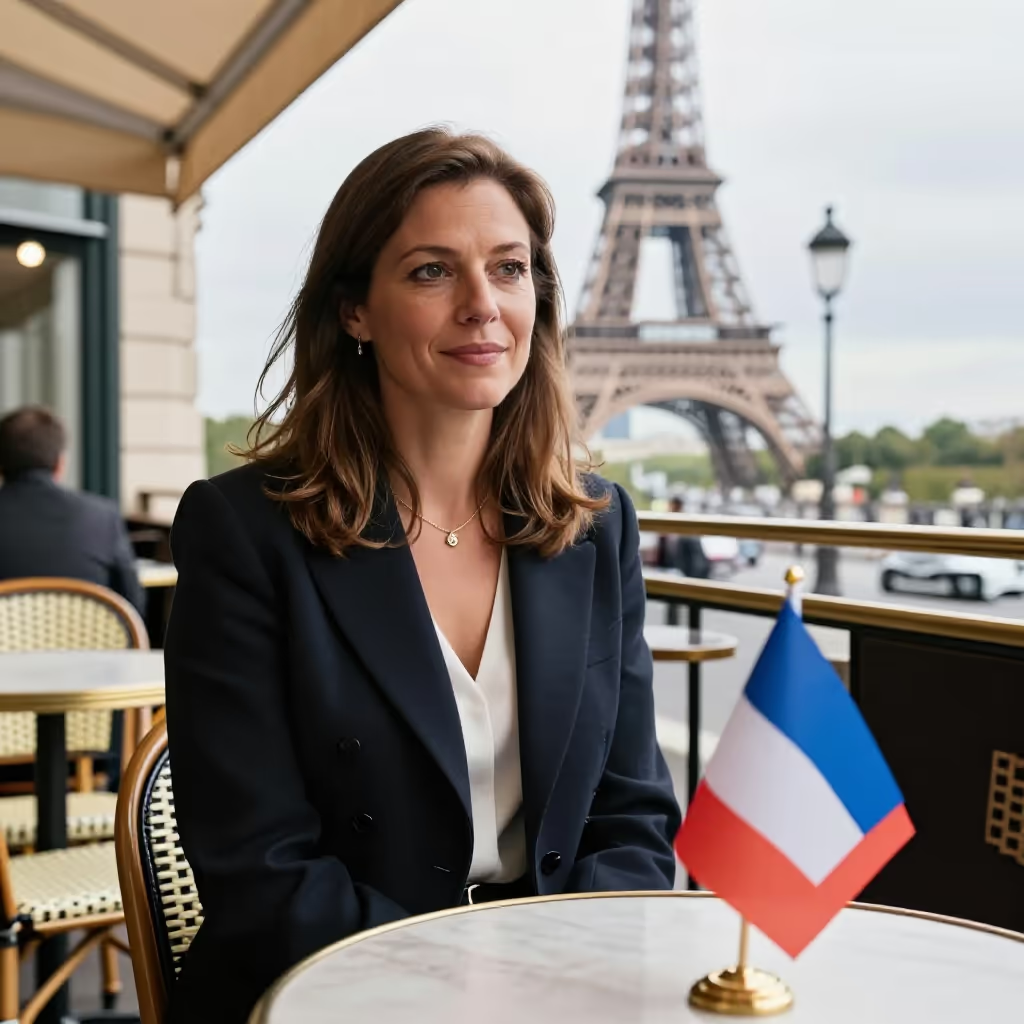
French
Loading your saved state.
French
Relates to France, its inhabitants, its culture, or its language.
Zum Abendessen gibt es eine französische Käseplatte mit Baguette.
For dinner, there is a French cheese platter with baguette.
The ending '-isch' is often used in German to form adjectives from the names of countries or regions. This turns 'Frankreich' (France) into the adjective 'französisch' (French).
Ich mag italienisches Essen, spanische Musik und französische Filme.
I like Italian food, Spanish music, and French films.
A common mistake is capitalization. As an adjective, 'französisch' is written in lowercase. However, when it refers to the language as a noun, it is capitalized: 'Französisch' (French).
Mein neuer Nachbar ist ein französischer Student.
My new neighbor is a French student.
'Französisch' is often used in connection with culture, food, and lifestyle. Typical combinations are 'die französische Küche' (French cuisine), 'französischer Wein' (French wine), 'französische Mode' (French fashion), or 'ein französischer Kuss' (a French kiss).
Sie hat einen typisch französischen Akzent.
She has a typically French accent.
The word can also be used as an adverb to describe how an action is carried out. It then remains unchanged and is written in lowercase.
Wir haben gestern Abend sehr gut französisch gegessen.
We ate very good French food yesterday evening.
French
'französisch' and 'das Französisch' are both connected to France and the French language, but they have different roles in a sentence. 'französisch' is an adjective and describes something, for example food, music, culture, or language. 'das Französisch' is a noun and means the language itself or the school subject. Learners can easily confuse the words because both fit when talking about language. A simple tip: with a noun, you often use 'französisch', for example 'ein französischer Film' (a French film). When you mean the language itself, you say 'Französisch'.

Zum Geburtstag kocht Lena ein französisches Essen.
For her birthday, Lena is cooking a French meal.
Für die Reise nach Lyon übt Tom jeden Abend Französisch.
For the trip to Lyon, Tom practices French every evening.