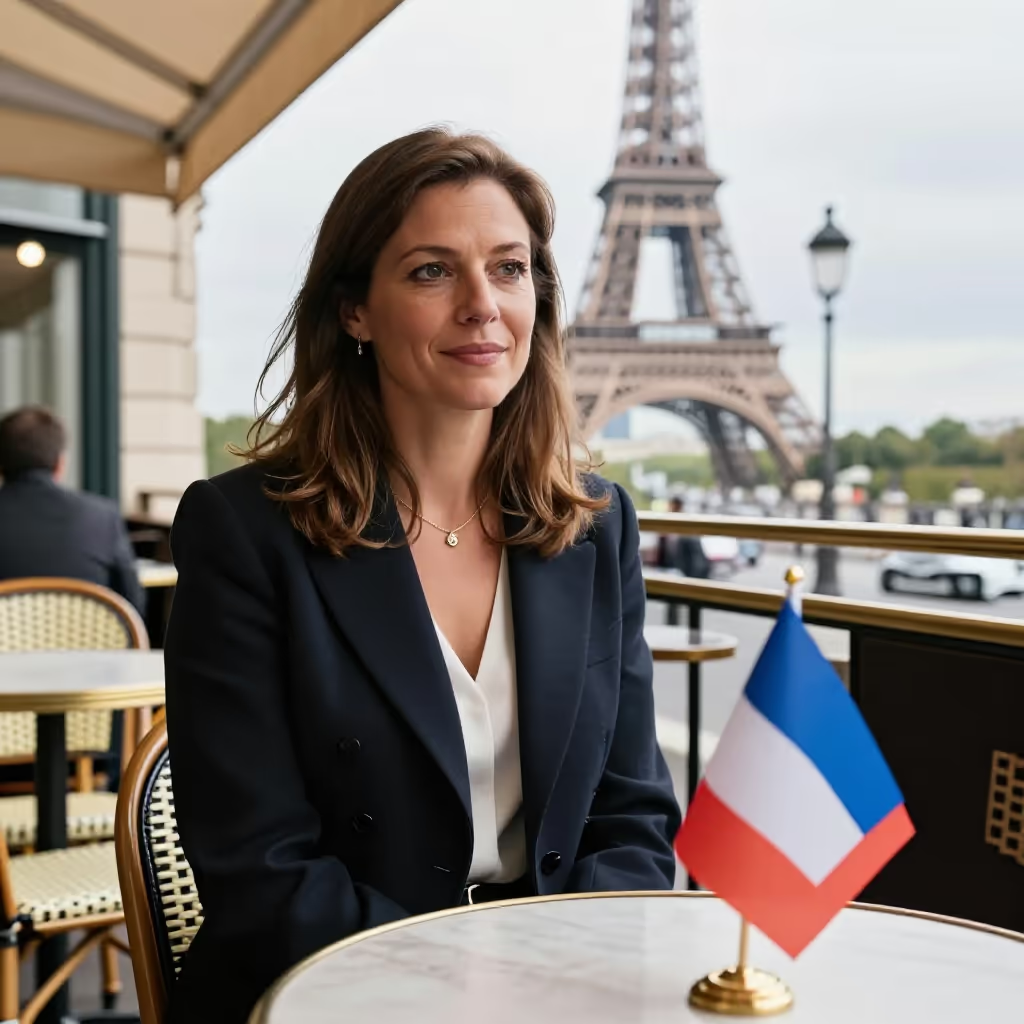
The Romance language spoken in France, Belgium, Switzerland, Canada, and many other countries. Also as a school subject.
example
In der neunten Klasse musste ich zwischen Französisch und Latein wählen.
In ninth grade, I had to choose between French and Latin.
Usage tips
Word formation
'Das Französisch' (French) is a nominalized adjective. Many languages in German are formed this way, by using the corresponding adjective as a noun and capitalizing it.
EXAMPLE
Neben Deutsch und Englisch spricht sie auch fließend Französisch.
Besides German and English, she also speaks fluent French.
Use without an article
When 'Französisch' (French) refers to the language, it is usually used without an article after verbs like 'sprechen' (to speak), 'lernen' (to learn), 'verstehen' (to understand), or 'unterrichten' (to teach).
EXAMPLE
Ich möchte im nächsten Urlaub mein Französisch verbessern.
I want to improve my French on my next vacation.
Typical prepositions
To express that something is said in this language, you use the preposition 'auf'. To express origin or translation, you use 'aus dem'.
EXAMPLE
Können Sie mir das bitte auf Französisch erklären?
Could you please explain that to me in French?
Typical verbs
Common verbs combined with 'Französisch' (French) as a school subject or skill are 'Französisch haben' (to have French), 'Französisch wählen' (to choose French), or 'eine Prüfung in Französisch ablegen' (to take an exam in French).
EXAMPLE
Ab der siebten Klasse haben die Schüler Französisch.
Starting in seventh grade, the students have French.
Compare with
confusable
Französisch vs französisch
French
'französisch' and 'das Französisch' are both connected to France and the French language, but they have different roles in a sentence. 'französisch' is an adjective and describes something, for example food, music, culture, or language. 'das Französisch' is a noun and means the language itself or the school subject. Learners can easily confuse the words because both fit when talking about language. A simple tip: with a noun, you often use 'französisch', for example 'ein französischer Film' (a French film). When you mean the language itself, you say 'Französisch'.
Französisch
Für die Reise nach Lyon übt Tom jeden Abend Französisch.
For the trip to Lyon, Tom practices French every evening.
französisch
Zum Geburtstag kocht Lena ein französisches Essen.