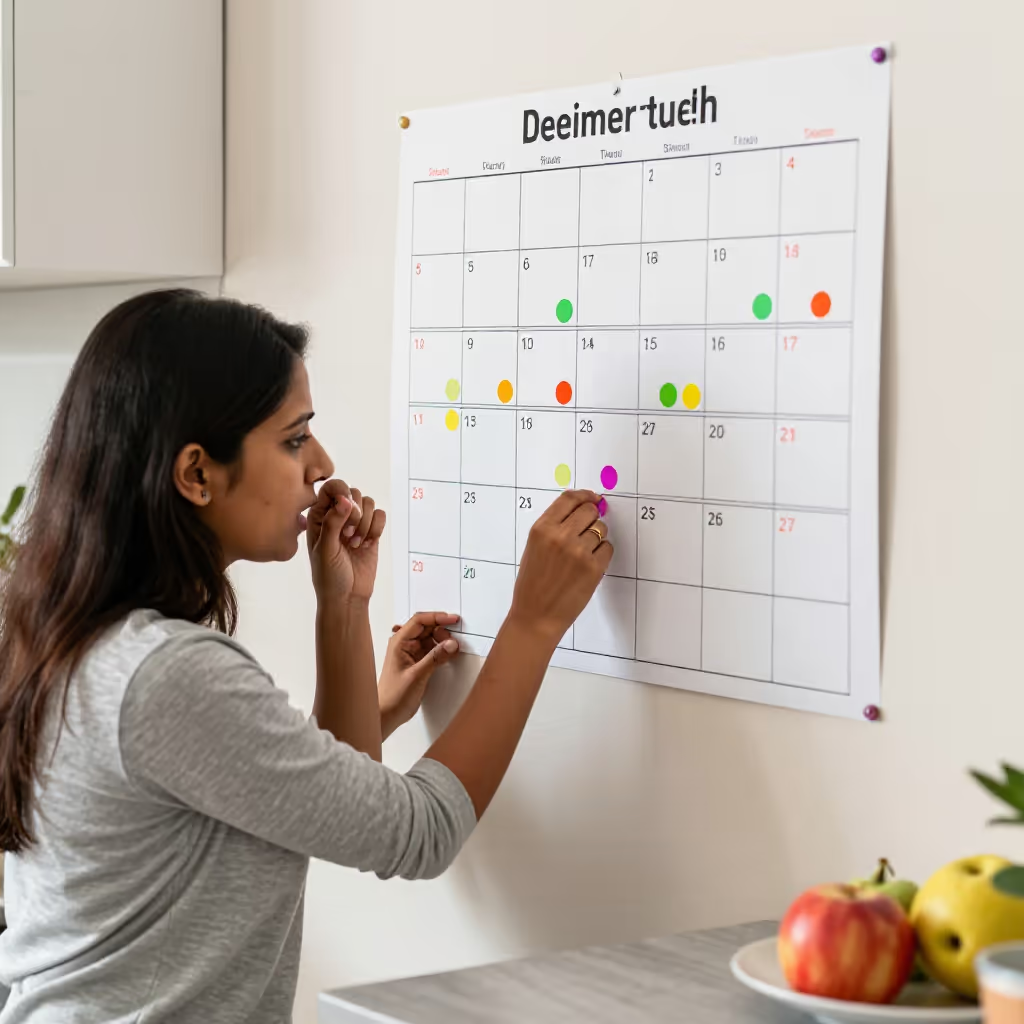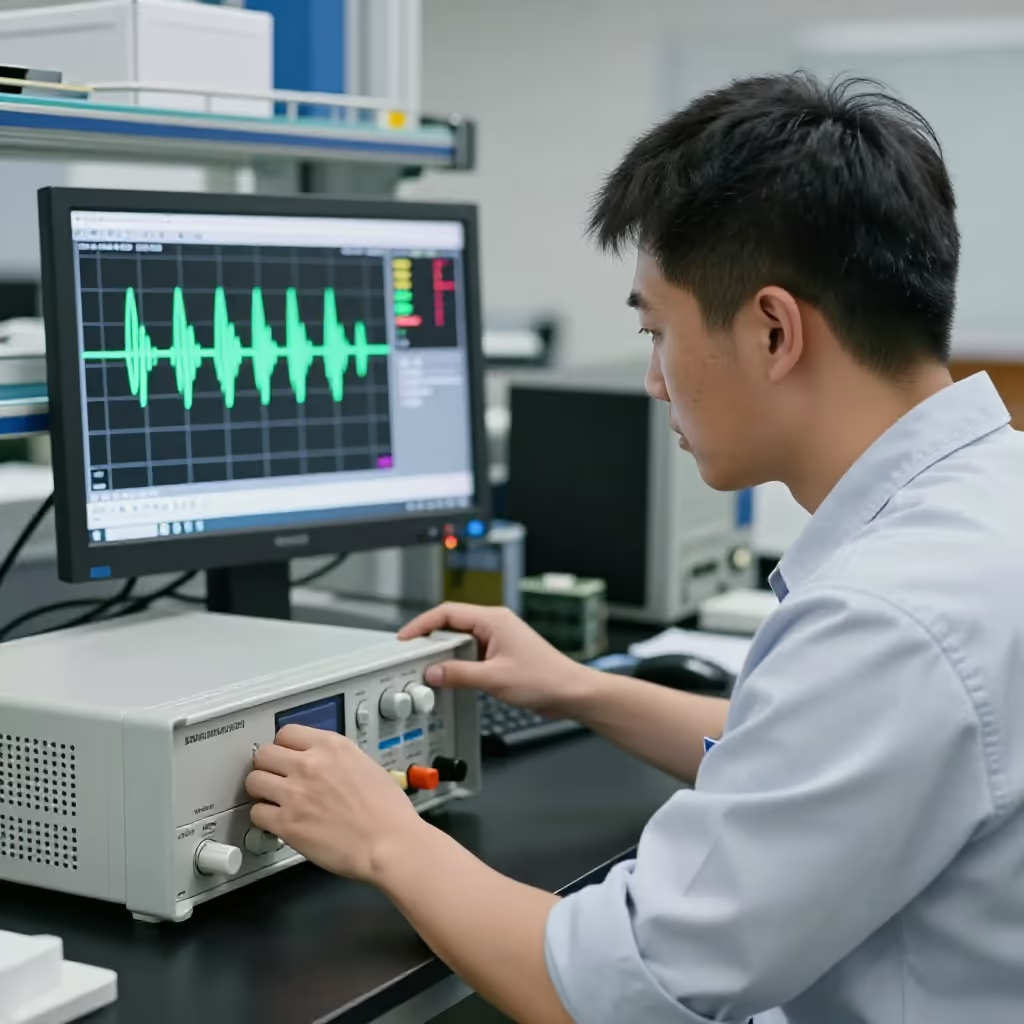
In physics and technology, the number of oscillations or recurring events per unit of time. It is often measured in hertz (Hz) and describes, for example, sound waves or radio signals.
example
Auf welcher Frequenz sendet dieser Radiosender?
On which frequency does this radio station broadcast?

Usage tips
International word
'Frequenz' (frequency) is an international word that comes from Latin. You will find it in a similar form in many other languages, which makes it easier to understand in technical or scientific contexts.
EXAMPLE
Die Frequenz des Signals muss genau eingestellt werden.
The frequency of the signal must be set precisely.
Context clue
To distinguish the meanings, pay attention to the context. Technical terms like 'Hertz (Hz)', 'senden' (to broadcast/transmit), or 'Welle' (wave) point to the physical meaning. General nouns like 'Besuche' (visits), 'Fehler' (errors), or 'Ereignisse' (events) indicate frequency in the sense of how often something occurs.
EXAMPLE
Welche Frequenz hat das WLAN-Netzwerk?
What frequency does the Wi-Fi network use?
Typical collocations
In a technical context, 'Frequenz' (frequency) is often used with verbs like 'senden' (to broadcast/transmit), 'empfangen' (to receive), or 'einstellen' (to set). Adjectives like 'hoch' (high) or 'niedrig' (low) are also typical.
EXAMPLE
Der Sender arbeitet auf einer sehr hohen Frequenz.
The transmitter operates on a very high frequency.
Use with genitive
In the meaning 'Häufigkeit' (frequency/how often something occurs), a genitive attribute or a compound noun is often used to specify what is meant. This indicates whose or what frequency is being referred to.
EXAMPLE
Die Frequenz der Zugabfahrten ist am Wochenende geringer.
The frequency of train departures is lower on weekends.
Register
In the meaning 'Häufigkeit' (frequency/how often something occurs), the word 'Frequenz' (frequency) belongs more to formal written language or technical language, for example in reports or analyses.
EXAMPLE
Die Studie analysiert die Frequenz von Kundenbeschwerden.
The study analyzes the frequency of customer complaints.
Compare with
confusable
Frequenz vs Anzahl
number
'die Anzahl' and 'die Frequenz' can be confused because both have to do with counting. 'Anzahl' tells you how many things or people there are in total. 'Frequenz' describes how often something happens within a certain period of time, or technically, how many oscillations there are per unit of time. So with 'Anzahl', you ask: 'How many?' With 'Frequenz', you are more likely to ask: 'How often per hour, day, or second?' For a quantity of passengers, mistakes, or chairs, 'Anzahl' fits. For regular repetitions, visits, or signals, 'Frequenz' fits.
Frequenz
Die Frequenz der Busse ist morgens höher als am Abend.
The frequency of the buses is higher in the morning than in the evening.
Anzahl
Am Bahnhof zählt Emma die Anzahl der wartenden Reisenden.
At the station, Emma counts the number of travelers waiting.