

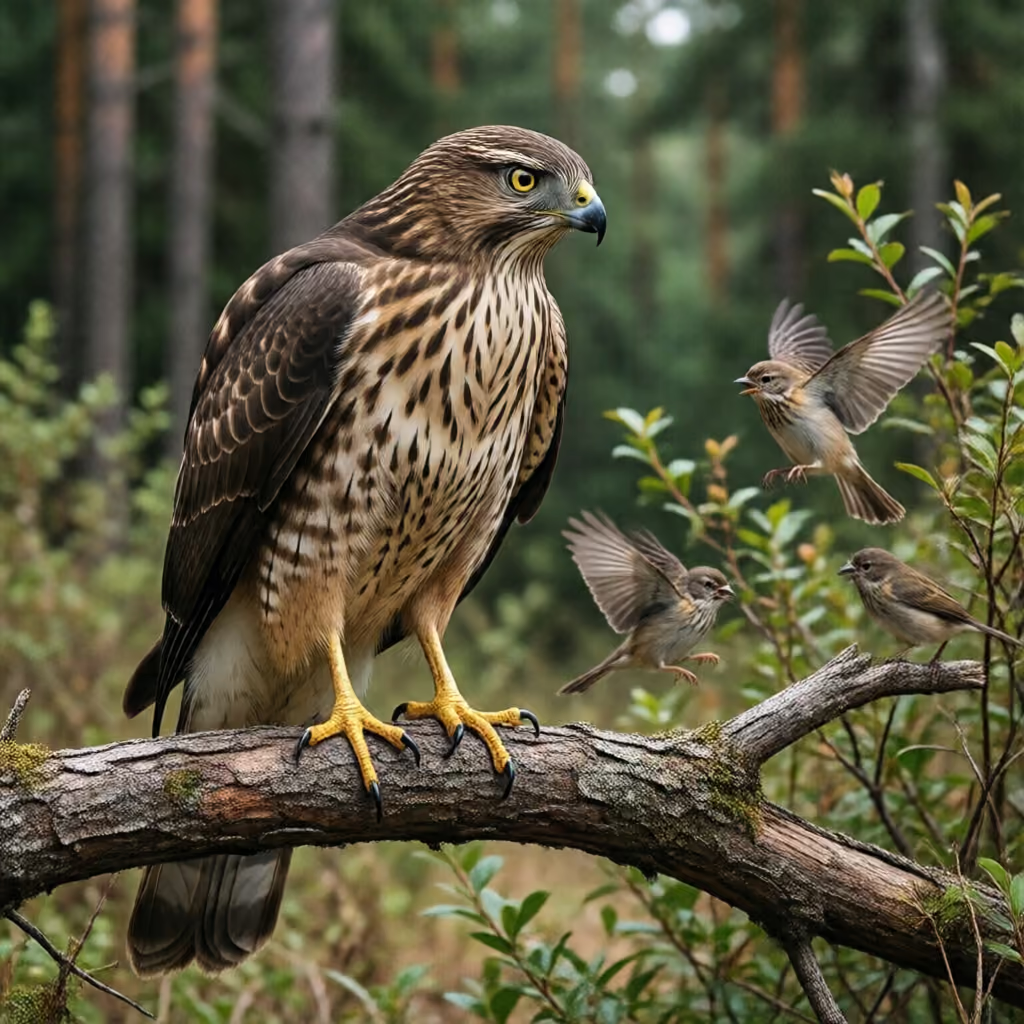
der Fressfeind
predator
An animal that hunts and eats other animals, making it their natural enemy.
EXAMPLE
Für viele kleinere Vögel ist der Habicht ein gefährlicher Fressfeind.
For many smaller birds, the goshawk is a dangerous predator.
predator
der Fressfeind, die Fressfeinde
Loading your saved state.
predator
An animal that hunts and eats other animals, making it their natural enemy.
Für viele kleinere Vögel ist der Habicht ein gefährlicher Fressfeind.
For many smaller birds, the goshawk is a dangerous predator.
| gender | masculine der |
|---|---|
| plural | die Fressfeinde |
| genitive | des Fressfeindes |
| singular | plural | |
|---|---|---|
| nominative | der Fressfeind | die Fressfeinde |
| accusative | den Fressfeind | die Fressfeinde |
| dative | dem Fressfeind | den Fressfeinden |
| genitive | des Fressfeindes des Fressfeinds | der Fressfeinde |
The article changes with the case; it is shown in colour.
'Fressfeind' (predator) is made up of 'Fress-' and 'Feind' (enemy). The first part indicates that the enemy hunts other animals as food.
Die Maus versteckt sich vor dem Fressfeind im dichten Gras.
The mouse hides from the predator in the dense grass.
The word is used particularly in biological and ecological texts. It often refers to the relationship between an animal species and its predators in a habitat.
Im Ökosystem des Waldes hat jede Tierart mehrere Fressfeinde.
In the forest ecosystem, every animal species has several predators.
Common collocations include 'natürliche Fressfeinde' (natural predators), 'gefährliche Fressfeinde' (dangerous predators), and 'sich vor Fressfeinden schützen' (to protect oneself from predators). The word often appears in the plural when referring to several species or animals.
Die Jungtiere bleiben lange im Nest, weil sie dort besser vor Fressfeinden geschützt sind.
The young animals stay in the nest for a long time because they are better protected from predators there.