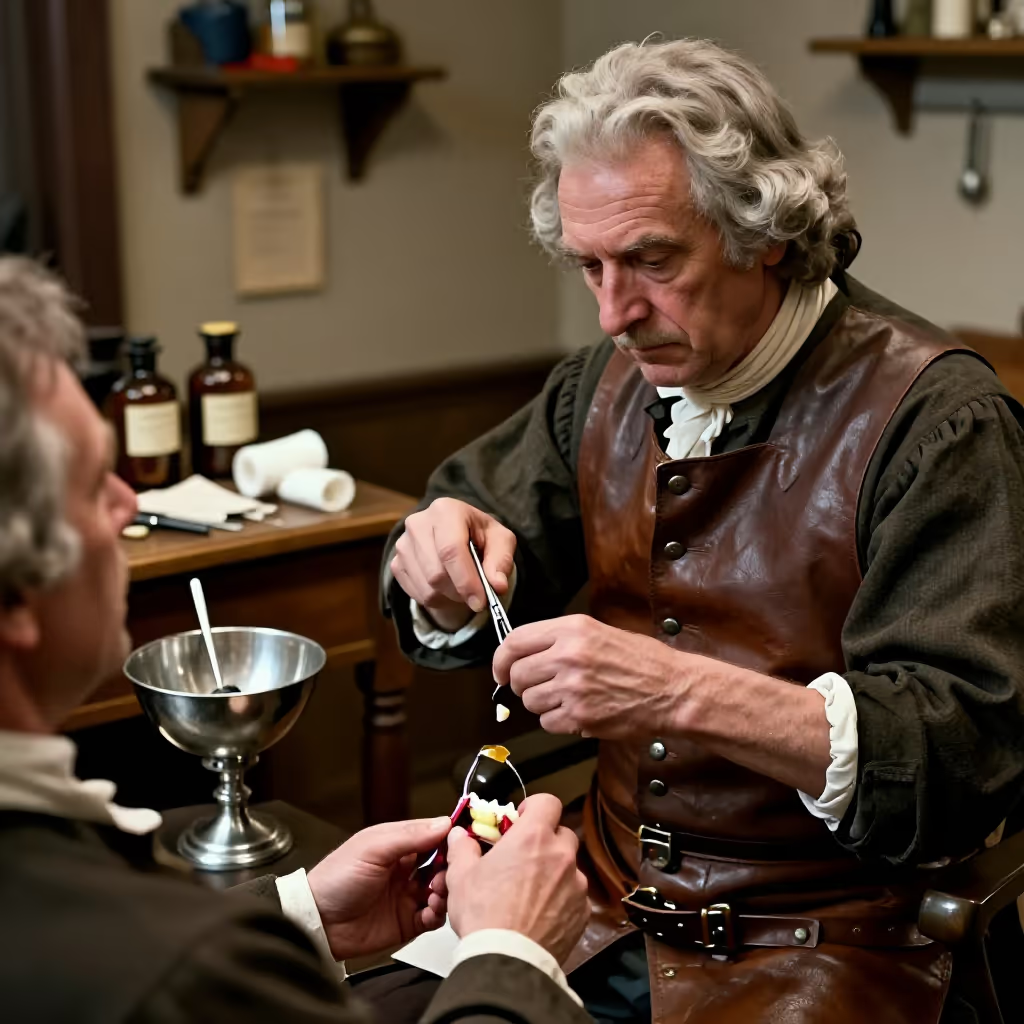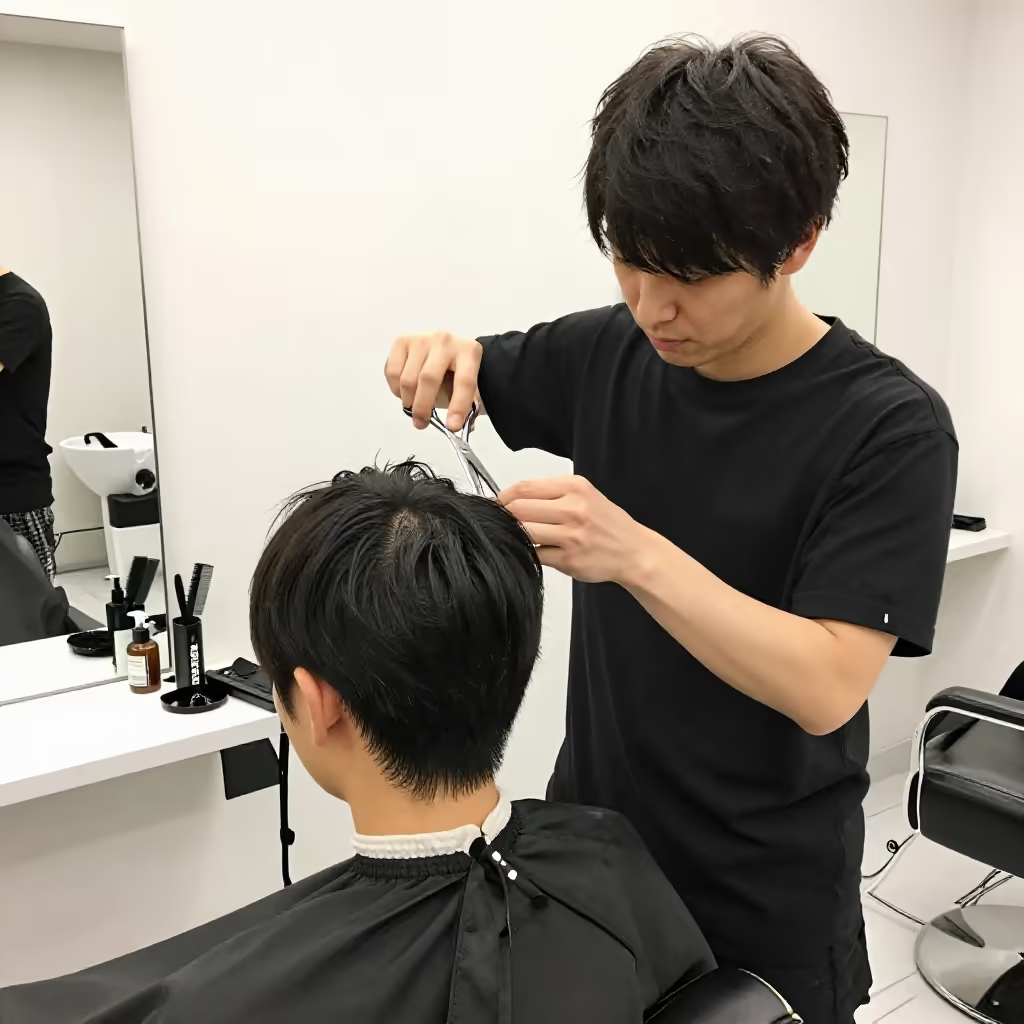
A person whose job is to cut, wash, dye, and style hair. The feminine form is 'die Friseurin' (female hairdresser).
example
Ich muss dringend zum Friseur, meine Haare sind viel zu lang.
I urgently need to go to the hairdresser; my hair is far too long.
Usage tips
Typical prepositions
When you have an appointment, you go 'zum Friseur' (to the hairdresser). While you are there, you are 'beim Friseur' (at the hairdresser's). Both phrases use the dative.
EXAMPLE
Ich gehe morgen Nachmittag zum Friseur.
I'm going to the hairdresser tomorrow afternoon.
Word family
'Der Friseur' (the hairdresser) belongs to a word family. What the hairdresser creates is a 'Frisur' (hairstyle). The related verb is 'frisieren' (to style hair).
EXAMPLE
Deine neue Frisur sieht toll aus!
Your new hairstyle looks great!
Person or place?
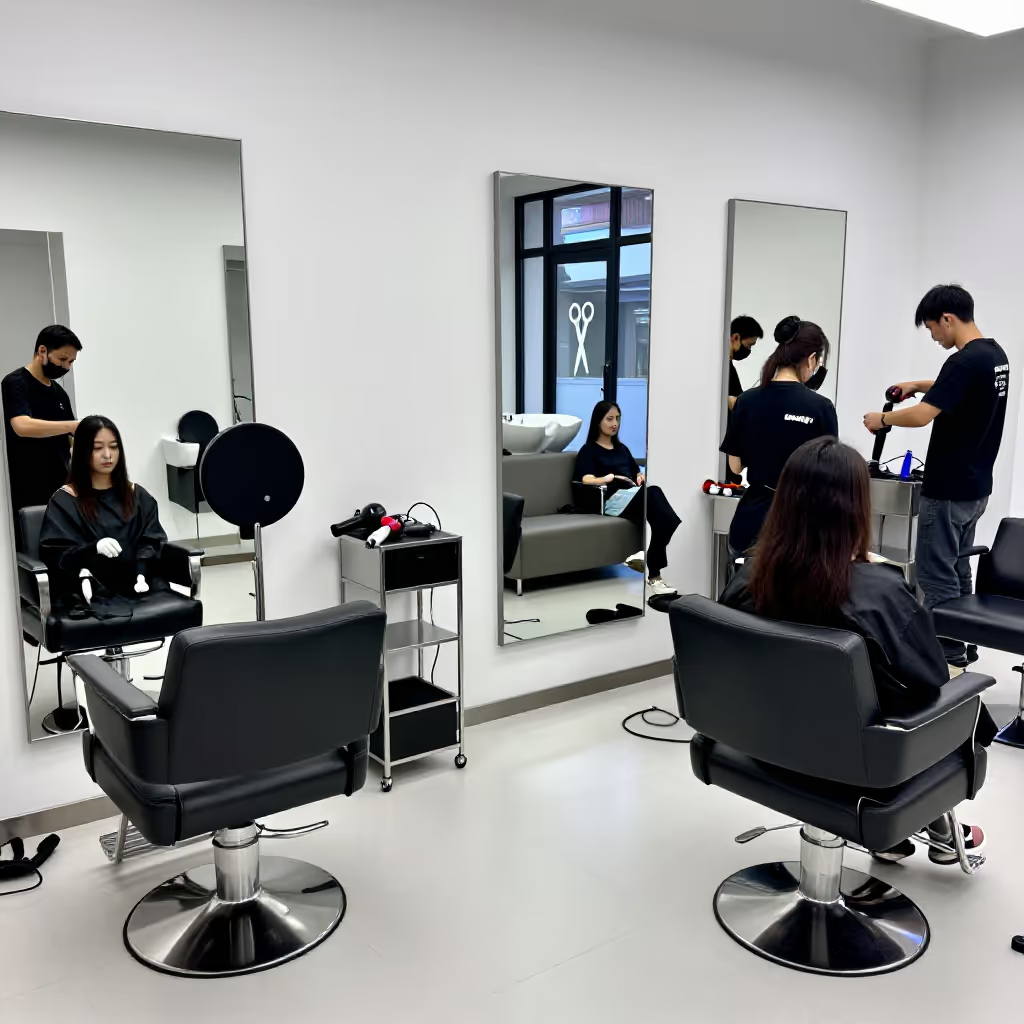
Although 'der Friseur' (the hairdresser) is the person, the expression 'zum Friseur gehen' (to go to the hairdresser) is almost always used for visiting the salon. If you explicitly mean the person, you often say 'mein Friseur' (my hairdresser).
EXAMPLE
Ich suche einen guten Friseur in dieser Gegend.
I'm looking for a good hairdresser in this area.
Compare with
near_synonym · confusable
Friseur vs Salon
salon
'der Salon' and 'der Friseur' can both have to do with a place where you get your hair cut. 'der Salon' refers more specifically to the business space, for example a 'Friseursalon' (hair salon) or 'Kosmetiksalon' (beauty salon). 'der Friseur' actually means the person who cuts hair. Colloquially, however, people also say 'Ich gehe zum Friseur' (I'm going to the hairdresser), meaning the shop. That is why the words can be confused. If you mean the person, 'der Friseur' is correct. If you want to emphasize the room or business, 'der Salon' fits better.
Friseur
Meine Mutter fragt den Friseur, ob er ihre Haare etwas kürzer schneiden kann.
My mother asks the hairdresser whether he can cut her hair a little shorter.
Salon
Der neue Salon in unserer Straße ist hell und modern eingerichtet.