

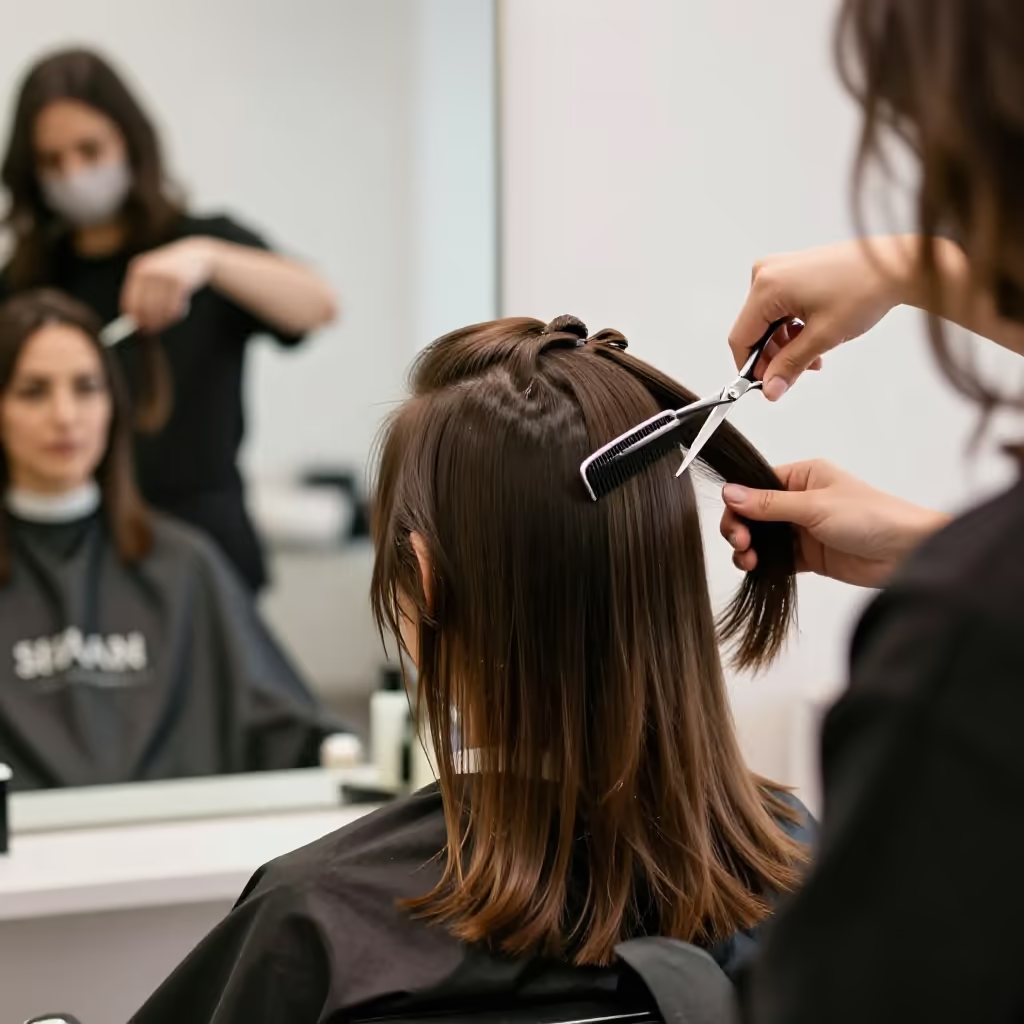
die Frisur
hairstyle
The way a person's hair is cut and styled.
EXAMPLE
Nach dem Friseurbesuch hatte sie eine komplett neue Frisur.
After going to the hairdresser, she had a completely new hairstyle.
hairstyle
Loading your saved state.
hairstyle
The way a person's hair is cut and styled.
Nach dem Friseurbesuch hatte sie eine komplett neue Frisur.
After going to the hairdresser, she had a completely new hairstyle.
'Die Frisur' (hairstyle) belongs to the word family of 'der Friseur' (the hairdresser) and 'frisieren' (the verb, to style hair). The hairstyle is the result of styling hair.
Ich lasse mir die Haare von meinem Lieblingsfriseur frisieren.
I have my hair styled by my favorite hairdresser.
Common verbs connected with 'Frisur' (hairstyle) are 'eine Frisur haben/tragen' (to have/wear a hairstyle), 'sich eine Frisur machen lassen' (to have one's hair styled), or 'die Frisur ändern' (to change one's hairstyle). Colloquially, people also say 'die Frisur sitzt' (the hairstyle is in place) when it looks good.
Sie trägt immer die gleiche Frisur.
She always wears the same hairstyle.
A hairstyle can be described with many adjectives, for example 'eine neue' (a new one), 'eine moderne' (a modern one), 'eine schicke' (a stylish one), or 'eine freche Frisur' (a bold/edgy hairstyle).
Für die Hochzeit wünscht sie sich eine elegante Frisur.
For the wedding, she wants an elegant hairstyle.
cut
Schnitt and Frisur can both describe the design of cut hair. Schnitt mainly refers to the shape created by cutting, while Frisur refers to the hair's overall styled appearance and can also include the styling. Use Schnitt for the desired cut and Frisur for the finished look.
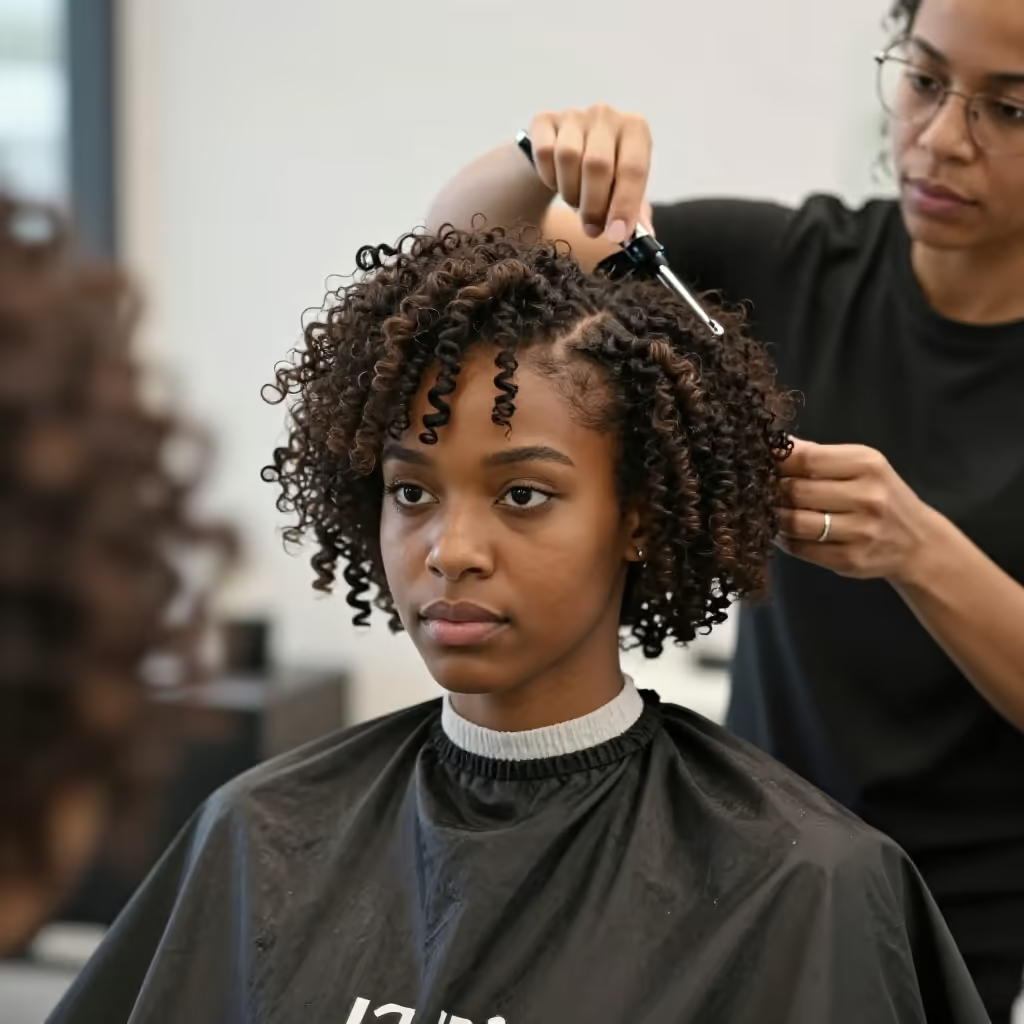
Die neue Frisur sieht auch nach dem Styling noch natürlich aus.
The new hairstyle still looks natural after styling.
Der neue Schnitt ist an den Seiten kurz und oben länger.
The new cut is short on the sides and longer on top.